
Intro
A padrão was a stone monolith topped with a cross, carved with the Portuguese coat of arms and an inscription. Portuguese navigators used these markers during the Age of Discovery to assert sovereignty in places they reached. The text describes padrões erected by Diogo Cão in 1482 and 1485, by Bartolomeu Dias in southern Africa, and by Vasco da Gama in several locations along the African coast and in the Laccadive Islands. It also notes that the Lisbon Geographical Society recovered three padrões by Diogo Cão and Bartolomeu Dias, while those of Vasco da Gama appear to have been lost. Another padrão, now in the National Museum of Jakarta, was set up by Federico de Leme in 1522 at Kalapa to commemorate a Luso-Sundanese alliance.
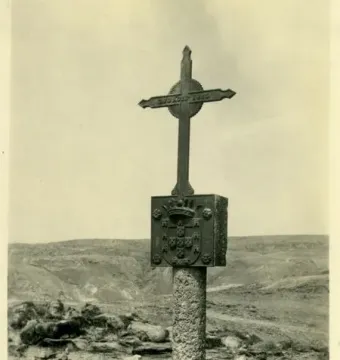
1931 © Victorcouto · Public domain
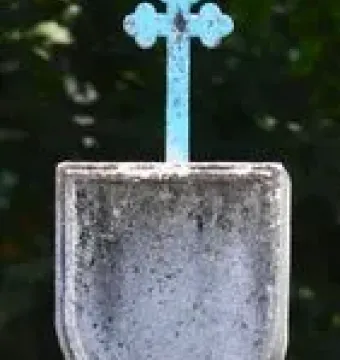
February 2017 © Ben Sutherland · CC BY 2.0
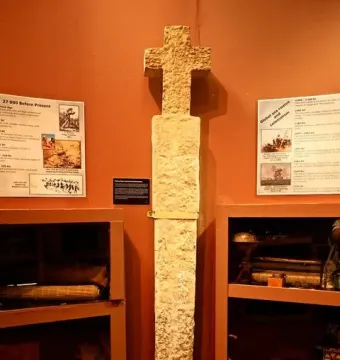
September 2013 © Leo za1 · CC BY-SA 3.0
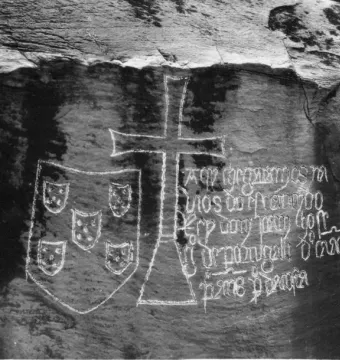
1910 © Victorcouto · Public domain
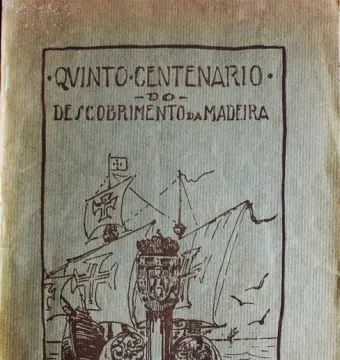
December 1922 © Vários · Public domain
Identification | |
| Title | padrão |
| Plural form | padrões |
| Original language | Portuguese |
| Translation | boundary marker; demarcation stone |
| Type | Portuguese stone marker or pillar monument |
Historical context | |
| Legal significance | Could support Portugal's claim to the rights of first discovery if no colony had yet been established |
| Vasco da Gama examples | Vasco da Gama erected padrões in southern Africa, on the east coast of Africa, in Mozambique, at Malindi, in the Laccadive Islands, and at Mossel Bay; his first was on 6 December 1497 at Mossel Bay |
| Bartolomeu Dias examples | Dias erected padrões in southwestern Africa, southeastern Africa, and at the Cape of Good Hope; one known example was erected on 6 June 1488 at the Cape of Good Hope |
| Other early Diogo Cão examples | Diogo Cão erected additional padrões in 1483 at Cabo de Lobo/Cabo Negro, and in 1485 at Cape Cross; associated locations also include Cape of Santa Maria, the mouth of the Zaire River, Angola, Gabon, and Namibia |
| First known example | Diogo Cão erected the first stone cross on 23 April 1483 in the southern mouth of the Congo River, dedicated to Saint George |
| First recorded installation | Diogo Cão, in 1482 at the mouth of the Congo River |
| Secondary meaning | Could also be erected at memorial places to mark friendship or an important event |
| Reason for later form | Wooden markers deteriorated quickly in tropical climates |
| Primary purpose | To proclaim Portuguese possession or suzerainty and record significant landfalls |
| Later form | Stone pillar or column surmounted by a cross and the Portuguese royal arms |
| Early form | Wooden pillars or crosses |
| Typical placement | On prominent coastal points such as capes, headlands, estuaries, and other visible landing sites |
| Use | Used by Portuguese navigators to mark voyages, claim first discovery, and assert Portuguese sovereignty over newly discovered lands; sometimes also used for commemorative or treaty-related purposes |
| Historical context | Portuguese maritime exploration and colonial expansion in Africa, Brazil, and Southeast Asia |
| Date of use | 15th and 16th centuries, during the Portuguese Age of Discovery |
| Other examples | Examples are also recorded for Gonçalo Coelho at Porto Seguro, Cristóvão Jacques in South America, Lourenço d'Almeida near Galle, Diogo Lopes de Sequeira on Sumatra, António de Abreu in the Moluccas, Alfonso d'Albuquerque on Mehum Island, Duarte Coelho in Siam, Jorge Álvares on Tamão Island, António de Brito on Banda, Henrique Leme at Sunda Kalapa, and Francisco de Sá near Cidigy River and Banten |
Creator | |
| Placed by | Portuguese navigators and travelers, including Diogo Cão, Bartolomeu Dias, Vasco da Gama, Pêro da Covilhã, Gonçalo Coelho, Jorge Álvares, António de Abreu, Lourenço d'Almeida, Diogo Lopes de Sequeira, António de Brito, Duarte Coelho, Cristóvão Jacques, Frederico/Federico de Leme, and Francisco de Sá |
Materials | |
| Origin of material | Some examples were carved in Portugal and transported on ships |
| Material | Stone; some examples were made of Portuguese limestone, marble, limestone, sandstone, or granite |
Technique | |
| Construction | Carved from a single block in the form of a pillar or column, usually topped with a cross fixed with lead; early markers may have been wooden crosses first erected on site |
Physical characteristics | |
| Height | About 3 metres; the Cape Cross original was 3.54 metres high, and some were described as about two man-lengths high |
| Weight | Up to 500 kg |
Appearance | |
| Decorations | The Portuguese royal coat of arms, a cross, and sometimes the image or name of a saint |
| Inscription | Yes |
| Inscription content | Typically gave the year of installation, the navigator's name, and the reigning king of Portugal, in Latin and Portuguese; some examples also proclaimed that the king had ordered the discovery of the land |
| Commemorative inscription | Commemorative padrões differed only by an added inscription about the event being commemorated |
Location and ownership | |
| Current location of reconstructed original | William Cullen Library of the University of the Witwatersrand, Johannesburg |
| Dias Cross Memorial replica | A replica padrão stands at the Dias Cross Memorial on a promontory at Kwaaihoek in South Africa's Eastern Cape province |
| Commemorative example in Nazaré | Vasco da Gama erected a padrão in Nazaré in gratitude to the Virgin Mary for the expedition's safe return from India |
| Vasco da Gama example material | Includes the original cross, made from Portuguese limestone |
| Vasco da Gama example location | Malindi, East Africa |
| Vasco da Gama example name | Vasco da Gama Pillar |
| Jakarta example | A padrão erected by Frederico de Leme in 1522 at Kalapa harbor in north present-day Jakarta to commemorate a Luso-Sundanese alliance treaty; rediscovered in 1918 and exhibited at the National Museum of Indonesia |
| Museum holding an example | National Museum of Jakarta, Indonesia |
Discovery and provenance | |
| Original Bartolomeu Dias padrão | Erected in 1488 by Bartolomeu Dias at Kwaaihoek to mark the site of his easternmost landfall after rounding the Cape of Good Hope |
| Discovery of original Dias padrão | Found by Eric Axelson in the 1930s; it had fallen or been pushed from Kwaaihoek and lay broken in gullies below |
| Recovery information | In the 20th century, the Lisbon Geographical Society recovered three padrões of Diogo Cão and one of Bartolomeu Dias; Vasco da Gama's padrões apparently remained lost |
History and restoration | |
| Restoration of original Dias padrão | Eric Axelson recovered the pieces and reconstructed the stone monument |
| Restoration initiative | The Lisbon Geographical Society restored padrões erected by Diogo Cão and Bartolomeu Dias in the 20th century |
Significance | |
| Related monument | Marco de Touros, a stone marker left by the Portuguese in 1501 and considered the oldest preserved monument in Brazil |
| Related monument significance | The Marco de Touros is treated as an object of cult because local people consider it a holy stone capable of miraculous cures |
| Other related markers | Other markers were installed at Cananéia and Belém (Pará) as a celebration of the Treaty of Tordesillas |