
Monument to General Carlos M. de Alvear
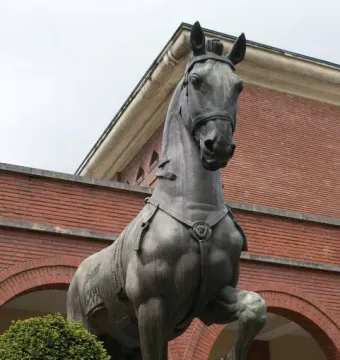
Monument to General Carlos M. de Alvear is an equestrian monument by Antoine Émile Bourdelle in Buenos Aires, located in the Recoleta district. Commissioned after a 1912 competition proposal from Rodolfo Alcorta, Bourdelle won the project and began work in 1913. Although the contract required completion by June 1915, the First World War delayed the project. The monument was shipped from France to Argentina in 1925 and installed at its present site on 12 October 1926. The composition features a five-meter statue of the general on horseback, set on a fourteen-meter pink granite pedestal, with four bronze allegorical figures symbolizing Strength, Freedom, Eloquence, and Victory.
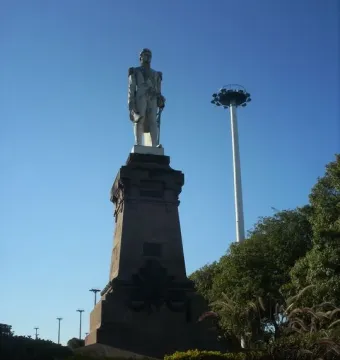
May 2009 © Marcecoro · CC BY-SA 3.0
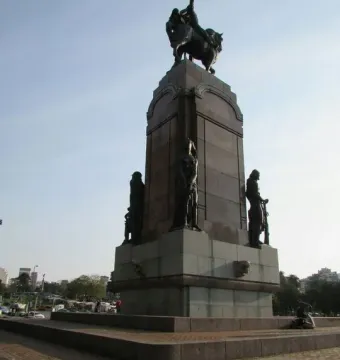
September 2015 © Mariavictoriamauri99 · CC BY-SA 4.0
February 2010 © Gobierno de la Ciudad de Buenos Aires · CC BY 2.0
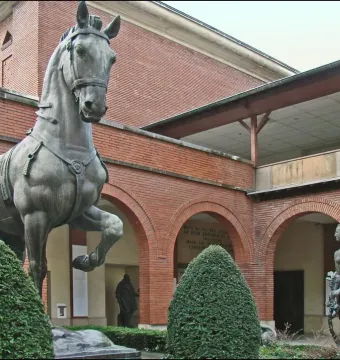
December 2009 © Jean-Pierre Dalbéra · CC BY 2.0
May 2008 © TijsB · CC BY-SA 2.0
Identification | |
| Title | Monument to General Carlos M. de Alvear |
| Original title | Monumento ecuestre a Carlos María de Alvear |
| Type | Equestrian monument |
Historical context | |
| Honoree | Carlos María de Alvear (1788/1789–1852), Argentine military officer and politician; Supreme Director of the United Provinces of the Río de la Plata in 1815; major figure in Argentine independence |
| Relationship to other monuments | Located near and opposite the monument honoring his son Torcuato de Alvear |
Creator | |
| Artist | Antoine Bourdelle |
| Artist nationality | French |
Discovery and provenance | |
| Artist's assessment | Bourdelle considered it one of his best works and his masterpiece among his great monuments |
| Inauguration | Inaugurated in the presence of President Marcelo Torcuato de Alvear, the honoree's grandson |
| Unveiling date | 16 October 1926 |
| Installation date | 12 October 1926 |
| Transport to Argentina | Brought from France to Argentina in 1925 |
| Original completion deadline | June 1915 |
| Work period | About 10 years; delayed by World War I |
| Competition result | Bourdelle won the competition and received the commission on 1 March 1913 |
| Competition | Bourdelle was invited to a 1912 design competition for the monument |
| Commissioned by | The authorities of Buenos Aires / the Argentine state |
| Commission initiated by | Rodolfo Alcorta, Argentine collector and friend of Antoine Bourdelle |
Physical characteristics | |
| Main figure height | 5 m |
| Total monument height | 20 m |
| Pedestal height | 13–14 m |
| Pedestal base area | About 20 m² |
| Allegorical figures height | 370 cm |
| Composition | Carlos María de Alvear is depicted on horseback, with horse and rider forming a static unit |
| Figure pose | Right arm raised, in the attitude of ordering his troops into battle; cape flowing behind him |
| Horse type | War horse (bridón de guerra) |
Materials | |
| Other materials | Plaster |
| Allegorical figures material | Bronze |
| Pedestal material | Pink granite |
| Main figure material | Bronze |
Technique | |
| Pedestal designer | Alejandro Bustillo |
| Pedestal form | Prismatic polished granite base with blind arches and a platform for the horse |
| Casting duration | Three years to cast all figures in bronze |
Appearance | |
| Stylistic inspiration | Ceremonial equestrian monuments of Antiquity and the Renaissance |
| Stylistic influences | Ancient Greek sculpture, archaic Greek art, Michelangelo, and medieval influences |
| Stylistic feature | Emphasized verticality |
| Visual effect | Looks good against the sky |
Iconography and meaning | |
| Preparatory studies | He made numerous drawings and maquettes with variants; horse studies were sketched in the stables of the cuirassier regiment in Montauban during World War I |
| Design process | Bourdelle repeatedly revised the allegories, sometimes up to six times, because he found them an anachronism |
| Victory depiction | Courageous and steadfast, supporting a sword and a tree sprout; shown without joy, looking anxiously into the distance |
| Eloquence attribute | Open mouth and scroll; later versions show a bearded man with a scroll |
| Victory attribute | Sword |
| Freedom attribute | Vine |
| Strength attribute | Club or staff |
| Meaning of allegories | They symbolize or explain the virtues and ideals of General Alvear |
| Allegorical figures | Strength, Freedom, Eloquence, and Victory |
| Pedestal decoration | Four allegorical figures at the corners of the pedestal |
Location and ownership | |
| Location | Plaza Julio de Caro, Recoleta, Buenos Aires, Argentina, near the Palais de Glace, opposite Avenida Alvear and adjacent to Plaza Intendente Alvear |
| Nearby landmark | Palais de Glace |
| Nearby avenue | Avenida Alvear |
| Nearby square | Plaza Intendente Alvear |
| Nearby square | Plaza Julio de Caro |
History and restoration | |
| War-related delay | World War I hindered completion; Bourdelle's assistants were mobilized and materials were unavailable |
| Completion status | Completed after World War I |
Significance | |
| Artist's opinion | Bourdelle considered it one of his best works |
| Inscription | Brigadier General / Carlos de Alvear / 1789 - 1852 |
| Inscription placement | Front |