
Lion Hunt of Ashurbanipal
The Lion Hunt of Ashurbanipal is a celebrated group of Assyrian bas-reliefs, originally from the North Palace of Nineveh and now displayed in Room 10 of the British Museum. Made between 645 and 635 BCE, the reliefs depict a ritualized hunt in an enclosed space, where King Ashurbanipal, who reigned from 668 to 631 BCE, attacks lions with arrows, a spear, or a sword as attendants drive them toward him. Once painted, the sculptures originally added bright color to the palace decoration. Excavated in 1852–55 by Hormuzd Rassam and William Loftus, the cycle is admired for its realism and its varied depictions of lions alive, wounded, dying, and dead.
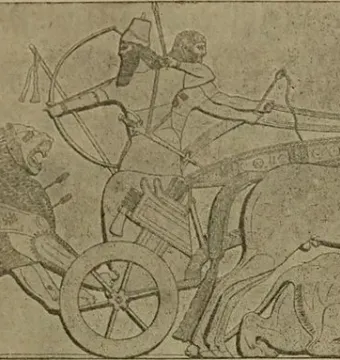
1906 © Internet Archive Book Images · No restrictions
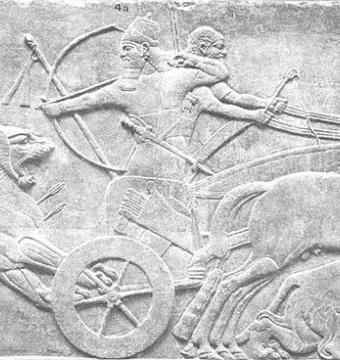
© The British Museum, London. · FAL
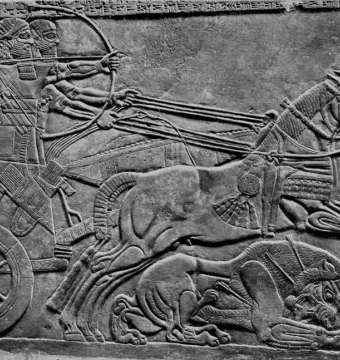
© Unknown authorUnknown author · Public domain
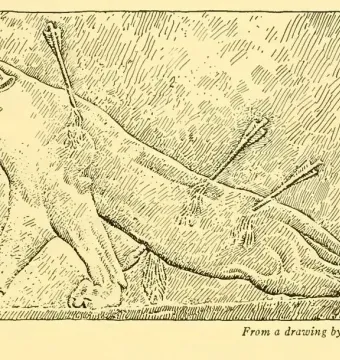
December 1919 © Harold Broadfield Warren · Public domain
January 2022 © Mohmmd Abd · CC BY-SA 4.0
Identification | |
| Title | Lion Hunt of Ashurbanipal |
| Original language title | Cacería de leones de Asurbanipal |
| Type | Group of Assyrian palace reliefs |
| Alternative title | The Royal Lion Hunt of Ashurbanipal |
Historical context | |
| Artistic motif history | A prominent symbolic theme since Sumer, represented on cylinder seals, tablets, reliefs, and frescoes |
| Related earlier ruler | Ashurnasirpal II |
| Earlier royal reliefs | Ashurnasirpal II commissioned lion-hunt reliefs in his palace at Nimrud about 200 years earlier |
| Earlier ruler reign | 883–859 BC |
| Earlier ruler inscription date | About 865 BC |
| Earlier ruler inscription content | He claimed to have captured 15 lions from the mountains and forests, taken away 50 lion cubs, gathered them in Kalhu and in the palaces of his land in cages, and raised their cubs in large numbers |
| Earlier hunting depiction | He is shown shooting arrows at lions from his chariot |
| Earlier hunting method | He claimed to have trapped and killed 30 elephants, 257 wild bulls, and 370 large lions with hunting weapons |
| Possible earlier setting | The earlier hunt may have been a more conventional hunt in open country or a simulated arena hunt |
| Post-reign context | After Ashurbanipal's reign, the Neo-Assyrian Empire descended into civil war and foreign invasions and had fallen apart by 612 BC |
| Fall of Nineveh | Nineveh was sacked and burned in 612 BC, perhaps only about 25 years after the reliefs were made |
| Later survival of lions | Mesopotamian lions survived in the desert until 1918 |
| Royal hunting tradition | Royal lion hunting in Mesopotamia was a prerogative of kingship |
| Art tradition | Assyrian art |
| Cultural context | Mesopotamian royal art |
| Date | About 645–635 BC |
| Production period | Late period of Assyrian art |
| Historical setting | Made near the end of the roughly 250-year period of Assyrian palace relief production, shortly before the Neo-Assyrian Empire collapsed |
| Ashurbanipal's reign | 668–631 BC |
| Historical significance of Ashurbanipal | The last great Assyrian king |
Creator | |
| Depicted ruler | Ashurbanipal |
Discovery and provenance | |
| Excavators | Hormuzd Rassam and William Loftus |
| Original location | North Palace, Nineveh |
| Repository | Most of the slabs were sent to the British Museum |
| Excavation dates | 1852–1854 by Hormuzd Rassam; 1854–1855 by William Loftus |
| Original arrangement | Originally formed different sequences placed in various areas of the imperial palace |
Location and ownership | |
| Current location | Room 10a, British Museum |
| Current status | Displayed as a group in the British Museum |
Physical characteristics | |
| Components | Slabs or orthostats |
Materials | |
| Material | Stone |
Technique | |
| Technique | Low relief |
Appearance | |
| Stylistic feature | The realism of the lions has long been praised |
| Animal figures | Lions shown in a wide variety of poses, alive, dying, and dead |
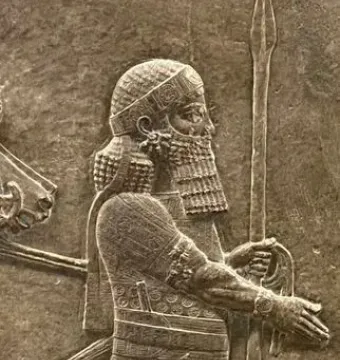
| Human figures | Shown mainly in formal profile poses, especially the king in his various appearances |
| Style | Assyrian palace relief style at its most developed and finest before decline set in |
| Original appearance | Probably originally painted and part of a brightly coloured palace decoration |
Subject | |
| Subject | Royal lion hunt scenes showing Ashurbanipal and attendants killing lions |
Iconography and meaning | |
| Symbolic meaning | Victory over Evil and Chaos, and the perpetuation of divine order and prosperity |
| Libation scene | Ashurbanipal pours a libation over the bodies of dead lions |
| Religious meaning | The hunt may have had a religious dimension and possibly an apotropaic intent |
| Protective equipment | A goat-hair or tent-cloth sleeve is probably implied for sword hunting, but it is not depicted |
| Close-combat pose | In sword combat, the king is shown gripping a lion by the mane with his left hand and driving a sword into its heart with his right hand |
| Mounted hunting | In the first two methods, the king was mounted on horseback or on a war chariot |
| Hunting methods | Archery, spear-hunting, and sword combat |
| Other figures | Assyrian soldiers with large shields and spears, and attendants with chained mastiffs |
| Method of controlling lions | Lions were kept in cages and released into a circumscribed space by soldiers and attendants |
| Hunt setting | An artificial, enclosed arena-like space where captive lions were released |
| Depicted action | Ashurbanipal kills lions with arrows, spear, or sword |
Significance | |
| Reception | Widely admired by the public and art historians since their arrival at the British Museum, and often regarded as supreme masterpieces of Assyrian art |
| Artistic significance | One of the masterpieces of Mesopotamian artistic production |
| Historical significance | Marks the end of about 250 years of palace relief production in Assyria and shows the style at its most developed form before decline |