
Monument to the Unknown Soldier
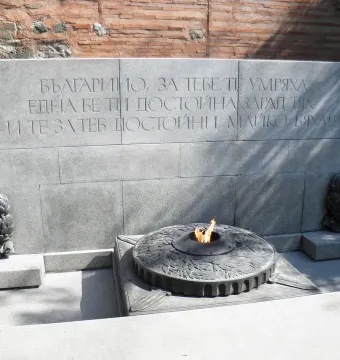
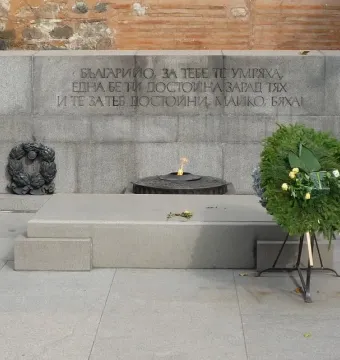
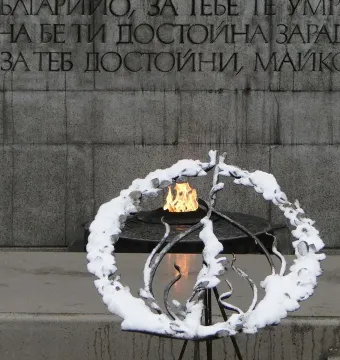
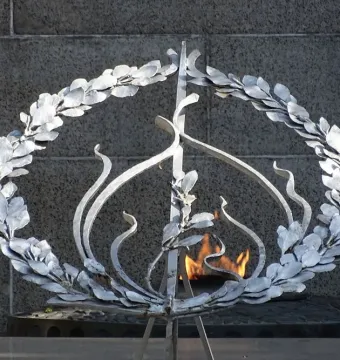
The Monument to the Unknown Soldier is a monument in the centre of Sofia, Bulgaria, beside the 6th-century Church of St Sophia on 2 Paris Street. It commemorates the hundreds of thousands of Bulgarian soldiers who died in wars defending their homeland. Designed by architect Nikola Nikolov, it was opened on September 22, 1981, marking the 1300th anniversary of the establishment of the Bulgarian state. The monument features an eternal flame, turf from Stara Zagora and Shipka Pass, a lion sculpture by Andrey Nikolov, and a stone inscription by Ivan Vazov. Ceremonies with the President of Bulgaria and foreign state leaders are often held here.
© Mister No · CC BY 3.0
© Colin W · CC BY-SA 3.0
© Nikolai Karaneschev · CC BY 3.0
July 2017 © Ad Meskens · CC BY-SA 4.0
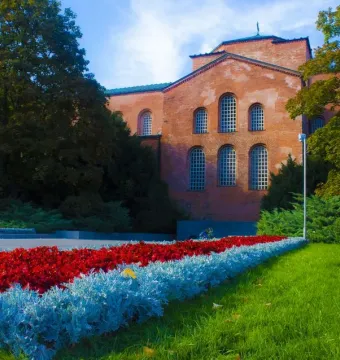
September 2015 © EverlastingStar · CC BY-SA 4.0
Identification | |
| Title | Monument to the Unknown Soldier |
| Alternative title | Tomb of the Unknown Soldier |
| Type | Memorial monument |
| Original-language title | Pametnik na Neznayniya voin |
Historical context | |
| Dedicated to | Unknown Bulgarian soldiers and the hundreds of thousands of Bulgarian soldiers who died in wars defending their homeland |
| Commemorated wars | Wars fought by the Bulgarian state, including the Russo-Turkish War (1877–1878) |
| Commemorated battles | Battle of Stara Zagora and Battle of Shipka Pass |
| Opening date | 22 September 1981 |
| Opening occasion | 1300th anniversary of the establishment of the Bulgarian state |
Creator | |
| Designer / architect | Nikola Nikolov |
| Lion sculptor | Andrey Nikolov |
Discovery and provenance | |
| Original sculptor | Andrey Nikolov |
| Reason original version was not approved | It was considered overloaded with sculptural figures; there were 17 figures |
| Original proposal | A group of Bulgarians proposed building the monument after the end of the First World War |
| Original project approval date | 14 December 1926 |
| Original project approved by | Special commission headed by War Minister General Ivan Valkov |
History and restoration | |
| Restoration initiative year | 1970s |
| Lion relocation history | Moved to Pancharevo children's town, then in 1952 to the bank of the Iskar River near Gorublyane, later to a pedestal on the road to Plovdiv in front of the former royal residence Vrana; lost during Trakia highway construction, found near the Vrana campsite in 1975, and later kept in the yard of the Military History Museum in Sofia before restoration |
| Current opening date | 22 September 1981 |
| Current project author team | A group led by architect Nikola Nikolov and sculptor Dimitrov |
| Current composition date | 1981 |
| Restoration decision | Bulgarian authorities decided to restore the Monument to the Unknown Soldier for the 1300th anniversary of the Bulgarian state |
| Original monument ready date | 8 July 1931 |
| Destruction history | Completely destroyed after the communist coup on 9 September 1944 and the Soviet occupation of Bulgaria |
| Damage history | Seriously damaged during the Anglo-American bombing of Sofia |
| Official opening date | 1941, during World War II |
| Final sculptural complex completion date | 14 September 1936 |
| Project completed date | 1933 |
| Revised version approved date | December 1931 |
Physical characteristics | |
| Decorative reliefs | Bronze reliefs and side bas-reliefs with grieving women |
| Emblems | Two metal crosses of the Order of Bravery |
| Included elements | Pylons with the Bulgarian flag |
| Main lion sculpture | Bronze lion, 4 m long |
| Eternal flame | Placed behind the sarcophagus |
| Current structure | A sarcophagus with 15 cartridges containing sacred soil from all over Bulgaria and the remains of unknown soldiers from historically significant places |
| Sarcophagus pedestal | Granite sarcophagus pedestal, 3 m wide and 2.55 m high |
| Materials | Bronze, granite, and metal elements |
Appearance | |
| Side relief themes | One side shows a weeping willow symbolizing grief and two Bulgarian women in Dobrujan and Thracian costumes; the other shows two Bulgarian women with candles in Macedonian and Aegean costumes, crushed by grief |
| Inscription text | "BЪЛГАРИЙО, ЗА ТЕБЕ ТЕ УМРЯХА, ЕДНА БЕ ТИ ДОСТОЙНА ЗАРАД ТЯХ И ТЕ ЗА ТЕБ ДОСТОЙНИ, МАЙКО, БЯХА!" |
| Sarcophagus inscription | "To those who died for the Fatherland — eternal glory!" |
Materials | |
| Included soil | Soil from Stara Zagora and Shipka Pass |
| Turf source sites | Stara Zagora and Shipka Pass |
Technique | |
| Inscription text source | A stanza from The New Graveyard Above Slivnitsa 1885 by Ivan Vazov |
| Inscription language | Bulgarian |
Iconography and meaning | |
| Lion pose interpretation dispute | The sitting lion was long considered inappropriate, with some interpreting it as a metaphor of surrender to national ideas |
| Lion symbolism | The lion is a national symbol of Bulgaria |
| Later interpretation | A symbol of honor, patriotism, and sacrifice of all Bulgarian warriors who died defending the homeland, regardless of when and where |
| Symbolic meaning | A symbolic grave for all known and unknown Bulgarian soldiers who died in the struggle for the liberation, unification, and defense of Bulgaria |
| Central feature | The symbolic Tomb of the Unknown Bulgarian Soldier occupies the central place in the complex |
| Purpose | To symbolize the memory of hundreds of thousands of Bulgarian soldiers who died for their homeland in wars fought by the Bulgarian state |
Location and ownership | |
| Location | Central Sofia, Bulgaria |
| Nearby landmark | Next to the 6th-century Church of St. Sophia |
| Street address | 2 Paris Street |
| Site description | Beside the southern facade of the transept of the Church of St. Sophia in Sofia |
| State ceremonial role | Site of major state ceremonies |
| Ceremonial uses | Annual national holiday ceremony on 3 March, official raising of the Bulgarian tricolor, army Epiphany ceremony, 6 May Day of Bravery and Bulgarian Army Day parade, and wreath-laying by official foreign delegations |
| Patriotic marches | Bulgarian March, Lukanov March, and other annual patriotic marches in Sofia |
| Associated with | The Church of St. Sophia gave its name to Sofia and is a symbol of the city |
Other | |
| Public initiative | In 2014, citizens of Sofia proposed restoring the Bulgarian Lion to the center of the memorial composition |
| Opposition to initiative | The proposal was blocked by a Russophile lobby |
| Eternal flame origin legend | According to communist mythology, it is lit by a flame brought from Shipka |