
The Resurrection
The Resurrection (La Resurrezione) is a bronze and brass sculpture by Pericle Fazzini in the Paul VI Audience Hall in Rome. Created to reflect the anguish of 20th-century humanity under the threat of nuclear war, it shows Jesus rising from a nuclear crater in the Garden of Gethsemane. Fazzini described the work as Christ emerging from a crater torn open by a nuclear bomb, in a vortex of violence and energy. Commissioned in 1965, casting began in 1972 and the final sketch was produced in 1975. The sculpture weighs 30 tons and cost $400,000. Pope Paul VI unveiled and blessed it on September 28, 1977, calling it monumental and unique.
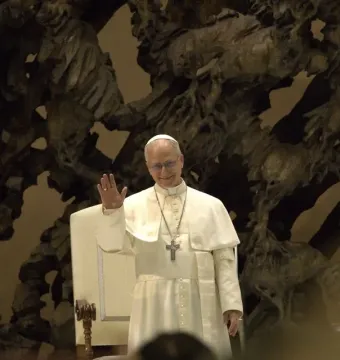
May 2025 © Edgar Beltrán · CC BY-SA 4.0
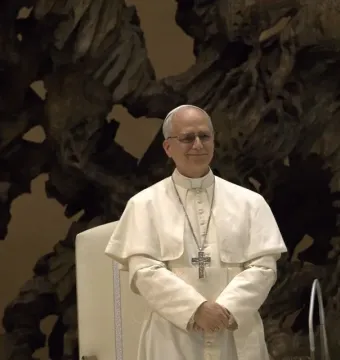
May 2025 © Edgar Beltrán · CC BY-SA 4.0
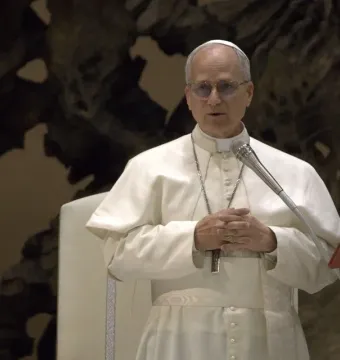
May 2025 © Edgar Beltrán · CC BY-SA 4.0
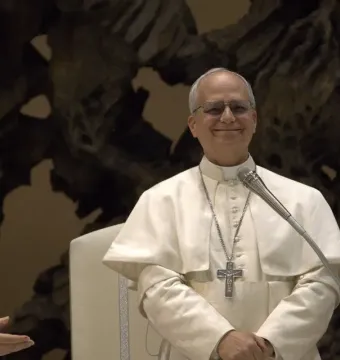
May 2025 © Edgar Beltrán · CC BY-SA 4.0
May 2025 © Edgar Beltrán · CC BY-SA 4.0
Identification | |
| Title | The Resurrection |
| Type | Sculpture |
| Original title | La Resurrezione |
Creator | |
| Artist | Pericle Fazzini |
| Artist nationality | Italian |
Historical context | |
| Commissioned by | Pope Paul VI |
| Commission date | 1965 |
| Commission context | After the Second Vatican Council; the final decision to commission Fazzini was taken directly by Pope Paul VI |
| Created in honor of | Pope Paul VI's 80th birthday |
| Work period | 1970–1975 |
Discovery and provenance | |
| Original model material | Polystyrene |
| Production method | The sketch was made in polystyrene, cut by the artist with special electric chisels, sent to the foundry, and later welded together to complete the work |
| Source citation | C. Gambardella et al., 'La Resurrezione by Pericle Fazzini in the Aula Paolo VI at the Vatican. The restoration of contemporary art by sacred multi-disciplinary dimensions,' Fabbrica della Conoscenza, XVI (2012) |
| Final sketch completed | Summer 1975 |
| Creation location | A workshop in San Lorenzo in Piscibus, which was made available to the artist while the church was deconsecrated |
| Casting began | 1972 |
| Casting location | Michelucci Art Foundry, Pistoia |
Materials | |
| Main materials | Bronze and brass |
| Material variation | Red bronze |
| Casting material quantity | About eight tons of a bronze and brass mixture |
Physical characteristics | |
| Weight | 30 tons |
| Dimensions | 20 meters wide, 7 meters high, 3 meters deep |
| Location within setting | Occupies the entire central section of the back wall of the hall |
Location and ownership | |
| Made for | Paul VI Audience Hall (also known as Aula Nervi) |
| Associated building project | Completed the construction of the Paul VI Audience Hall |
| Building architect | Pier Luigi Nervi |
| Hall style | Modernist architecture |
| Purpose of the hall | Built to host public audiences of Pope Paul VI |
| Use of the hall | Used by the Pope for weekly catechetical meetings when they cannot be held in Saint Peter's Square because of adverse weather conditions |
| Unveiled and blessed by | Pope Paul VI |
| Current location | Paul VI Audience Hall (Aula Paolo VI), Vatican City, Rome |
Appearance | |
| Surrounding elements | Rocks, dry branches, roots, pieces of bones, and skulls |
| Central figure | The risen Christ |
| Facial expression | Conveys inner suffering and profound serenity |
| Hair and beard | Long hair and beard blown by a wind moving from left to right |
| Pose of Christ | Standing prominently before the assembly of the faithful, with arms open |
Iconography and meaning | |
| Atmospheric effect | A mystical wind lifts the Savior and disturbs the background |
| Depicted subject | The resurrection of Christ |
| Artist's description of the work | Christ rises from a crater torn open by a nuclear bomb; an atrocious explosion, a vortex of violence and energy |
| Intended theme | The anguish of 20th-century mankind living under the threat of nuclear war |
| Regional reference | The Mediterranean landscape of the Marche, the artist's native region |
| Historical reference | The apocalyptic event of the atomic bomb; the recent tragedies of Hiroshima and Nagasaki |
| Biblical reference | The Garden of Gethsemane, the last place where Christ prayed |
| Symbolic meaning | Christ is victorious over death |
| Interpretation | Christ rises from a crater caused by a nuclear explosion in the Garden of Gethsemane |
History and restoration | |
| Restoration note | The sculpture was restored as part of contemporary art conservation |
| Restoration conducted by | Professor Giuseppe Farina, a Calabrian artist originally from Monterosso Calabro |
| Cleaning/restoration period | 3 October to 12 December 2011 |
| Health impact on artist | He had health problems caused by exposure to toxic gases during the work |
| Production hazard | Burning plastic fumes gave Fazzini a blood clot during production |
| Pope's description | Monumental and unique |
| Completion date | 29 September 1977 |
| Unveiling and blessing date | 28 September 1977 |
| Artist present at unveiling | Yes, Fazzini was in attendance |
Significance | |
| Reception | Not well understood by everyone who sees it; some consider it horrifying |
| Commemorative stamp | In 2013, Vatican Post issued a €0.85 Easter stamp depicting the sculpture |
| San Marino stamp attempt | In 1978, San Marino attempted to issue three Christmas stamps with pictures of the statue; Fazzini approved the stamps, but the Vatican objected and San Marino cancelled them |
| Art historical context | Contemporary art; sacred art |
| Interpretive description | A work with multi-disciplinary sacred dimensions |