
Statue of Sofia
The Statue of Sofia is a monumental sculpture in Sofia, Bulgaria, officially opened to the public on December 28, 2000. It was approved by the Sofia City Council on September 17, 2000, and erected over two days, from December 25 to 27, 2000, on a site once occupied by a statue of Lenin. Created by sculptor Georgi Chapkanov, the copper and bronze figure stands 8.08 meters high on a 16-meter pedestal and weighs about 5 tons. It is adorned with a crown, wreath, and owl, symbolizing power, fame, and wisdom. The statue was intended as a symbol of better times in the new millennium.
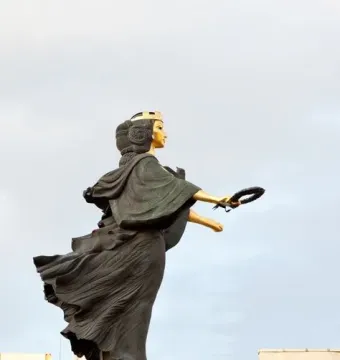
October 2012 © Bin im Garten · CC BY-SA 3.0
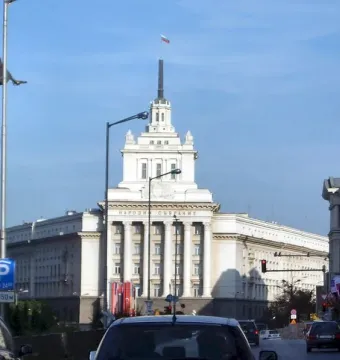
September 2006 © en:User:Cameltrader · CC BY-SA 3.0
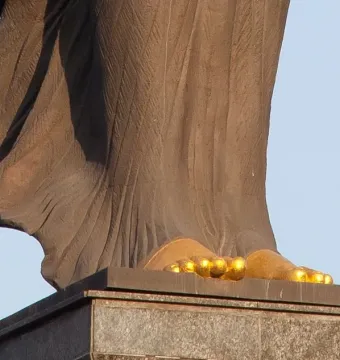
October 2012 © Bin im Garten · CC BY-SA 3.0
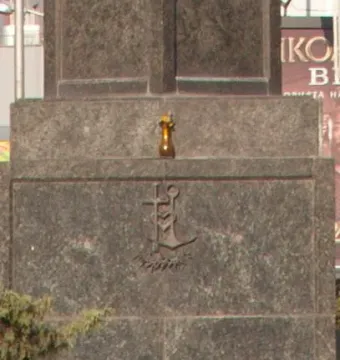
October 2012 © Bin im Garten · CC BY-SA 3.0
Identification | |
| Title | Statue of Sveta Sofia |
| Subject | Sveta Sofia |
| Alternative titles | Statue of Sofia; Statue of the "Holy Sofia"; "Heilige Sofia" statue |
| Type | Statue; monumental sculpture; large sculpture; bronze statue; female figure |
| Original-language name | Света София (Sveta Sofija) |
Historical context | |
| Construction period | 25–27 December 2000 |
| Original plan | Initially planned as a dedication to Saint Sophia and to be placed on the former Party House, with a clock tower |
| Previous site use | The site was previously occupied by a Lenin statue |
| Controversy | The project was controversial because the Orthodox Church and critics objected to associating it with Sophia of Rome and the pagan Sophia of the Hellenistic period |
| Opening by | Stefan Sofiyanski, then mayor of Sofia |
| Public opening date | 28 December 2000 |
| Approval body | Sofia City Council |
| Approval date | 17 September 2000 |
Creator | |
| Architect | Stanislaw Konstantinow |
| Sculptor | Georgi Chapkanov (Georgi Tschapkanow; Georgi Čăpkanov) |
Discovery and provenance | |
| Name origin | Named after the Church of Saint Sophia (Sweta Sofia), which gave the city of Sofia its name |
| City name origin | The city of Sofia was founded as Serdica by the Romans; its present name derives from the church Sweta Sofia, not from a saint |
| Namesake church | Church of Saint Sophia / Sweta Sofia, outside the gates of ancient Serdica; dedicated to the Wisdom of God |
| Day of Sofia | 17 September was declared the city holiday of Sofia by the Sofia City Council on 25 March 1992 |
| Reason for confusion | 17 September is also the feast day of Saint Sophia of Milan, which caused confusion with the city name |
Physical characteristics | |
| Location | Independence Square, Sofia, Bulgaria, at the junction of Todor Aleksandrow Boulevard and Knjaginja Maria Luisa Boulevard |
| Nearby landmarks | St. Joseph Catholic Cathedral behind; St. Nedelya Cathedral to the right; Banya Bashi Mosque to the left; entrance to the Serdica metro station and underpass to St. Petka Paraskeva Church and the Archaeological Complex Serdica nearby |
| View direction | Looking across Independence Square toward the former Party House of the Bulgarian Communist Party (now part of the Parliament/Narodno Sabranie) |
| Orientation | Facing east |
| Assembled parts | 160 |
| Placement | Set on a high pedestal |
| Pedestal height | 16 m |
| Height | 8.8 m |
| Weight | About 5 tons |
Materials | |
| Statue material | Copper and bronze |
| Pedestal material | Marble |
Technique | |
| Surface treatment | The exposed parts of the figure are gilded |
Appearance | |
| Headwear | Golden crown |
| Overall appearance | Regal, authoritative, and powerful |
| Clothing | An antiquizing garment and flowing wind-swept cloak billowing backward |
| Left arm | Outstretched, with an owl sitting on it |
| Right hand | Holding a laurel wreath |
| Depicted figure | A young woman standing upright with outstretched arms |
Iconography and meaning | |
| Symbolism | Intended to embody the greatness and beauty of Sofia and to symbolize better times in the new millennium |
| Interpretation | A symbol for all residents of Sofia regardless of religion; also the protector of the city and country |
| Crown symbolism | Symbol of power; also associated with Tyche and inspired by the old emblem of Sofia from 1900 |
| Laurel wreath symbolism | Symbol of fame and victory; also associated with supreme power and, through its circular form, infinity, perfection, and renewing vitality |
| Owl symbolism | Symbol of wisdom |
| Interpretive history | Initially interpreted by the city and sculptor as Saint/Holy Sofia or an allegory of the city of Sofia; later the sculptor said it should simply be understood as Sofia |
| Rejected interpretations | A saintly patron figure of Sofia and a goddess of wisdom were both rejected as incorrect interpretations |
| Related religious explanation | The church name refers to the Wisdom of God, not to a saint |
Location and ownership | |
| Current location | Sofia, Bulgaria |