
Africa
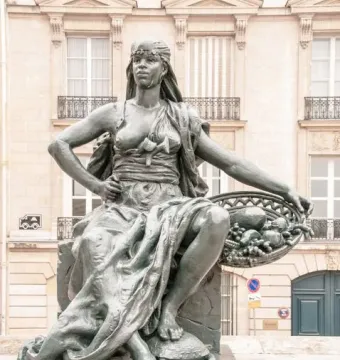
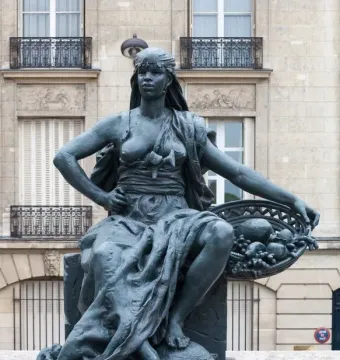
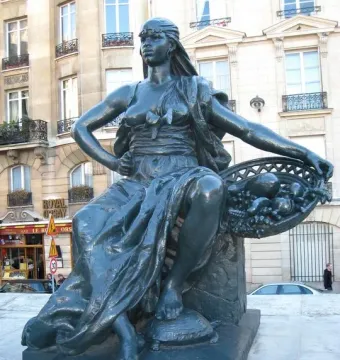
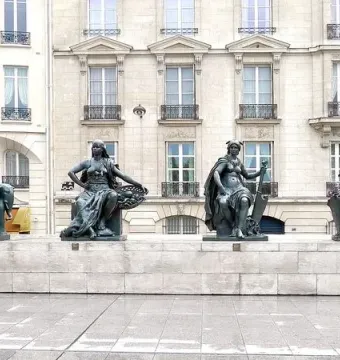
Africa is a cast-iron sculpture on a covered plinth, created in 1878 by the French sculptor Eugène Delaplanche and cast by Antoine Durenne. It presents the African continent in allegorical form. The work was commissioned by the French state to decorate the terrace of the Trocadéro Palace for the 1878 Universal Exposition in Paris. It remained there until 1935, when the palace was rebuilt for the Palais de Chaillot, and was then sent to Nantes. In 1985, the Louvre assigned it to the Musée d'Orsay, which had it restored by the Coubertin foundry. It is now displayed on the forecourt of the Musée d'Orsay alongside five other cast-iron statues representing the other continents.
February 2013 © Graeme Churchard · CC BY 2.0
April 2017 © Luis Miguel Bugallo Sánchez (Lmbuga) · CC BY-SA 4.0
February 2008 © Daderot · Public domain
© Mbzt · CC BY 3.0
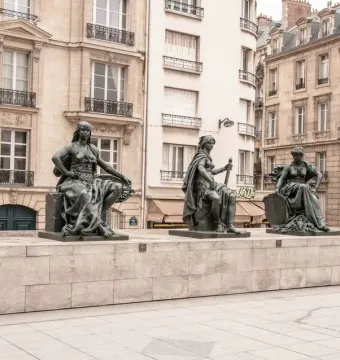
© Graeme Churchard · CC BY 2.0
Identification | |
| Title | Africa |
| Type | Sculpture |
Historical context | |
| Date created | 1878 |
Creator | |
| Artist | Eugène Delaplanche |
| Founder / caster | Antoine Durenne |
Discovery and provenance | |
| Commissioned by | the French state |
| Commission date | 1878 |
| Purpose of commission | to decorate the terrace of the Palais du Trocadéro for the 1878 Universal Exposition in Paris |
| Original location | Terrace of the Palais du Trocadéro, Paris |
| Original group context | One of six similarly sized cast-iron statues placed at the Palais du Trocadéro for the 1878 Universal Exposition, each representing a continent |
| Relocation in 1935 | Moved from the Palais du Trocadéro to Nantes after the palace was rebuilt to make way for the Palais de Chaillot |
| Transfer to Musée d'Orsay | 1985 |
History and restoration | |
| Restoration | The Musée d'Orsay commissioned the Coubertin foundry to restore it |
Location and ownership | |
| Current location | Forecourt of the Musée d'Orsay, Paris |
| Current display context | Displayed with five other similarly sized cast-iron statues representing the other continents |
Physical characteristics | |
| Material | Cast iron |
| Base | Covered base |
Iconography and meaning | |
| Subject | An allegory of Africa |
| Turtle symbolism | May allude to the continent's fertility and slower awakening |
| Pseudo-hieroglyphs reference | Ancient Egypt |
Appearance | |
| Depicted figure | A seated, bare-breasted woman |
| Clothing | A long dress tied at the waist with a sash and a veil decorated with jewels |
| Accessories | Jewelry and a belt |
| Attribute in left hand | A basket of fruit and vegetables |
| Foot placement | Left foot resting on a turtle |
| Side decoration | Imitations of hieroglyphs |
Significance | |
| Jean-Marcel Humbert interpretation | Preeminence for the African continent is usually assigned to Egypt, but in this case it is assigned to Africa itself |