
Bust of an Aruwimi Native
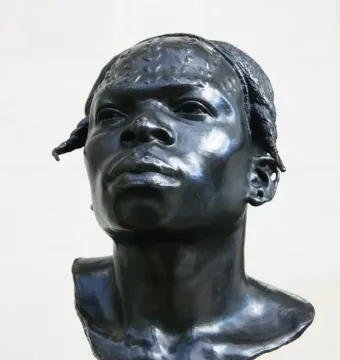
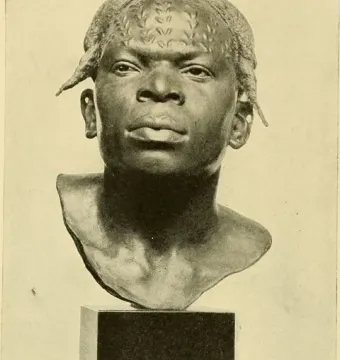
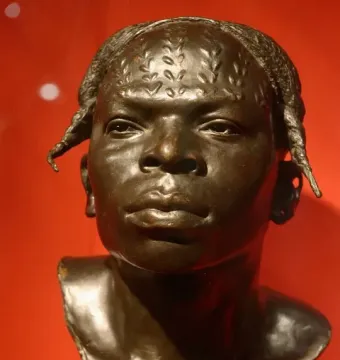
Bust of an Aruwimi Native is a work by English sculptor Herbert Ward (1863–1919), now preserved at the Musée d'Orsay in Paris. The bust depicts a man from the Aruwimi region and was sculpted from one of Ward’s own drawings made while he served as an officer in Henry Morton Stanley’s expedition in Central Africa. During the expedition, Ward stayed for 14 months in Yambuya, on the banks of the Lohale, or Aruwimi, River, a tributary of the Congo. After returning to England, he later published illustrated books that included photographs of places visited, people, his cabin interior, and sculptures he had made in Africa or after sketches brought back from there.
November 2015 © Lomita · CC BY-SA 4.0
1910 © Internet Archive Book Images · No restrictions
November 2017 © Marie-Lan Nguyen · Public domain
Identification | |
| Title | Bust of an Aruwimi native |
| Alternative title | Un indigène Aruwimi - Souvenir de voyage (expédition Stanley) |
| Type | Bust |
| Subject | An Aruwimi native |
| Original title | Un indigène Aruwimi |
Creator | |
| Artist | Herbert Ward |
| Artist nationality | English |
| Artist lifespan | 1863–1919 |
| Artist profession | English Africanist, illustrator, and explorer |
Creation context | |
| Based on | One of Ward's drawings made while he was serving as an officer in Henry Morton Stanley's Central African expedition |
Historical context | |
| Associated place | Yambuya, on the banks of the Aruwimi River |
| Geographic context | The Aruwimi River is a tributary of the Congo River in the present-day Democratic Republic of the Congo |
| Creation context | Ward made the source drawing while stationed for 14 months at Yambuya, on the banks of the Aruwimi (Lohale) River, in 1884–1885, in what is now the Democratic Republic of the Congo |
| Related expedition | Henry Morton Stanley's expedition to Central Africa |
Discovery and provenance | |
| Publication | A voice from the Congo: comprising stories, anecdotes, and descriptive notes |
| Publication date | 1910 |
| Published depiction | Photographed and published in Herbert Ward's 1910 book |
| Caption in publication | Un indigeno Aruwimi (An Aruwimi native) |
| Publication contents | Included photographs of visited places, people, the interior of Ward's hut, and sculptures he had made in Africa or from sketches brought back from Africa |
Physical characteristics | |
| Material | Bronze |
Appearance | |
| Depicted subject | The head of a Bantu man living on the banks of the Aruwimi River |
| Facial markings | Forehead scarification marks |
| Hair arrangement | Hair gathered into two braids falling along the sides of the head |
Iconography and meaning | |
| Scarification meaning | In many Central African peoples, scarification is a rite of passage to adulthood |
Location and ownership | |
| Current location | Musée d'Orsay, Paris |
Other | |
| Related sculpture | Ward also sculpted Woman of Central Africa, depicting a young Bakongo woman |