
Neptune Fountain
Neptune Fountain is an artificial basin in the park of the Palace of Versailles, named after the Roman god Neptune. It stands in alignment with the Water Walk and the Dragon Basin, at the northern end of a south-north axis that includes the Swiss Lake, the Orangery Parterre, and the Water Parterres. The basin was built between 1679 and 1681 under the direction of Le Nôtre, and was then called the "Lower Dragon Pond." During the reign of Louis XV, it was modified. In 1736, Ange-Jacques Gabriel slightly altered its layout, and in 1740 three groups of lead sculptures were installed, including works by Nicolas Sébastien Adam, Lambert Sigisbert Adam, Jean-Baptiste Lemoyne, and Edmé Bouchardon.
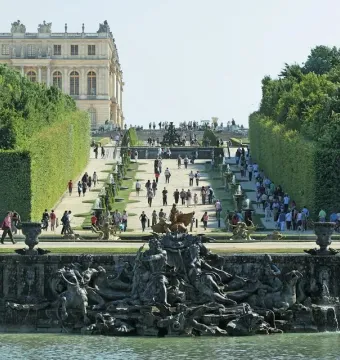
June 2011 © Coyau · CC BY-SA 3.0
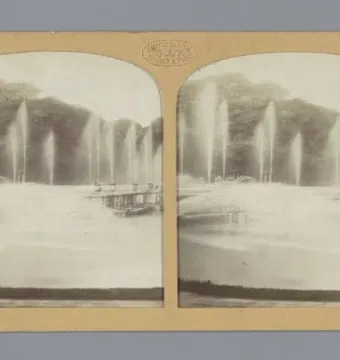
1858 © Rijksmuseum · CC0
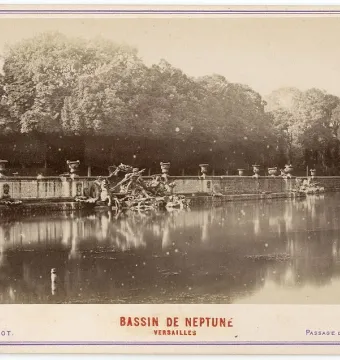
© Ladrey, E. · CC BY 4.0
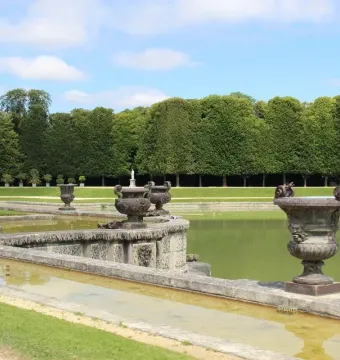
July 2016 © Gary Todd · CC0
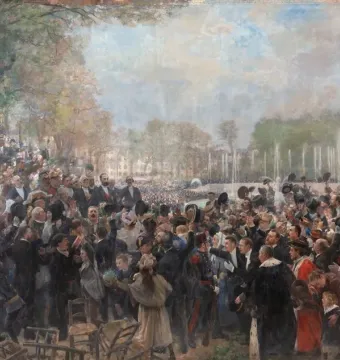
1893 © Alfred Philippe Roll · Public domain
Identification | |
| Title | Neptune Fountain |
| Type | Artificial basin / fountain basin |
| Original name | Basin of Neptune (Pièce d'eau sous le Dragon) |
Location and ownership | |
| Location | Park of the Palace of Versailles, France |
| Position in the garden | At the northern end of the south-north axis including the Swiss Pond, the Orangery Parterre, and the Water Parterres; aligned with the Water Walk and the Dragon Basin |
Iconography and meaning | |
| Named after | The Roman god Neptune |
Historical context | |
| Built | 1679–1681 |
Creator | |
| Sculpture group 1 artists | Nicolas Sébastien Adam and Lambert Sigisbert Adam |
| Supervision | André Le Nôtre |
| Sculpture group 3 artist | Edmé Bouchardon |
| Sculpture group 2 artist | Jean-Baptiste Lemoyne |
History and restoration | |
| Modified during | The reign of Louis XV |
| Sculptural additions | In 1740, three lead sculpture groups were installed: Neptune and Amphitrite, The God of the Ocean, and Proteus |
| Layout altered by | Ange-Jacques Gabriel slightly changed the layout in 1736 |
Materials | |
| Material | Lead |
Appearance | |
| Water displays | Important and varied fountains |
Significance | |
| Reception | It aroused the admiration of the court |