
Blackpool High Tide Organ
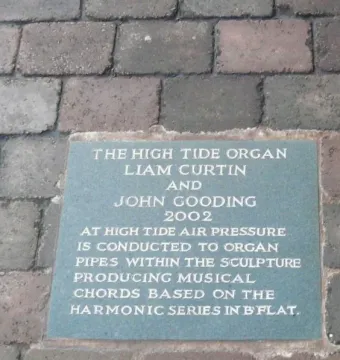
Blackpool High Tide Organ is a 15-metre-tall architectural sculpture in Blackpool, UK, created in 2002 as part of the Great Promenade Show series. Designed by artists Liam Curtin and John Gooding, it is made of concrete, steel, zinc, and copper. Described as a “musical manifestation of the sea,” it produces sound when waves force air through eight pipes attached to the seawall and connected to 18 organ pipes inside the structure. The best time to hear it is two to three hours before or after high tide. On very calm days, it may remain silent for part of its cycle.
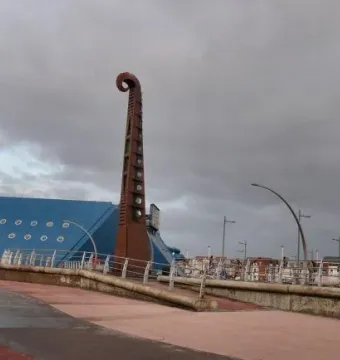
November 2011 © https://www.geograph.org.uk/profile/22742 · CC BY-SA 2.0
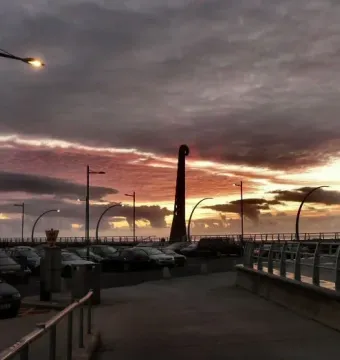
November 2008 © Gerald England · CC BY-SA 2.0
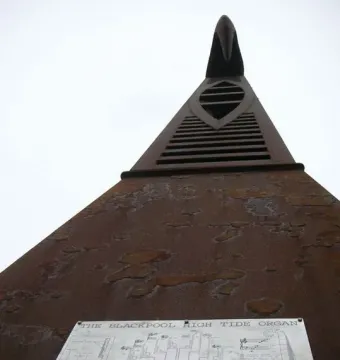
May 1998 © Sam Dooley · CC BY-SA 3.0
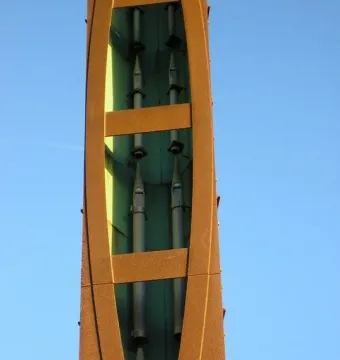
December 2005 © RHaworth · CC BY-SA 3.0
November 2008 © Gerald England · CC BY-SA 2.0
Identification | |
| Title | Blackpool High Tide Organ |
| Alternative name | High Tide Organ |
| Alternative name in Russian | Блэкпульский приливной орган |
| Type | tidal organ; architectural structure resembling an organ |
Historical context | |
| Year built | 2002 |
| Part of | The Great Promenade Show |
| Series type | series of sculptures |
Creator | |
| Designed by | Liam Curtin and John Gooding |
Discovery and provenance | |
| Location | New Promenade, Blackpool, United Kingdom |
Physical characteristics | |
| Height | 15 meters |
| Materials | concrete, steel, zinc, and copper sheet |
| Condition | heavily corroded |
Technique | |
| Silent conditions | on very calm days the organ is silent for part of its cycle |
| Best time to hear it | two to three hours before or after high tide |
| Pipe arrangement | eight pipes attached outside to the seawall, connected under the promenade to 18 organ pipes within the sculpture |
| Pitch basis | pipe heights are based on the harmonic series in B-flat major |
| Sound mechanism | incoming tidal waves push seawater through eight sea-wall pipes, forcing air up to 18 organ pipes inside the sculpture |
| Function | harnesses wave energy to produce sound; played by the sea at high tide |
Appearance | |
| Description | a "musical manifestation of the sea" |
Iconography and meaning | |
| Environmental interpretation | said to produce a unique interpretation of Blackpool's natural and man-made environments |
Significance | |
| Context | one of several examples of a tidal or sea organ |
| Comparable instruments | the Sea Organ in Croatia; the San Francisco Wave Organ; the aeolian harp; the musical swing chimes |
History and restoration | |
| Official complaint | In 2019, Curtin made an official complaint about the state of the instrument |
| Safety concerns | Curtin alleged that a lack of maintenance had caused safety concerns |
| Inspection outcome | a health and safety surveyor determined that the instrument needed annual safety checks |
| Call for demolition | In 2021, Curtin called for the instrument to be demolished |
| Reason for demolition call | Curtin said he had been begging the council for almost 20 years to maintain the work and other works, in some cases for public safety reasons |
| Personal maintenance | Curtin said he had done some maintenance on it himself at his own cost |
| Removal date | December 2021 |