
Lycosoura Artemis
Lycosoura Artemis is the remnant of a colossal sculpture of Artemis from the Hellenistic period, discovered in Lycosura in present-day Arcadia, Greece. The bust is an acrolith, made from a composite of different materials, and is attributed to the sculptor Damophon, who was active in the Peloponnese in the early 2nd century B.C. Artemis was worshipped there alongside Demeter, the Titan Anytos, and Despoina. The historian Pausanias recorded Damophon’s life, the temple, and its religious adherents. Found in excavations in the summer of 1889, the bust is now housed in the National Archaeological Museum, Athens, as NAMA 1735.
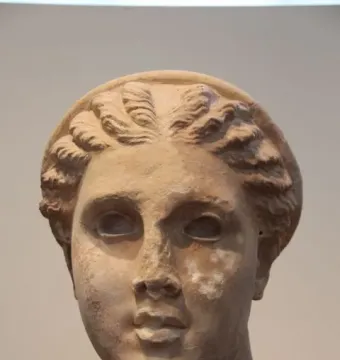
July 2016 © Gary Todd · CC0
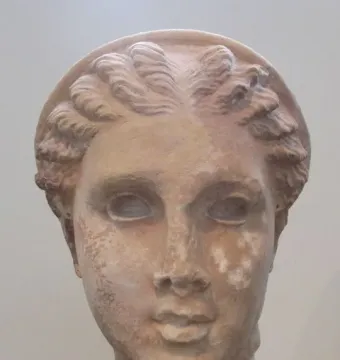
September 2010 © Tilemahos Efthimiadis · CC BY-SA 2.0
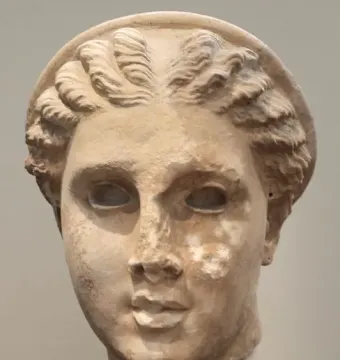
July 2023 © Francesco Bini · CC BY-SA 4.0
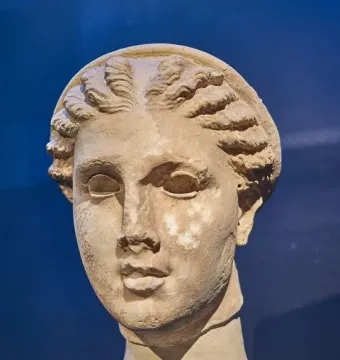
October 2021 © George E. Koronaios · CC BY-SA 4.0
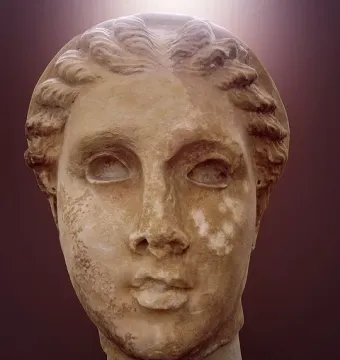
2006 © User:Tetraktys · CC BY-SA 3.0
Identification | |
| Title | Lycosoura Artemis |
| Alternative title | Artemis of Lycosura |
| Type | Colossal statue of Artemis |
| Surviving form | Bust |
Historical context | |
| Period | Hellenistic period |
Creator | |
| Attribution | Attributed to Damophon |
| Artist activity | Prominent in the Peloponnese in the early 2nd century BCE |
Discovery and provenance | |
| Discovery site | Temple of Despoina at Lycosura, present-day Arcadia, Greece |
| Discovery date | Summer 1889 |
| Excavation director | M. Cavvadias |
| Found with | Fragments of sculptures of Demeter, Despoina, Anytos, and a kore of Persephone |
| Original group context | One of the sculptures from the Temple of Despoina |
| Historical source | Pausanias documented Damophon, the temple, and its worshippers |
Physical characteristics | |
| Estimated original size | Probably 5.6 meters high and 8.4 meters wide |
| Surviving height | 48 cm |
Materials | |
| Type | Acrolith |
| Construction | Marble heads, hands, and feet with a wooden body; composite sculpture made of many materials |
Appearance | |
| Depiction | Artemis wearing a fawn skin and a quiver, with a torch in one hand and two serpents in the other |
| Hair | Melon coiffure |
| Head adornment | Wreath or crown |
| Eyes | Inlaid eyes |
| Earrings | Holes in the ears indicate earrings |
Iconography and meaning | |
| Associated deities | Artemis was worshipped with Demeter, Anytos, and Despoina |
| Related figure | Persephone as a kore |
| Interpretation | Localized chthonic cult or worship |
Location and ownership | |
| Current location | National Archaeological Museum, Athens |
| Inventory number | NAMA 1735 |
| Other finds location | A local museum in Lycosura |