
Femme d'Afrique centrale
Femme d'Afrique centrale is a work by the English sculptor Herbert Ward, kept at the Musée d'Orsay in Paris. The female bust was carved from one of Ward’s drawings made while he accompanied Henry Morton Stanley on his exploration of Central Africa. Ward also traveled along the Lohale, or Aruwimi, River in what is now the Democratic Republic of the Congo, and stayed for fourteen months at Yambuya on the riverbank. An africanist, illustrator, and explorer, Ward later published accounts of his Congo experiences, including Five years with the Congo cannibals and A voice from the Congo, which included photographs of the sculptures he made from the sketches he brought back from Africa.
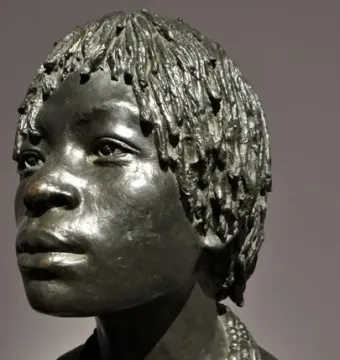
April 2019 © Ibex73 · CC BY-SA 4.0
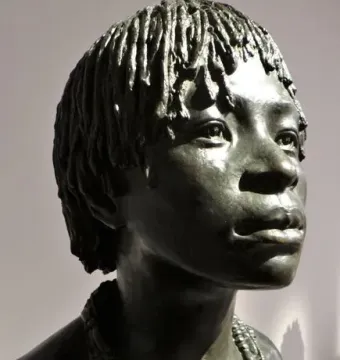
April 2019 © Ibex73 · CC BY-SA 4.0
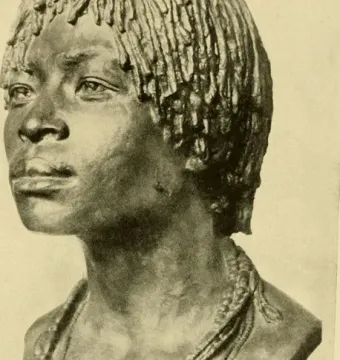
1910 © Internet Archive Book Images · No restrictions
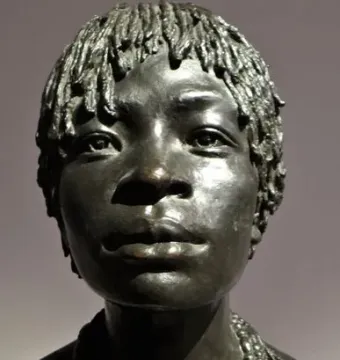
April 2019 © Ibex73 · CC BY-SA 4.0
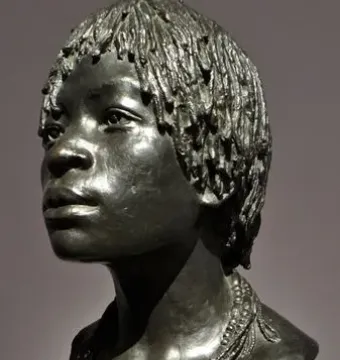
April 2019 © Ibex73 · CC BY-SA 4.0
Identification | |
| Title | Femme d'Afrique centrale |
| Alternate title | Woman of Central Africa |
| Type | Bust |
| Alternate title | La Donna dell'Africa centrale |
Creator | |
| Artist | Herbert Ward |
| Artist nationality | English |
| Artist background | English Africanist, illustrator, and explorer |
Historical context | |
| Stay at Yambuya | Ward stayed fourteen months at Yambuya on the Aruwimi |
| Related earlier publication | Five years with the Congo cannibals |
| Stanley context | Stanley was the official representative of Leopold II in the Congo and was criticized in England for his brutal behavior, earning the nickname "Bula Matari" |
| Publication | A voice from the Congo: comprising stories, anecdotes, and descriptive notes (1910) |
| Exploration location | Aruwimi (Lohale) River, present-day Democratic Republic of the Congo |
| Exploration context | Ward explored the Lower and Upper Congo for two years after meeting Stanley in London in 1884 |
| Related explorer | Henry Morton Stanley |
| Historical context | Made after one of Ward's drawings from his exploration of Central Africa with Henry Morton Stanley |
Physical characteristics | |
| Material | Bronze |
| Earlier version | A plaster version was made before the bronze bust |
| Exhibition of earlier version | Exhibited at the Salon of French Artists in 1901 |
Iconography and meaning | |
| Subject | A young Bakongo woman from Central Africa |
| Appearance | Short hair |
| Appearance | Traditional regional necklaces |
| Gaze | Looking straight ahead |
Location and ownership | |
| Current location | Musée d'Orsay, Paris |
| Earlier location in image caption | Musée du Luxembourg, Paris |
Other | |
| Related work | Un indigeno Aruwimi, another bust by Herbert Ward depicting a male subject |
| Related work exhibition location | The other bust was exhibited in the same Paris museum |