
Heracles and Nessus
Heracles and Nessus is a large sculptural work by Giambologna, the Italianized name of Jean Boulogne, a French sculptor who settled in Florence. The group measures 180 cm high, 67 cm wide, and 97 cm long. Created in the spirit of Mannerism, it is notable for the strong, almost elastic torsion of the centaur Nessus, bent under the force of Heracles. First placed in 1599 at the Carnesecchi corner in Florence, it was later moved near the south side of the Uffizi Gallery and then to the square near Ponte Vecchio, on the left bank of the Arno. Since 1812, it has been permanently located in the Loggia dei Lanzi in Piazza della Signoria.
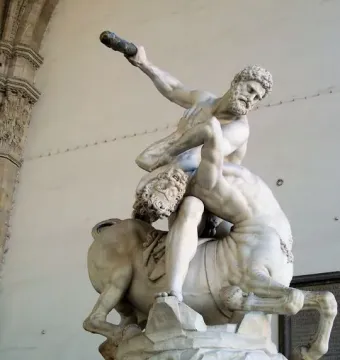
© sonofgroucho · CC BY 2.0
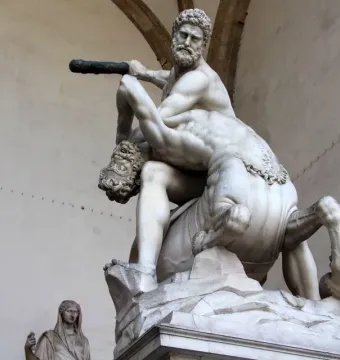
© Fred Romero · CC BY 2.0
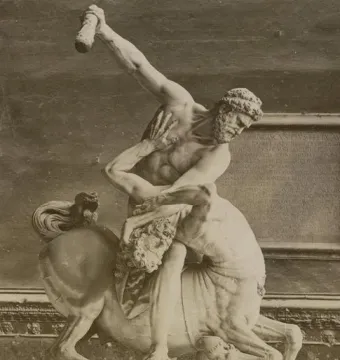
· Public domain
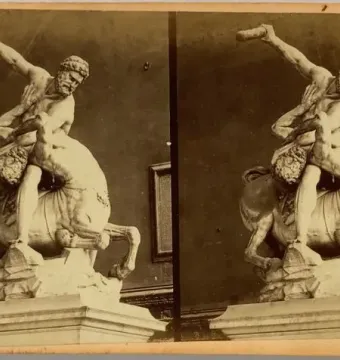
November 2024 © StereoSam · CC0
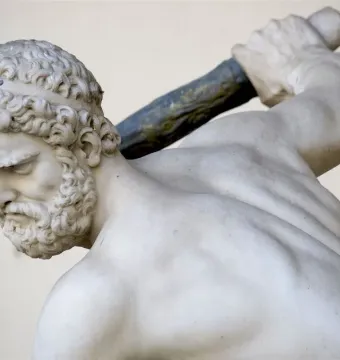
© Turquis Oana · CC BY 3.0
Identification | |
| Title | Heracles and Nessus |
| Original title | Hércules y el centauro Neso |
| French title | Hercule et le centaure Nessus |
| Type | Large sculptural group |
| Style | Mannerism |
Historical context | |
| Date of creation | 1598 |
Creator | |
| Artist | Giambologna |
| Original name | Jean Boulogne |
| Birth and death | Douai 1529 – Florence 1608 |
| Nationality | French sculptor |
| Origin | Born in Flanders; originally from the Low Countries |
| Arrival in Italy | Arrived in Rome around 1550 |
| Cultural characterization | Considered Italian in spirit and education despite his northern origins |
| Influence | Michelangelo |
Discovery and provenance | |
| Later location | Small square near the Ponte Vecchio, on the left bank of the Arno |
| Subsequent location | Under the Loggia degli Uffizi, on the south side |
| Initial installation location | Canto dei Carnesecchi, Florence |
| Initial installation date | 1599 |
Location and ownership | |
| Current location | Loggia dei Lanzi, Piazza della Signoria, Florence, Italy |
| Permanent location since | 1812 |
Physical characteristics | |
| Dimensions | 180 cm high, 67 cm wide, 97 cm long |
Materials | |
| Material | Marble |
Appearance | |
| Stylistic character | Theatrical, with great plastic force, acute decorative taste, and dynamism expressed through opposed and serpentine masses |
| Main compositional feature | Powerful, almost elastic torsion of Nessus's body |
| Depicted moment | The climactic moment of the confrontation between Heracles and Nessus |
| Nessus depiction | The centaur is bent by Heracles' force, with thick curly hair and a distressed, agonized expression |
| Heracles depiction | Heracles is shown with uncontrolled rage on his face |
Iconography and meaning | |
| Subject | Heracles and the centaur Nessus |
| Mythological background | Nessus pretended to help Deianira cross a river, tried to rape her, and was then killed by Heracles with deadly arrows |
| Mythological interpretation | An ideal transposition of the struggle between good and evil |
| Symbolism of Heracles | Symbol of supreme civic virtues and tutelary deity of Florence |
Other | |
| Relocation history | Moved several times before reaching its definitive placement in 1812 |