
Venus Unica
Venus Unica is a Roman marble sculpture conserved in the Archaeological Museum of Seville, Andalusia. It was made in Italica, the first Roman city founded in Hispania, during the reign of Emperor Hadrian. The statue draws on the artistic model of Aphrodite Anadyomene, emerging from the waters. Discovered in Santiponce in 1940 by a family, it was found semi-buried in their own house. The sculpture is in a Hellenistic style, measures 2.11 meters high, and holds a colocasia leaf in its right hand.
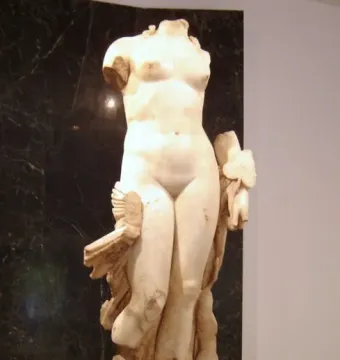
© Lobillo · Public domain
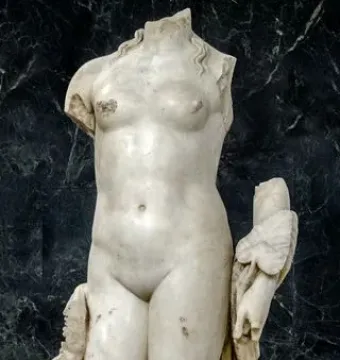
May 2015 © Ángel M. Felicísimo · CC BY-SA 2.0
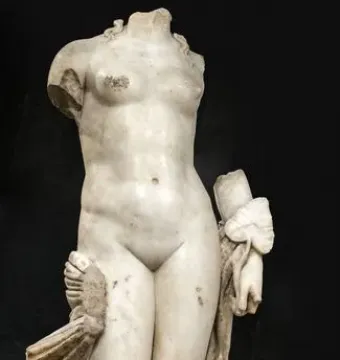
December 2015 © Ángel M. Felicísimo · CC BY 2.0
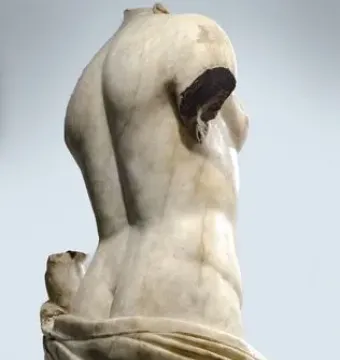
May 2015 © Ángel M. Felicísimo · CC BY-SA 2.0
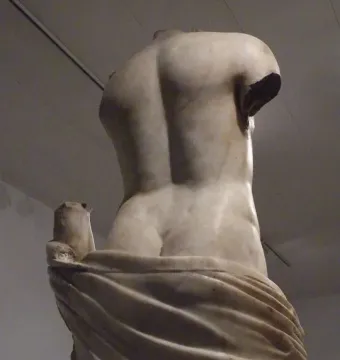
May 2011 © BauerT007 · CC BY 3.0
Identification | |
| Title | Venus Unica (Museo Arqueológico de Sevilla) |
| Alternative name | Venus of Itálica |
| Type | Roman sculpture |
Historical context | |
| Date | 2nd century, during the reign of Hadrian (117–138) |
Creator | |
| Artistic model | Aphrodite Anadyomene |
Discovery and provenance | |
| Anecdotal use after discovery | For many years only one shoulder was exposed, and the family used it to crack walnuts without knowing what was hidden just a few centimeters below |
| Discovery date | 1940 |
| Discovery context | found semi-buried in a family’s own house |
| Discovery location | Santiponce |
| Modern location of Italica | Santiponce, Province of Seville, Andalusia, Spain |
| Foundation date of Italica | 206 BC |
| Origin | Italica, the first Roman city founded in Hispania |
Physical characteristics | |
| Height | 2.11 meters |
Materials | |
| Material | marble |
Appearance | |
| Depicted subject | The goddess emerges from the waters |
| Attribute | holds a colocasia leaf in her right hand |
Style | |
| Style | Hellenistic |
Location and ownership | |
| Current location | Archaeological Museum of Seville, Andalusia |