
Liberty Statue
The Liberty Statue in Budapest stands on Gellért Hill in front of the Citadel in Buda. It is the largest of three bronze statues by sculptor Zsigmond Kisfaludi Strobl, erected in 1947 to honor soldiers who liberated the country during World War II. The 14-meter-high figure, together with its pedestal, rises to about 40 meters and is visible from almost anywhere in Budapest. It depicts a woman holding a palm frond aloft. A Hungarian nurse posed as the model. The statue became a national symbol and is also shown on a former 10-forint coin and on an air-mail stamp.
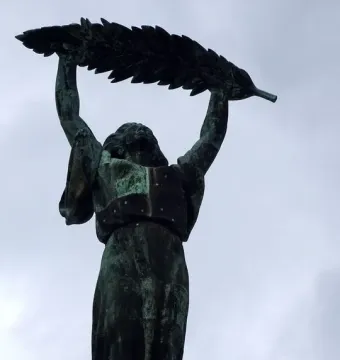
© VillageHero · CC BY-SA 2.0
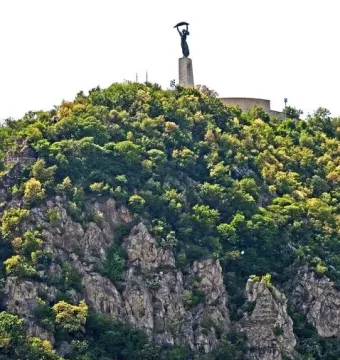
© Dennis G. Jarvis · CC BY-SA 2.0
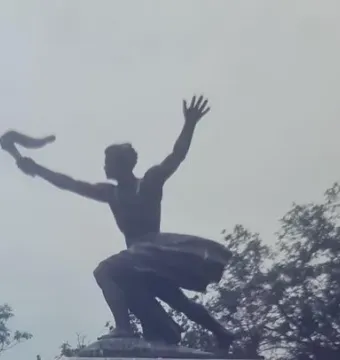
May 2023 © Avisadehh · CC BY-SA 4.0
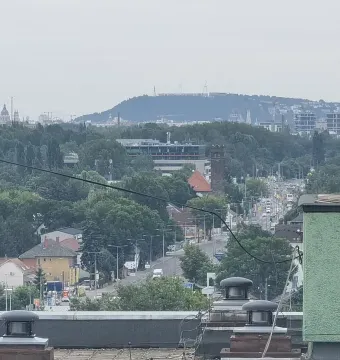
June 2023 © Random photos 1989 · CC BY-SA 4.0
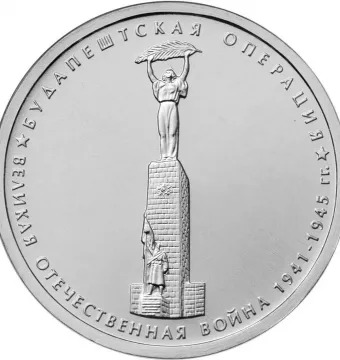
November 2014 © Банк России · Public domain
Identification | |
| Title | Liberty Statue |
| Type | Monument |
| Other names | Szabadság szobor; Szabadság Szobor; Статуя свободы; Monumento alla Liberazione; Liberty Statue of Budapest; Freedom Statue |
Historical context | |
| Date erected | 1947 |
| Commemorates | The liberation of Budapest and Hungary by the Red Army in World War II; after 1989, the inscription was changed to commemorate all who sacrificed their lives for Hungary's independence, freedom, and prosperity |
| Historical interpretation at construction | At the time of construction, the defeat of the Axis forces by the Red Army was officially regarded as liberation |
Creator | |
| Sculptor | Zsigmond Kisfaludi Strobl |
Discovery and provenance | |
| Model | A Hungarian nurse |
| Original design purpose | According to Zsigmond Kisfaludi Strobl, the design was originally intended for the memorial of István Horthy and would have featured a child instead of the palm leaf |
| Original design variation | A legend says the statue originally held an airplane propeller, said to commemorate Miklós Horthy's son, who died in a test-flight accident at the start of World War II |
Physical characteristics | |
| Total height | About 40 metres |
| Number of statues | Three |
| Figure depicted | A female figure |
| Pedestal height | 26 metres |
| Height of main figure | 14 metres |
Materials | |
| Material | Bronze |
Appearance | |
| Held object | A palm branch |
| Other group figures | A dragon slayer fighting a dragon with bare fists; a figure carrying a torch symbolizing the flame of liberty |
Location and ownership | |
| Current location of removed sculptures | Memento Park |
| Current location of former pedestal figure | Memento Park |
| Location | Gellért Hill, Budapest, Hungary, at the east end of the Citadel in the Buda district |
| Original companion sculpture | A 6-metre bronze Soviet soldier with a PPSh-41 submachine gun and a banner, based on a prototype by V. M. Golovtsov |
| Visibility | Placed so it can be seen from almost anywhere in Budapest |
History and restoration | |
| Original inscription | "In memory of the Soviet hero-liberators from the grateful Hungarian people. 1945" |
| Current inscription | "In memory of all those who sacrificed their lives for the independence, freedom and prosperity of Hungary." |
| Inscription language at construction | Hungarian and Russian |
| Inscription language after 1989 | Hungarian only |
| Damage history | Some parts of the monument were damaged during the 1956 revolution |
| Original companion sculpture removed | Removed in 1992 |
| Inscription changed | After Hungary's transition to democracy in 1989, the pedestal inscription was modified and the Russian-language version was removed |
| Future renovation note | After a 2025 renovation, a Christian cross will be placed at the base of the statue |
Significance | |
| Prominence | A distinctive and prominent feature of Budapest's cityscape |
| Depicted on currency | Featured on the 10-forint coin series valid until 1990 and during the 1980s and 1990s |
| Depicted on stamp | Shown on an airmail stamp issued on 29 October 1950 |
| Television usage | Used by Hungarian television (MTV) during the communist era as the image representing Hungary in the Hungarian Intervision opening sequence |
Other | |
| Annual holiday use | Fireworks are launched from the square in front of the statue every year on 20 August for the national holiday |