
Victory Column
The Victory Column is a monument in Berlin, Germany, designed by Heinrich Strack after 1864 to commemorate the Prussian victory over Denmark in the Second Schleswig War. By the time it was inaugurated on 2 September 1873, Prussia had also defeated Austria and its German allies, as well as France, which gave the monument a broader meaning. Its current form includes a bronze sculpture of Victoria, the Roman goddess of victory, designed by Friedrich Drake, and the column stands 67 m high. Berliners also call it Goldelse. Today, the Victory Column is a major tourist attraction, and its viewing platform offers a view over Berlin.
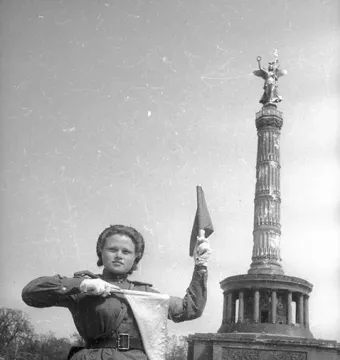
1945 © Yevgeny Khaldei · Public domain
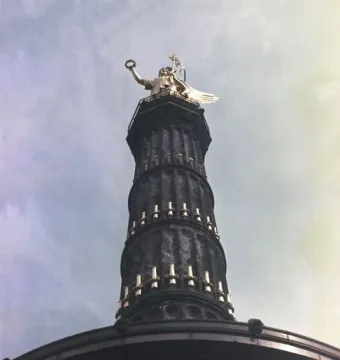
June 1990 © Falk2 · CC BY-SA 4.0
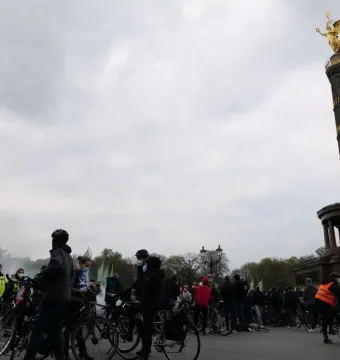
May 2021 © Leonhard Lenz · CC0
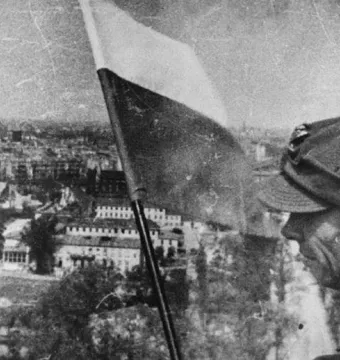
May 1945 © Polish Army · Public domain
September 2022 © Babewyn · CC BY-SA 4.0
Identification | |
| Title | Siegessäule |
| Type | triumphal column / monument |
| Common English name | Victory Column |
| Alternative names | Colonne de la Victoire; Obelisco da Vitória |
| Name meaning | from Sieg meaning "victory" and Säule meaning "column" |
Historical context | |
| Construction period | 1864–1873 |
| Design date | after 1864 |
| Commemorated events | Prussia's victories over Denmark in 1864, Austria in 1866, and France in 1870–1871 |
| Original commemorative purpose | to commemorate Prussia's victory over Denmark in the Second Schleswig War |
| Later meaning | also symbolized the rise of the German Empire and the Prussian victories of the wars of unification |
Creator | |
| Designer | Heinrich Strack |
| Sculptor of Victoria | Friedrich Drake |
| Architectural influence | Karl Friedrich Schinkel |
Discovery and provenance | |
| Relocation date | 1938–1939 |
| Relocation note | moved by the Nazis; the column's height was increased by one drum during relocation |
| Original location | Königsplatz, Berlin, facing the Reichstag palace |
| Commissioned by | William I |
| Current location | Großer Stern in the Großer Tiergarten, Berlin, Germany |
Physical characteristics | |
| Height | 66.89 m including the statue |
| Crowning sculpture height | 8.3 m |
| Crowning sculpture weight | 35 tons |
| Staircase | 285-step internal spiral staircase |
| Viewing platform height | 50.66 m above ground |
Materials | |
| Base material | polished red granite |
| Column material | Obernkirchen sandstone |
| Crowning sculpture material | bronze, gilded |
| Pedestal relief material | bronze |
| Decorative elements | 60 gilded captured cannon barrels |
| Mosaic material | glass wall mosaic |
Technique | |
| Mosaic maker | Antonio Salviati after a cartoon by Anton von Werner |
Appearance | |
| Column decoration | the lower three drums contain 60 gilded cannon barrels; after relocation the freed flutings of the uppermost drum received gilded laurel festoons |
| Structure | pedestal with four tapering column drums and a circular colonnaded hall |
| Crowning figure | bronze figure of Victoria with a laurel wreath in her right hand, a military standard with the Iron Cross in her left, and an eagle-winged helmet |
| Pedestal decoration | four bronze reliefs showing battles and the entry of troops into Berlin |
Iconography and meaning | |
| Mosaic subject | the founding of the German Empire as a consequence of victory over France |
| Crowning figure identity | Victoria, the Roman goddess of victory, also identifiable as Nike and, with the eagle helmet, Borussia |
| Crowning figure model | Victoria of the United Kingdom and Ireland, then crown princess in Prussia |
| Relief subjects | Battle of Düppel (1864), Battle of Königgrätz (1866), Battle of Sedan (1870), and the victorious entry of the troops into Berlin (1871) |
Location and ownership | |
| Setting | center of the Großer Stern roundabout in the Großer Tiergarten park, Berlin |
| Associated avenue | Straße des 17. Juni |
| Access | reachable via T-shaped pedestrian tunnels and four neoclassical gatehouses north and south of Straße des 17. Juni |
| Viewing platform access | ticket required |
| Viewing platform view | Berlin, including the Great Tiergarten, Potsdamer Platz, and the Brandenburg Gate |
| Museum | small museum in the pedestal about the monument's changing history |
History and restoration | |
| Restoration | upper sculpture restored in 1954, 1989, and 2011; large-scale reconstruction took place from March 2010 to May 2011 |
| Transfer significance | the 1938–1939 relocation probably saved the monument from destruction at the end of the war |
| Demolition plans | after World War II, the Allies debated demolition; the French demanded it, but the British and Americans rejected this and the Soviets abstained |
| Attack | attempted bombing by the Revolutionary Cells on 15 January 1991 damaged one support of the bronze Victoria |
| Original orientation | Victoria faced south toward Siegesallee at Königsplatz |
| Postwar relief history | three reliefs were removed in 1945 by the French occupation authorities, later found in Paris, and returned after restoration in 1987; the fourth relief had been kept in Spandau Citadel |
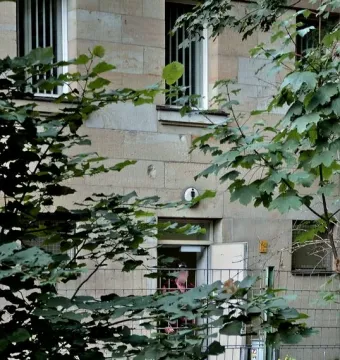
| World War II damage | survived the bombings and storming of Berlin with little damage; several bullet holes remain on the walls |
| Current orientation | Victoria faces west toward Ernst-Reuter-Platz since the 1939 relocation |
| Inauguration occasion | Sedan Day, the third anniversary of the Battle of Sedan |
| Inauguration date | 2 September 1873 |
Significance | |
| Nickname | Goldelse |
| Nickname meaning | something like "Golden Lizzy" |
| Nickname origin | from its gilding and E. Marlitt's 1866 novel Goldelse |
| Tourist status | major tourist attraction in Berlin |
| Protection status | protected as a historic monument (Denkmalschutz) |
| Historical significance | one of the most important national monuments in Germany and one of Berlin's most important sights |