
Arles Bust
The Arles Bust is a life-size marble bust of a man discovered in 2007 in the Rhône near Arles by divers from the French Department of Underwater Archaeological Research. Its discoverers suggested it could be a portrait of Julius Caesar and possibly contemporary with him, a claim that was widely reported by the press and French cultural authorities. However, specialists later questioned both the identity of the figure and the dating of the object. The bust was displayed for a time at the Louvre and is now part of the collection of the Musée de l’Arles antique.
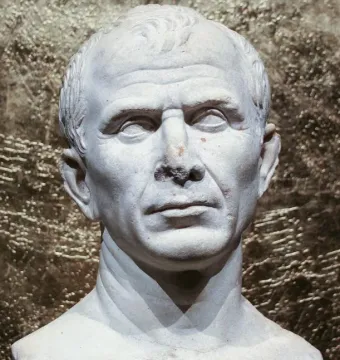
2009 © Mcleclat · CC BY-SA 3.0
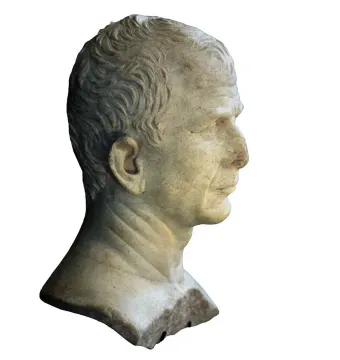
© Rama · Public domain
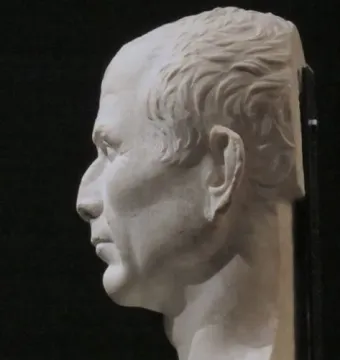
May 2010 © ho visto nina volare · CC BY-SA 2.0
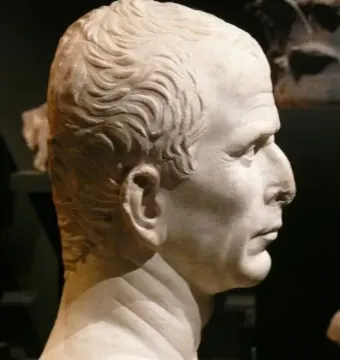
January 2010 © Finoskov · CC BY-SA 3.0
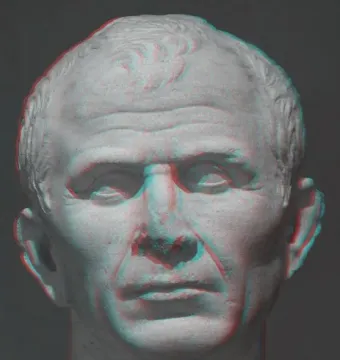
March 2014 © David ROMEUF · CC BY-SA 3.0
Identification | |
| Title | Arles bust |
| Object type | Bust |
| Subject | An unidentified man; possibly Julius Caesar |
| Alternative names | Rhone portrait; Arles portrait; Rhone bust |
Historical context | |
| Date | Disputed: around the 1st century BC; proposed by discoverers as about 46 BC; alternatively Augustan period; some argue no earlier than the 3rd century AD terminus post quem for deposition |
| Historical context | Found in the Rhône River at Arles during an underwater archaeological campaign in 2007 |
Creator | |
| Discoverers | Divers from the French Department of Underwater and Submarine Archaeological Research (DRASSM) |
Discovery and provenance | |
| Discovery date | September–October 2007 |
| Discovery location | The Rhône River near Arles, southern France |
| Discovery context | Discovered during an underwater archaeological campaign |
| Associated finds | Smaller statues of Marsyas in Hellenistic style and a life-size marble sculpture of Neptune |
| Interpretation of disposal | The discoverers suggested it was discreetly discarded after Caesar's assassination in 44 BC because portraits of him could have been politically dangerous; this hypothesis was disputed by later scholars |
Physical characteristics | |
| Support | Herm |
| Size | Life-size; later described as a little larger than life-size |
| Appearance | Realistic portrait of a middle-aged man with a slightly receding hairline at the temples, a long neck with pronounced "Venus rings," and the lower edge shaped for placement on an herm; shown without the toga and conventionally considered a heroic nude form |
Materials | |
| Material | Marble |
Technique | |
| Style | Highly realistic; linked to the late Republican Roman tradition of portrait and genre sculpture of the 1st century BC |
Iconography and meaning | |
| Symbolic meaning | Its nudity is interpreted as metaphorically expressing a distinction that is "more than human" |
| Identification debate | The identity of the figure remains controversial; some scholars accept it as Julius Caesar, while others reject that identification and suggest a local notable modeled on Caesar |
| Comparative evidence | Critics noted a lack of resemblance to Caesar portraits on late coinage and to the Tusculum bust; supporters pointed to similarities with coin portraits such as wrinkles in the neck and a prominent Adam's apple |
Location and ownership | |
| Museum history | Exhibited for a time at the Louvre Museum and displayed in an exhibition in Arles |
| Current location | Musée de l'Arles antique |
History and restoration | |
| Scholarly assessment | Specialists later widely reconsidered the identification and dating; the debate remains open and ongoing among archaeologists and art historians |
Significance | |
| Historical significance | If identified as Caesar, it would be the oldest known representation of him; even if not Caesar, it remains an important find for what it suggests about local elites' attachment to Caesar |
Other | |
| Media attention | The discovery received widespread press coverage, major media attention, and was featured in documentaries and on French postage stamps |