
The Implorer
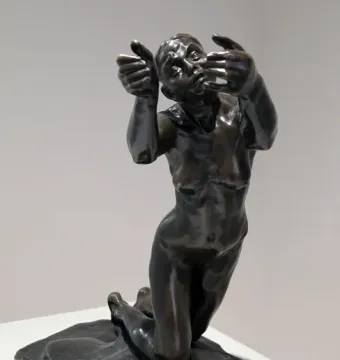
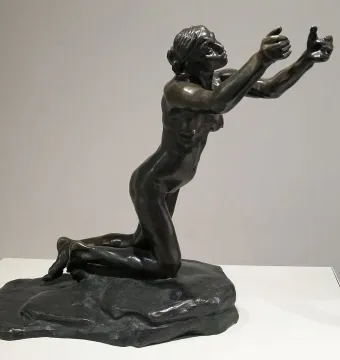
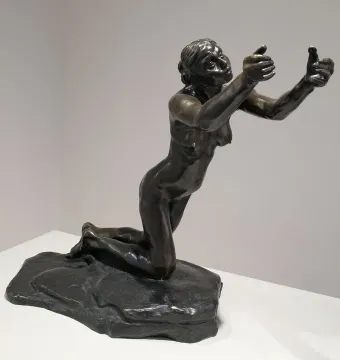
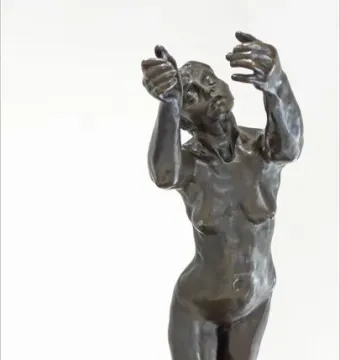
The Implorer is a sculpture by the French artist Camille Claudel, created in 1899 and cast in bronze in 1907. Originally linked to the sculptural group The Age of Maturity, it was later acquired by Captain Tissier. The work’s history is closely connected to Claudel’s dealings with patrons and dealers, including Eugène Blot, who helped secure permission for the bronze casting in 1907. The source text also notes Auguste Rodin’s reaction to the work, seeing in it his abandoned lover and attempting to prevent state support for the casting. Paul Claudel described the figure as his sister Camille: nude, kneeling, imploring, and humiliated.
September 2019 © Vassil · CC0
September 2019 © Vassil · CC0
September 2019 © Vassil · CC0
August 2018 © Jean-Pierre Dalbéra · CC BY 2.0
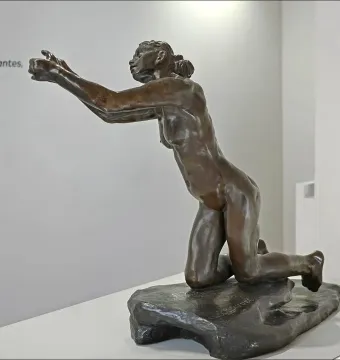
August 2018 © Jean-Pierre Dalbéra · CC BY 2.0
Identification | |
| Title | The Implorer |
| Alternative titles | L'Implorante; La Suppliante; Le Dieu envolé |
Creator | |
| Artist | Camille Claudel |
Historical context | |
| Date of creation | 1892–1905 |
| Early studies | Terracotta and plaster studies from 1892 to 1894, with a polychrome plaster study in 1895 |
| First bronze version | 1894 |
| Later bronze casts | 1904–1905; 1910 |
| Presented at | 1894 Salon |
| Context of creation | Begun after Camille Claudel left Auguste Rodin in 1892, as a work shaped by her sense of abandonment |
| Relation to related group work | Main figure of L'Âge mûr; later incorporated into the group |
| Commission and provenance | After Captain Tissier acquired the work in June 1899, a bronze cast was made for him because he wanted to buy L'Âge mûr; Eugène Blot later arranged limited editions |
| Related group work | L'Âge mûr (The Age of Maturity) |
Discovery and provenance | |
| Acquired by | Captain Tissier |
| Date acquired by Captain Tissier | June 1899 |
| Related dealer or patron | Eugène Blot |
| State authorization for casting | Eugène Blot intervened with Dujardin-Beaumetz on 3 April 1907 to authorize removal of the model from the marble depot for casting; permission was granted on 16 April 1907 |
Physical characteristics | |
| Composition development | The figure was later lengthened and made to lean further forward |
| Body details | The curved back is emphasized, and in some versions the torso alone is shown with hands on the heart |
| Subject | A young nude woman kneeling or advancing on her knees, with arms stretched forward in supplication |
| Pose and expression | Nude, kneeling, leaning forward, with a pleading gesture and an expression of pain, despair, and humiliation |
| Depicted figure | A symbolic self-portrait of Camille Claudel |
| Type | Sculpture; autobiographical sculpture; part of a larger group composition |
Materials | |
| Materials | Terracotta, plaster, polychrome plaster, and bronze |
| Original medium | Plaster model |
| Bronze casting | Bronze versions were cast from the model |
Appearance | |
| Early title and appearance | Early versions were shown isolated, pleading into the void |
Iconography and meaning | |
| Interpretation | A female figure expressing supplication, abandonment, and Claudel's own pain after her breakup with Rodin |
| Related figures evoked | Auguste Rodin; Rose Beuret |
| Related interpretations | Rodin reportedly saw the work as his lover shattered by abandonment; Paul Claudel described it as his sister Camille imploring, humiliated, kneeling, and nude, embodying her soul and identity |
| Alternative early title | Le Dieu envolé |
| Self-representation | Claudel represented herself in the work; some interpretations also note a young-woman body with signs of recent childbirth |
Location and ownership | |
| Examples in collections | Metropolitan Museum of Art, Musée Camille Claudel in Nogent-sur-Seine, and Musée Rodin in Paris |
History and restoration | |
| Casting and editions | A separate cast was made in 1899 for Captain Tissier for practical and financial reasons; additional casts were made by Eugène Blot in 1904–1905 and by Lebossé in 1910 |
Significance | |
| Related note | The work is closely tied to Claudel's breakup with Rodin and to the development of L'Âge mûr |