
California
California is a mid-19th-century marble sculpture by the American sculptor Hiram Powers. The statue is an allegory of California’s wealth and danger, created in response to the ongoing California Gold Rush. Powers began working on it in 1850 and had completed a plaster model by 1855; the carving was finished in 1858. Although it was originally intended for Sutter’s Mill, the sculpture was ultimately finished for New York businessman William Backhouse Astor Sr. In 1872, Astor donated it to the newly established Metropolitan Museum of Art in New York, where it became the first sculpture by an American artist in the museum’s collection.
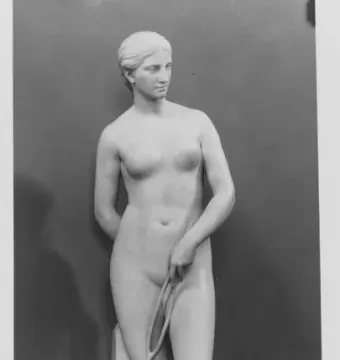
© Hiram Powers · CC0
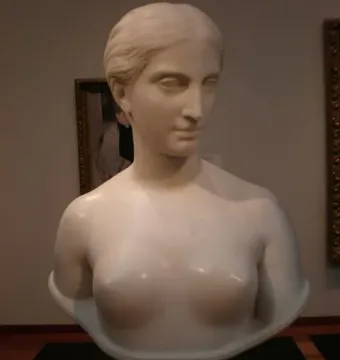
January 2009 © BrokenSphere · CC BY-SA 3.0
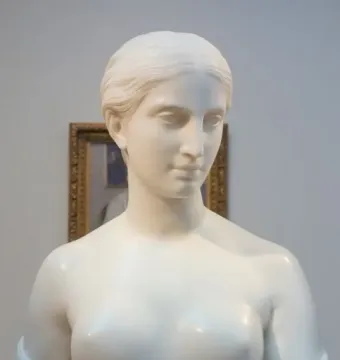
November 2013 © Daderot · CC0
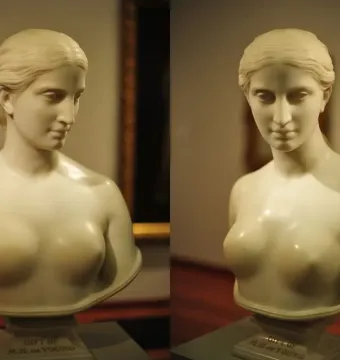
March 2012 © Chris Hunkeler · CC BY-SA 2.0
January 2009 © BrokenSphere · CC BY-SA 3.0
Identification | |
| Title | California |
| Type | Sculpture |
Historical context | |
| Date created | 1858 |
| Period | Mid-19th century |
| Associated event | California Gold Rush |
| Artistic style | Neoclassical |
| Artistic convention | Female nude sculptures used as allegories of places were a predominant mid-19th-century artistic trend |
| Work begun | 1850 |
| Plaster model completed | 1855 |
| Carving completed | 1858 |
Creator | |
| Artist | Hiram Powers |
| Artist nationality | American |
| Related work | The Greek Slave |
Discovery and provenance | |
| Donated in | 1872 |
| Donated to | Metropolitan Museum of Art, New York |
| Reason for original location | The site where gold flakes were found in early 1848, which sparked the California Gold Rush |
| Completion circumstances | Finished on commission for William Backhouse Astor Sr. rather than being sent to California as originally planned |
| Original intended location | Sutter's Mill, California |
| Commissioned by | William Backhouse Astor Sr. |
Location and ownership | |
| Current location | Metropolitan Museum of Art, New York City |
| Display status | Currently exhibited at the Metropolitan Museum of Art in New York |
| Museum significance | First sculpture by an American artist to enter the Metropolitan Museum of Art's collection |
Physical characteristics | |
| Subject | An allegory of California and the California Gold Rush |
| Depicted figure | A young woman |
| Pose and composition | The figure stands upright, completely nude, holding a divining rod crossed in front of her body in her left hand and a thorn-covered branch in her right hand; a quartz column stands behind her to the back-right |
| Material | Marble |
| Secondary material depicted | Quartz |
| Divining rod symbolism | A tool purportedly able to detect gold deposits |
| Symbolism of held objects | They represent the apparent opportunity and hidden dangers of pursuing California |
| Quartz symbolism | It symbolizes California's mineral wealth, especially the association of gold with quartz deposits |
Significance | |
| Artist's status | Powers was already famous for The Greek Slave |