
Sphinx of Memphis
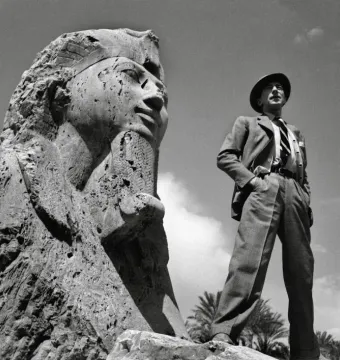
The Sphinx of Memphis, also known as the Alabaster Sphinx, is a stone sphinx near the remains of Memphis, Egypt. It was likely carved between 1700 and 1400 BCE during the 18th Dynasty, but no inscriptions identify the pharaoh it honors. Based on its facial features, it has been associated with Hatshepsut, Amenhotep II, or Amenhotep III. Measuring 8 m long and 4 m high, it is smaller than the Great Sphinx of Giza but still one of the largest Egyptian alabaster monuments. The sculpture weighs around 90 tons and sits on a foundation that makes it appear to rise from the sand. Its striations on the left side are a particularly unusual feature.
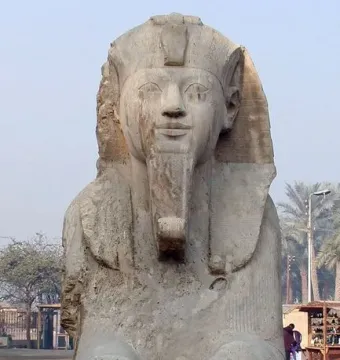
· CC BY-SA 2.5
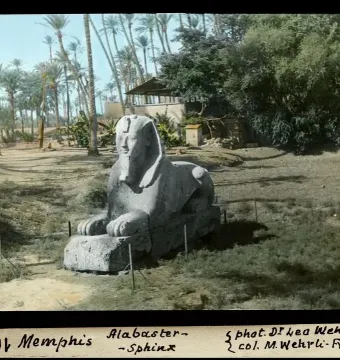
© Leo Wehrli · CC BY-SA 4.0
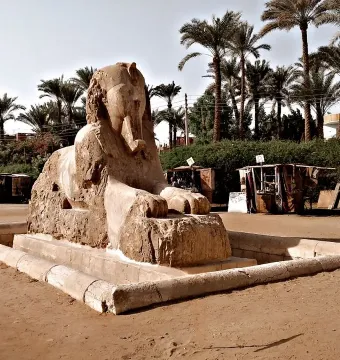
September 2025 © Bilal Detailz · CC BY-SA 4.0
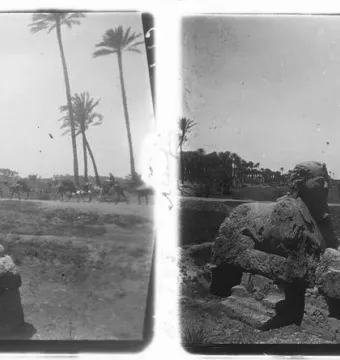
© Josep Salvany i Blanch · Public domain
February 2012 © Yani papadimos · CC BY-SA 3.0
Identification | |
| Name | Sphinx of Memphis |
| Alternative name | Alabaster Sphinx |
| Original Polish name | Sfinks z Memfis |
| Type | sphinx statue |
Historical context | |
| Date | approximately 1700–1400 BCE |
| Period | New Kingdom of Egypt, probably the 18th Dynasty |
| Memphis status | Capital of Ancient Egypt and of the First Nome of Lower Egypt |
Creator | |
| Depicted figure | Unknown; proposed identifications are Hatshepsut, Amenhotep II, or Amenhotep III |
| Basis for identification | Facial features; no inscriptions survive |
Discovery and provenance | |
| Discovery year | 1912 |
| Discoverer | William Flinders Petrie |
| Associated institution | British School in America |
| Discovery context | Found jutting out of a sand hill, with only part of the object visible above the sand |
| Follow-up excavation | In 1913 further digging identified the visible part as a sphinx's tail; excavation in 1912 was not pursued further because it was too late in the season |
Physical characteristics | |
| Visible surface features | Striations on the left side, uncommon on Egyptian monuments |
| Relative size | Considerably smaller than the Great Sphinx of Giza |
| Dimensions | 8 m long and 4 m high |
| Weight | Approximately 90 tons |
Materials | |
| Material | Egyptian alabaster, possibly calcite |
| Material properties | Yellowish white, soft stone |
Appearance | |
| Description | Carved sculpture in the form of a sphinx |
| Support | Supported by a foundation that makes it appear to rise out of the sand |
Iconography and meaning | |
| Symbolic association | Believed to have a mystical connection to the Sun |
| Cultural view | Considered beautiful in ancient Egypt |
Location and ownership | |
| Original location | South side of the Great Temple of Ptah in Memphis, next to a colossus of Ramesses II |
| Associated temple | Great Temple of Ptah |
| Associated deity | Ptah |
| Temple deity role | Creator god and master builder; inventor of masonry; patron of architects and craftsmen; associated with healing power |
| Geographic context | Memphis, south of the Nile Delta, in the region between Lower and Upper Egypt |
History and restoration | |
| Survival | One of the few masterpieces to survive the ravaging and pillaging of Memphite temples |
Significance | |
| Notability | One of the largest monuments ever made from Egyptian alabaster |