
Homunculus Loxodontus
Homunculus Loxodontus is a sculpture by Dutch artist Margriet van Breevoort, created for the Leiden University Medical Center and installed in spring 2016. Made of plastic and epoxy resin, it depicts a gray, legless creature with an elephant-seal head, a larval body, and human-like arms folded in front of it. The figure sits in a waiting-room chair and was intended to express the emotions people feel while waiting for a medical diagnosis. It was first placed in front of the hospital’s children’s department in May 2016, then moved in February 2017 to display alongside other works inside the medical center. The sculpture became widely popular as an internet meme in several post-Soviet countries.
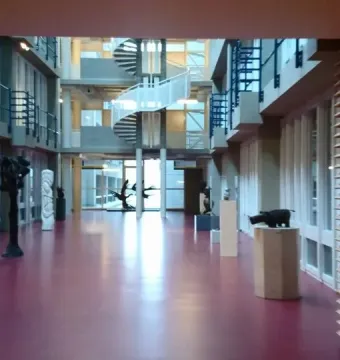
February 2017 © Zlelik2000 · CC BY-SA 4.0
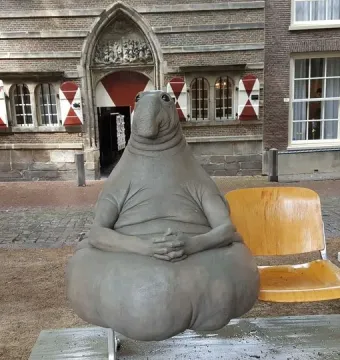
June 2016 © Bic · CC BY-SA 4.0
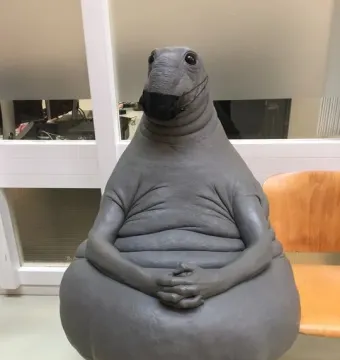
March 2021 © Vysotsky · CC BY-SA 4.0
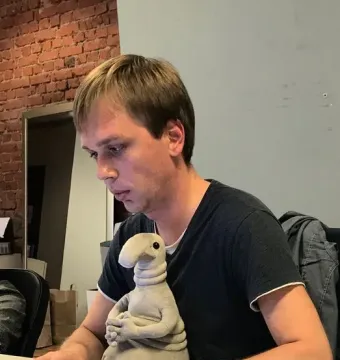
June 2019 © Taisia Bekbulatova · CC BY 4.0
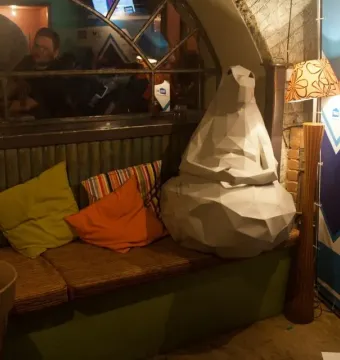
February 2017 © Dmitry Rozhkov · CC BY-SA 4.0
Identification | |
| Title | Homunculus Loxodontus |
| Type | Sculpture |
| Alternative names | Zhdun; The One Who Waits; Snorp; WOSH; Pochekun; Zhдун; Počekun; Pačakun |
Creator | |
| Artist | Margriet van Breevoort |
| Artist nationality | Dutch |
Historical context | |
| Commissioned for | An annual art competition organized by the Leiden Sculpture Foundation, with the theme of biological sciences |
| Grant recipient | Margriet van Breevoort received a grant from Leiden University Medical Center to create the sculpture |
| Competition year | 2016 |
| Installation date | Spring 2016; originally installed in May 2016 |
| Popularity | Became popular as an internet meme in Eastern Europe and post-Soviet countries, especially Russia and Ukraine |
| Meme origin | A photograph posted on Pikabu in January 2017 |
Discovery and provenance | |
| Court case | On 28 August 2018, CD Land won 8.6 million rubles from MegaFon for unauthorized use of the Zhdun image |
| Media rights | CD Land bought the Russian media rights for five years starting in 2017 |
| Rights acquisition date | July 2017 |
| Rights holder | Russian company CD Land |
| Meaning of local name | An informal Russian term meaning "the one who waits" |
| Local name | Ждун |
| Russian, Ukrainian, and Belarusian names | Russian: Ždun; Ukrainian: Počekun; Belarusian: Pačakun; all mean "the one who waits" |
Physical characteristics | |
| Depicted figure | A gray, legless creature with the head of a northern elephant seal, a larval body, human arms clasped in front, and one finger missing on each hand |
| Pose | Seated on a waiting-room chair |
| Color | Gray |
Materials | |
| Material | Plastic and epoxy resin |
| Material properties | When mixed, the materials form a clay-like substance that is hard and rough to the touch |
Appearance | |
| Description by the artist | A terrifying and unusual mix of a human with a northern sea elephant and a huge insect larva, without legs, but with human arms and many folds |
Iconography and meaning | |
| Intended mood | Humorous, cute, and huggable |
| Artist's description of the character | A failed experiment that waits and hopes to become better; a big cute lump of flesh that one wants to hug |
| Artist's approach | Brevoort avoided depicting the dark side of medicine or disease and focused on ordinary patients waiting for a diagnosis |
| Interpretation by the sculptor | Represents the emotions people feel while waiting in a medical office |
| Intended message | Patients should wait calmly for a diagnosis with hope for the best |
| Subject | Patients waiting for a doctor and a diagnosis |
| Dedication | Dedicated to patients who wait a long time for a doctor’s appointment |
Location and ownership | |
| Original location | In front of the children's hospital at Leiden University Medical Center in Leiden |
| Later location | Exhibited inside Leiden University Medical Center, alongside other artworks in a hall with more than ten other sculptures |
| Location on 19 February 2017 | At the entrance to Leiden University Medical Center |
| Location on 13 August 2019 | Inside Leiden University Medical Center again |
| Copy location | Chita, at the retro site of the House of Officers Park |
| Another copy location | Top of the Russian mountain resort Rosa Khutor in the Adler District of Sochi, Krasnodar Krai |
History and restoration | |
| Temporary modification | A face mask was added across the nose in 2021 due to COVID-19, and later removed |
Significance | |
| 2017 media recognition | Mir Fantastiki called Zhdun the main meme of 2017 |
| Literary use | The figure first appeared in Russian literature in 2017 in the gestalt novel Ultranormality by Nathan Dubovitsky, and was later used by many authors in prose and poetry as a meme |
| Film adaptation | A family comedy titled Zhdun / Snorp: My Alien Friend was released in Russia in March 2025; a sequel titled Zhdun 2 / Snorp: My Alien Friend 2 was announced for 30 April 2026 |
| Media adaptations | It was edited into paintings, photographs, videos, and other visual media; it also appeared on the cover of Balthazar's 2021 album Sand |
| Merchandising | Toys, figurines, beanbag chairs, and large sculptures in the character’s form began to be sold after Zhdun became popular online, including as gifts for Valentine’s Day, Defender of the Fatherland Day, and International Women’s Day |
| Pop culture impact | Igromania wrote about the character’s influence on pop culture and video-game audiences |
| Political interpretation in Ukraine | Ukrainian MP Boryslav Bereza brought a figure of Zhdun to the Verkhovna Rada on 24 February 2017 and called it a symbol of the expectations of Ukrainian society |
| Le Monde interpretation | Isabelle Mandrau associated its popularity with memories of Soviet times and failures of Russian reforms |
| Dutch media interpretation | A Dutch publication linked its popularity in Russia to bureaucratic powerlessness and the importance of endless waiting in everyday life |
| Sociological interpretation | Alexey Roshchin said the image reflects hidden dissatisfaction and social impoverishment, both intellectual and spiritual |
| Political interpretation in Russia | Dmitry Travin called Zhdun a national symbol of Russia, interpreting it as a sad, lazy, sluggish but charming and optimistic figure waiting for change |
| Meme meaning | Seen as a symbol of waiting, patience, stagnation, and passive expectation of change |
| Recognition | Named the most photographed attraction in Leiden in 2016 |
Other | |
| Associated national context | Discussed in the context of Russian and Ukrainian society, internet culture, bureaucracy, and political expectations |