
Fountain of King Matthias
Fountain of King Matthias is a monumental neo-Baroque fountain at Buda Castle in Budapest. Designed by sculptor Alajos Stróbl, it was built between 1899 and 1904 and inaugurated in the presence of the king. The sculpture is one of the city’s most photographed monuments. Its sculptural group tells the story of Szep Ilonka, a poor girl who fell in love with a man named Mattia, not knowing he was King Matthias Corvinus. When she learned his true identity and felt unworthy of him, she died of a broken heart. Though smaller in scale, the fountain has some architectural and scenic similarities to Rome’s Trevi Fountain.
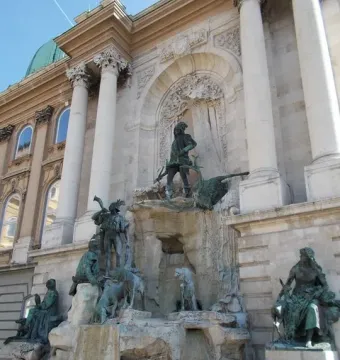
2015 © Globetrotter19 · CC BY-SA 4.0
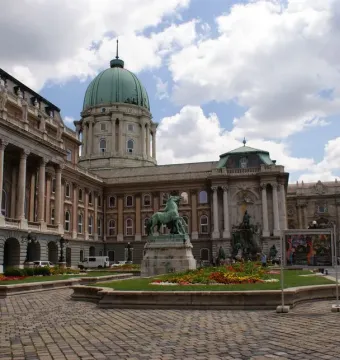
© Saba26 · CC BY-SA 3.0
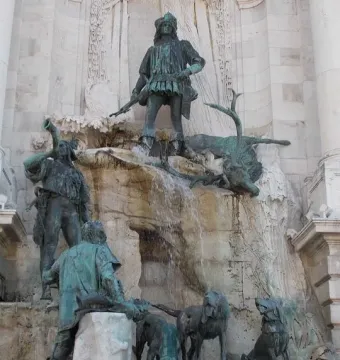
2015 © Globetrotter19 · CC BY-SA 3.0
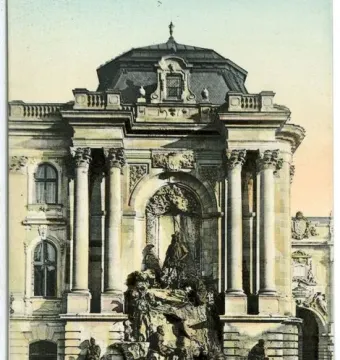
1905 © Brück & Sohn Kunstverlag Meißen · CC0
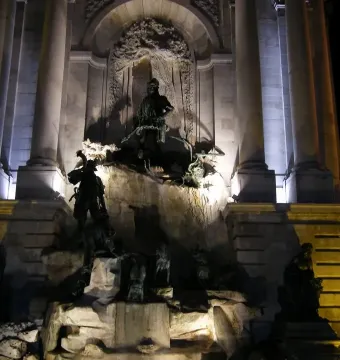
July 2011 © Mykee78 · CC BY-SA 2.5 hu
Identification | |
| Title | Fountain of King Matthias |
| Other names | Mátyás kútja; Matthias Fountain; La Fontana o Pozzo di Mattia; Trevi Fountain of Budapest |
| Type | Monumental fountain group |
Historical context | |
| Style | Neo-Baroque |
| Construction | 1899–1904 |
| Inauguration | 1904, in the presence of King Francis Joseph |
Creator | |
| Artist | Alajos Stróbl |
| Co-creator | Alajos Hauszmann |
| Role of creators | Masters of works on the reconstruction of the Royal Palace; Alajos Hauszmann was the master builder |
Discovery and provenance | |
| Composition approval | Approved by King Francis Joseph |
| Stag model | Modelled after a stag killed by poachers in 1896 in the forest where Stróbl went hunting |
| Hounds model source | Sent to the sculptor by Duke Pálffy |
Physical characteristics | |
| Setting | Against the backdrop of the northern facade of the former Castle Church |
| Location | West esplanade / western forecourt of Buda Castle, Budapest, Hungary |
| Composition | The figures stand on heaps of rocks |
Materials | |
| Material | Bronze |
Appearance | |
| Facade behind the fountain | Monumental facade flanked by two pairs of giant Corinthian columns |
| Central niche | Triumphal arch decorated with King Matthias' personal coat of arms and Art Nouveau arboreal ornament |
| Surface decoration | Plain golden mosaic |
| Architectural comparison | The theatrical arrangement resembles the Trevi Fountain in Rome, but on a much smaller scale |
History and restoration | |
| Reconstruction | Reconstructed by Jenő Grantner after the Second World War |
| War damage | The middle dog sculpture was destroyed during the Second World War |
| Awards | The henchman figure won a state gold medal in 1901 |
| Restoration | Restored in 2010 |
| Original roof and crowning | Originally had a more elaborate balustrade crowning and Mansard roof, simplified after damage in the Second World War |
Iconography and meaning | |
| Narrative | The sculptural group tells the story of Szép Ilonka and King Matthias, who fell in love while he was hunting incognito; after she learned his identity and believed herself unworthy of him, she died of heartbreak |
| Symbolism | The Art Nouveau arboreal decoration contrasts with the fountain's more traditional taste |
| Left-side figure | Galeotto Marzio, the Italian chronicler at King Matthias' court; shown with a falcon on his left fist and a sighthound at his feet |
| Right-side figure | Szép Ilonka (Helen the Fair), the heroine of a 19th-century ballad by Mihály Vörösmarty; shown looking toward the king and protecting her tame fawn from the hunters |
| Animals in central group | Three hounds |
| Lower central figure | A henchman sitting on a boulder with his back to the viewer, blowing a horn |
| King Matthias figure | Standing on the highest rock in hunting attire, holding a crossbow, with a dead stag at his feet |
| Main subject | A hunting party led by King Matthias Corvinus of Hungary |
Location and ownership | |
| Nickname | Trevi Fountain of Budapest |
Significance | |
| Notability | One of the most frequently photographed landmarks in Budapest |
| Assessment | Considered a masterpiece of Neo-Baroque art |