
National Women's Monument
The National Women's Monument in Bloemfontein, South Africa, commemorates about 27,000 Boer women and children who died in British concentration camps during the Second Boer War. It was designed by Pretoria architect Frans Soff and sculpted by Anton van Wouw. The monument features a 35-metre obelisk, low semi-circular walls, and a central bronze group based on a sketch by Emily Hobhouse, showing two sorrowing women and a dying child in the Springfontein camp. The monument was unveiled on 16 December 1913 before about 20,000 people. Emily Hobhouse’s ashes were later placed at its foot, and nearby are the graves of several notable figures.
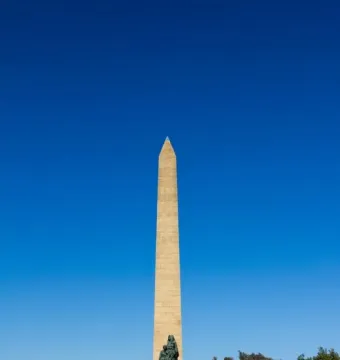
June 2012 © PCB1981 · CC BY-SA 3.0
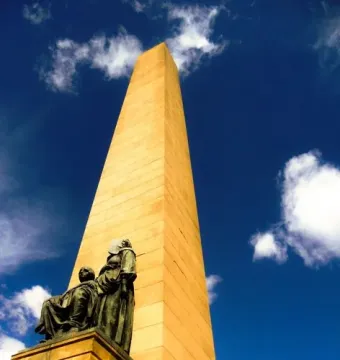
April 2012 © Zainabza · CC BY-SA 3.0
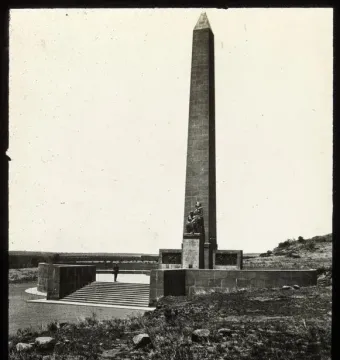
© Photographic Material and Stock Importers, 61 Market Square, Sydney · Public domain
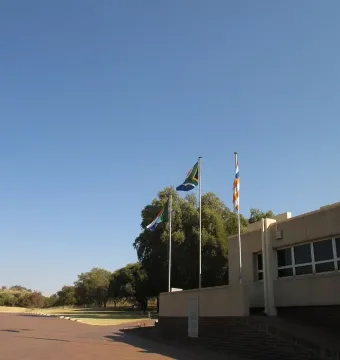
July 2014 © User:Katangais · CC BY-SA 3.0
August 2011 © Salome Bothma · CC BY-SA 3.0
Identification | |
| Title | National Women's Monument |
| Type | Monument / sculpture group |
| Original name | Nasionale Vrouemonument / Das Nationale Frauendenkmal / Vrouemonument |
Location and ownership | |
| Heritage status | Provincial Heritage Site in the Free State |
| Nearby museum | The Anglo-Boer War Museum is permanently located on the same premises and was inaugurated nearby in 1931 |
| Nearby graves | Christiaan de Wet, Rev. John Daniel Kestell, and Marthinus Theunis Steyn and his wife are buried beside the monument |
| Emily Hobhouse ashes | Buried at the foot of the monument 13 years after the unveiling |
| Listed as national monument since | 1982 |
| Annual visitation | Students of C&N Sekondêre Meisieskool Oranje visit the monument annually, on a 10 km hike, to honor Steyn and its historical significance |
| Country | South Africa |
| Province | Free State |
| Location | Bloemfontein, South Africa |
| Setting | About 3 km south of central Bloemfontein, against the surrounding hills |
Historical context | |
| Project initiation | After returning to South Africa, Steyn formed a committee to launch the project |
| Commemorates | Approximately 27,000 Boer women and children who died in British concentration camps during the Second Boer War |
| Origin of idea | Proposed by Marthinus Steyn after the Boer War while he was receiving medical treatment in Europe; supported by Emily Hobhouse and the Afrikaans poet Totius |
| Rejected alternative concept | A school or hospital was proposed instead, but rejected as lacking inspiration; several Afrikaner/Boer organizations supported the monument instead |
| Purpose | Commemorative memorial to Boer women and children who suffered and died in British concentration camps during the Second Boer War |
Creator | |
| Sculptor | Anton van Wouw |
| Designer / architect | Frans Soff (Pretoria architect, 1867–1936) |
Discovery and provenance | |
| Funding | £10,000 raised from the Afrikaner community between 1907 and 1911 |
History and restoration | |
| Unveiling date | 16 December 1913 |
| Unveiling attendance | About 20,000 South Africans |
| Construction delay | Start of construction was delayed by English-speaking members of the Bloemfontein Town Council because they felt the memorial would reflect poorly on Great Britain and local war supporters |
| Malan's statement | He declared Tibbie Steyn the last link to the original Boer Republics |
| Burial officiant | Dr. D. F. Malan |
| Burials on site | The burial of Marthinus Steyn at the foot of the structure began a new era of commemorations; Tibbie Steyn was buried beside him in 1955 despite her objections to burial use of the grounds |
| Other memorials on site | Since 1960, other Second Boer War memorials have been erected on the monument grounds |
Physical characteristics | |
| Height | About 35 m |
| Main form | An obelisk with low semicircular walls on both sides |
Materials | |
| Central bronze group material | Bronze |
| Main material | Kroonstad sandstone |
Appearance | |
| Hobhouse's criticism | She felt the sculpture did not do justice to the scene and that the child looked asleep rather than at death's door |
| Emily Hobhouse's role | She sketched or co-designed the central group and later criticized the finished sculpture |
| Central group inspiration | Based on Emily Hobhouse's account of a scene she described at Springfontein station on 15 May 1901 |
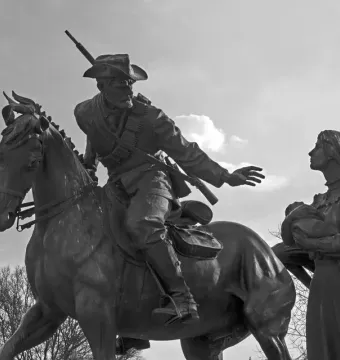
| Central figure depiction | A barefoot woman holding her dead or dying child on her lap, with another woman moving away in the distance |
| Central bronze group | A bronze group of two mourning women and a dying child in the Springfontein concentration camp |
| Iconographic references | Modeled on Christian imagery of the Pietà and Anna selbdritt |
Significance | |
| Historical significance | It became one of the primary sites dedicated to the legacy of the Second Boer War |
| Political significance | It helped create a new national consciousness among white South Africans and supported Boer nationalism |
| Ideological meaning | An expression of the Boer 'volksmoeder' ideal, extending women's maternal role from the household to the nation |
| Historical interpretation | Selective remembrance of Boer women in concentration camps was used to justify violence in defense of the vulnerable |
| Later interpretation | Its aesthetic and commemorative scope widened over time; it later became synonymous with the suffering of women and children in British concentration camps |