
Bust of Cardinal Richelieu
The Bust of Cardinal Richelieu is a marble sculpture by the Italian artist Gian Lorenzo Bernini, now in the Louvre in Paris. Cardinal Richelieu had hoped to commission Bernini to create a full-length sculpture through Jules Mazarin and the French ambassador in Rome, François Annibal d’Estrées, but Pope Urban VIII did not allow it. As a result, Bernini made a bust instead, working from images of Richelieu sent to Rome from France between November 1640 and January 1641. Once completed, the bust was transported to Paris. Although it arrived in August 1640, Richelieu was unhappy with the work and soon commissioned another bust by Jean Warin.
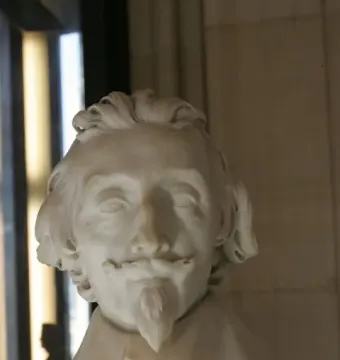
October 2007 © Rama · CC BY-SA 2.0 fr
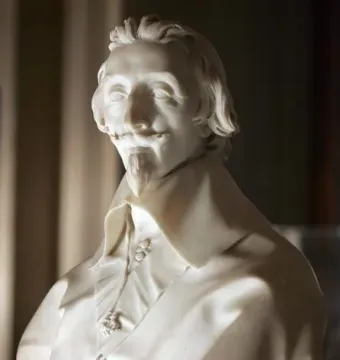
October 2007 © Rama · CC BY-SA 2.0 fr
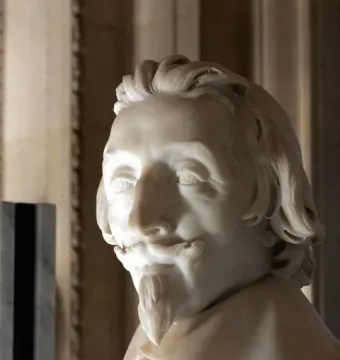
October 2007 © Rama · CC BY-SA 2.0 fr
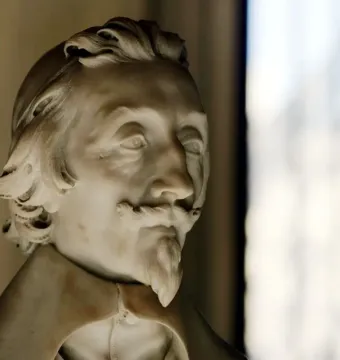
October 2007 © Rama · CC BY-SA 2.0 fr
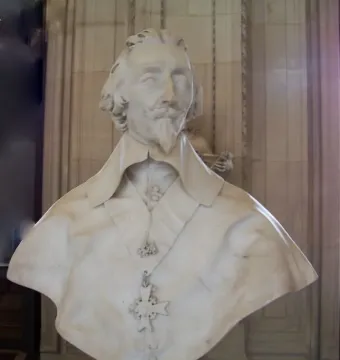
May 2010 © Rodney · CC BY 2.0
Identification | |
| Title | Bust of Cardinal Richelieu |
| Original Italian title | Il Busto del Cardinale Richelieu |
| Type | Bust |
| Original French title | Le buste du cardinal de Richelieu |
Creator | |
| Artist | Gian Lorenzo Bernini (Le Bernin) |
| Artist nationality | Italian |
| Artist lifespan | 1598–1680 |
Historical context | |
| Intended form | Full-length portrait statue |
| Reason it became a bust | Pope Urban VIII disapproved of the full-length statue and ordered Bernini to make only a bust |
| Negotiations handled by | Cardinal Mazarin and Marshal François-Annibal d'Estrées, French ambassador to Rome |
| Approvals required from | Cardinal Barberini and Pope Urban VIII |
| Commissioned year | 1640 |
| Commissioned by | Cardinal Richelieu |
| Subject role | First minister of Louis XIII of France |
| Subject | Cardinal Armand Jean du Plessis de Richelieu |
Discovery and provenance | |
| Creation basis | Images of Cardinal Richelieu sent from France to Rome |
| Production place | Rome |
History and restoration | |
| Date created | November 1640 to mid-January 1641 |
| Transported to | Paris |
| Arrival in Paris | August 1641 |
| Reception | Judged unsuccessful in Paris; considered not sufficiently lifelike or true to Richelieu's features |
| Subsequent related commission | Richelieu later commissioned another bust from Jean Warin |
Physical characteristics | |
| Material | White marble |
| Appearance | Finely and carefully carved, especially in the clothing and the face |
Appearance | |
| Facial expression | Noble air |
Significance | |
| Historical context / tradition | Part of a long tradition of busts of famous figures |