
Il Grande Cretto
Il Grande Cretto is a landscape artwork by Alberto Burri, begun in 1984 on the ruins of the old town of Gibellina in north-west Sicily. It follows the layout of the former city, which was destroyed in the 1968 Belice earthquake. Burri proposed preserving the original streetscape as a memorial and covered the rubble with white cement. Funding shortages left the work unfinished from 1989 until it was completed in 2015, in recognition of Burri’s centenary. The artwork has also been used as a filming location and as the setting for theatrical works, and it hosted the closing event of the 2023 Orestiadi festival.
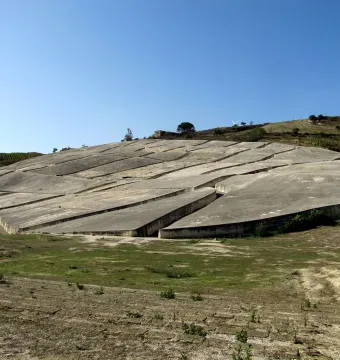
September 2012 © Fabior1984 · CC BY-SA 3.0
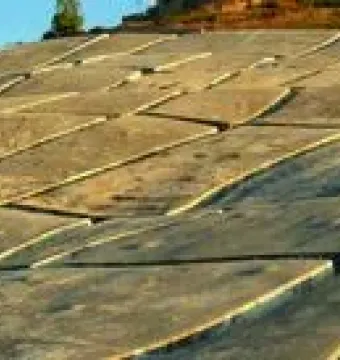
August 2009 © Davide Mauro · CC BY-SA 4.0
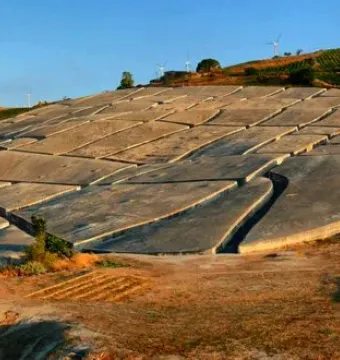
August 2009 © Boobax · CC BY-SA 3.0
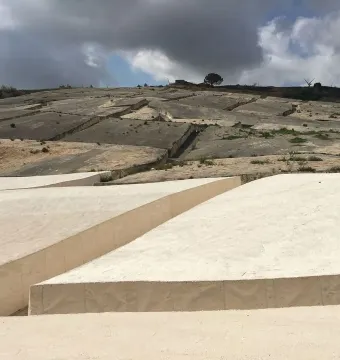
July 2016 © MurissaFrancesciosa · CC BY-SA 4.0
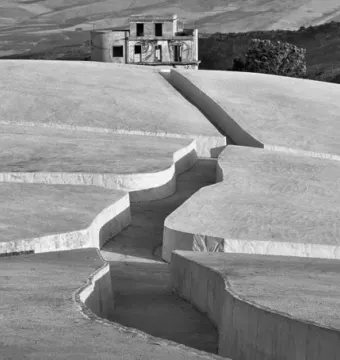
2019 © Pino Musi · CC BY-SA 4.0
Identification | |
| Title | Cretto di Burri |
| Type | Monumental land art work; memorial |
| Alternative names | Cretto di Gibellina; Il Grande Cretto; Grande Cretto |
Creator | |
| Artist | Alberto Burri |
Historical context | |
| Status during interruption | Unfinished |
| Purpose | To preserve the original streetscape as a memorial and place of remembrance |
| Historical basis | Created in response to the destruction of the original town of Gibellina in the 1968 Belice earthquake, which killed more than 200 people and left the town uninhabitable |
| Associated city reconstruction | Part of the artistic reconstruction of Gibellina planned by mayor Ludovico Corrao |
| Interrupted period | 1989–2015 |
| Completion date | 2015 |
| Construction period | 1984–1989; resumed in 2015 |
| Start date | 1984 |
Location and ownership | |
| Location | On the site of the ruined original town of Gibellina Vecchia, Sicily, Italy |
| Related place | Gibellina Vecchia (the abandoned original town of Gibellina) |
| Replacement settlement | Gibellina Nuova was built about 18 kilometres away because the original site was seismically unstable |
Physical characteristics | |
| Area | About 85,000 square metres (about 8.5 hectares) |
| Fissure width | About 2 to 3 metres |
| Block height | About 1.60 metres |
| Form | A walkable labyrinth of concrete blocks and joints tracing the old street grid and alleyways of Gibellina Vecchia |
| Appearance | From above, it resembles a series of cracks or fissures in the ground; described as a concrete sheet or eternal scar |
Materials | |
| Material | White concrete poured over the rubble of the old town |
Technique | |
| Construction method | Concrete blocks were formed by accumulating and enclosing the ruins of demolished buildings, with the rubble covered by a thick layer of white cement |
Appearance | |
| Concept | A cretto, or cracked-earth effect, inspired by sun-cracked ground |
Significance | |
| Symbolism | A symbol of memory, loss, and artistic transformation |
| Meaning | Its artistic value lies in freezing the historical memory of the town |
| Reception | The monument is not recognized by many residents, including some who lived through the earthquake |
| Scale | One of the largest contemporary artworks in the world |
History and restoration | |
| Funding | It was underfunded, leaving it unfinished for decades; later completion was supported by donations from Sicilian Americans and raw material supplied by Italian cement companies |
| Site preparation | The army removed the rubble remaining since 1968; this was opposed by former inhabitants and contributed to local resistance to the project |
| Completion occasion | Completed in 2015 for Burri's centenary |
| Current state | Completed monument |
Other | |
| Filming date | I-TIGI Canto per Ustica was filmed entirely in the Cretto in 2000 |
| Music video appearances | Featured in the music videos for Io non abito al mare, Pushing the Tides, and Meteoriti |
| Other film and television appearances | Used in the films Un mondo meglio che niente (2012), La legge del terremoto (2020), Abbattiamoli, Il fantasma di Corleone, and the television series Màkari and Citadel: Diana |
| Reason for choosing the site | Paolini said he chose the Cretto because it is a concrete labyrinth that, seen from above, resembles the maze of lies in which judges had to find the thread of the investigation |
| Related earlier works by the artist | Burri had explored the cretto theme in many medium-sized paintings since the early 1970s |
| Theatrical work subject | The Ustica massacre of 27 June 1980 and the long investigation led by judge Rosario Priore |
| Theatrical work | The work is the subject and setting of I-TIGI a Gibellina and its video adaptation I-TIGI Canto per Ustica by Marco Paolini |
| Retrospective dates | 9 October 2015 to 6 January 2016 |
| Documentary film | In 2015, Petra Noordkamp made a short documentary about the work for Alberto Burri's retrospective at the Solomon R. Guggenheim Museum in New York, commissioned by the Solomon R. Guggenheim Foundation |
| Festival appearance | Hosted the closing event of the 42nd Orestiadi festival in 2023, with music by Mario Venuti; that edition drew a record number of spectators |