
Little Princess Statue
Little Princess Statue (Kiskirálylány) is a 50 cm statuette created by László Marton in 1972. Inspired by his eldest daughter Évi, who played in a princess costume in the Tabán, the work captures a tender childhood image that became one of Budapest’s symbols. The original statuette sits on the Danube promenade in Budapest, Hungary, where a larger copy was placed in 1990. Another copy stands in Tapolca, the artist’s hometown, and a version was also donated to Japan for the Tokyo Metropolitan Art Space concert hall. The original 1972 statuette is owned by the Hungarian National Gallery.
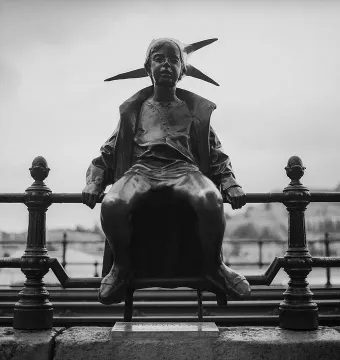
© Benjamin Balazs · CC0
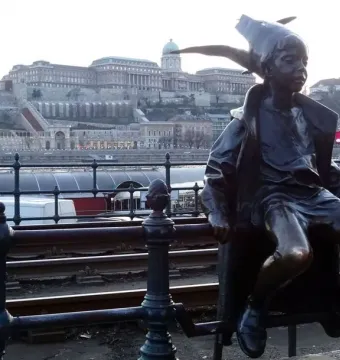
© VillageHero · CC BY-SA 2.0
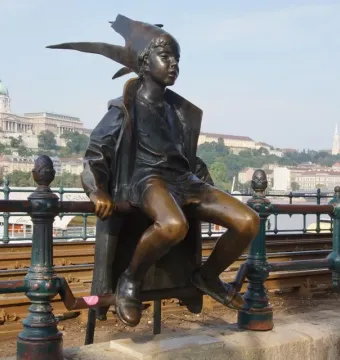
© rob Stoeltje · CC BY 2.0
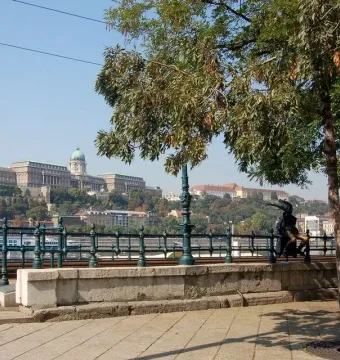
September 2006 © Bahnfrend · CC BY-SA 4.0
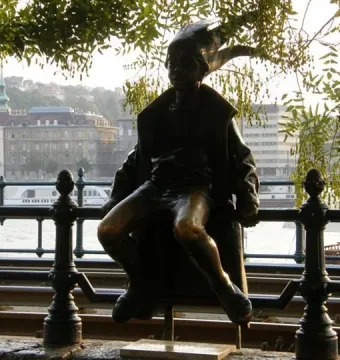
October 2013 © Budapestvoyage · CC BY-SA 3.0
Identification | |
| Title | Little Princess |
| Original title | Kiskirálylány |
| German title | Die Kleine Prinzessin |
| Alternative name | the elf |
| Type | Statue |
Creator | |
| Artist | László Marton |
| Artist life dates | 1925–2008 |
| Artist honors | Munkácsy Prize and Kossuth Prize |
Historical context | |
| Year created | 1972 |
| Original form | 50 cm statuette |
| Original work | An enlarged copy of a 50 cm statuette |
| Large-size copy installation date | 1990 |
Iconography and meaning | |
| Artist statement | Marton said that when he saw his 5-year-old daughter playing in a little princess costume in the Tabán, he immediately had the subject matter and sculpted Little Princess |
| Depicted scene inspiration | As a child in the Tabán district, Évike played dressed as a princess with a newspaper crown made by her father and pretended bathrobes were a mantle |
| Inspiration | Marton’s eldest daughter Évike, from his first marriage |
| Subject | A little princess seated |
Physical characteristics | |
| Height | 50 cm |
| Pose | Seated |
Location and ownership | |
| Original location | On the railings of the Danube promenade in Budapest, Hungary |
| Current owner of original statuette | Hungarian National Gallery |
| Large-size copy location | On the Danube promenade in Budapest, Hungary |
| Second copy location | Tapolca, the artist’s hometown |
| Japan copy location | In front of the concert hall of the Tokyo Metropolitan Art Space cultural center, Japan |
| Japan copy donor | Donated by the artist |
History and restoration | |
| Replacement | The original sculpture was replaced in 1990 by a larger version |
Significance | |
| Symbolic significance | Became a symbol of Budapest |