
Statue of Iddi-Ilum
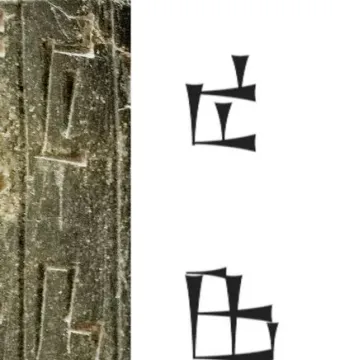
The Statue of Iddi-Ilum is a 41.5 cm-high steatite statuette made in the early 21st century BC. It was discovered in the palace at Mari (Tell Hariri) during French excavations led by André Parrot in the winter of 1936/1937. The figure is a votive statuette of a standing man in a long robe and is largely preserved, apart from a broken arm and the head. An Akkadian inscription in the lower part states that it was dedicated to the goddess Inanna/Ištar by Iddin-ilum, a šakkanakku (governor) of Mari. It is now on display in the Louvre in Paris, inventory number AO 19486.
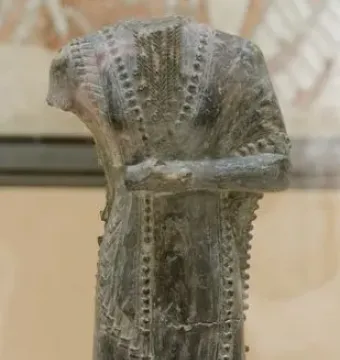
December 2012 © Marie-Lan Nguyen · Public domain
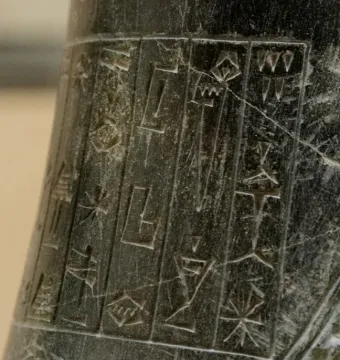
December 2012 © Marie-Lan Nguyen · Public domain
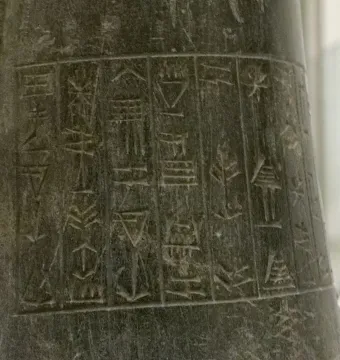
December 2012 © Marie-Lan Nguyen · Public domain
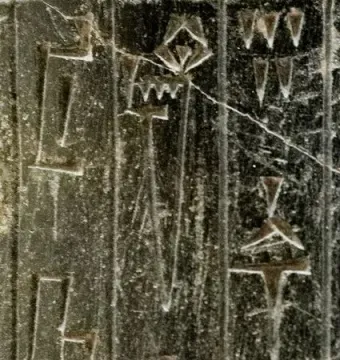
April 2020 © Marie-Lan Nguyen · CC BY 2.5
April 2020 © Marie-Lan Nguyen · CC BY 2.5
Identification | |
| Title | Statue of Iddi-Ilum |
| Type | Statue; votive prayer statue |
| Alternative name in article | Statuette of Iddin-ilum |
Historical context | |
| Date | Early 21st century BC |
| Culture and origin | Ancient city-state of Mari in eastern Syria |
| Historical relationship | Contemporary of the Third Dynasty of Ur and probably their vassal |
Creator | |
| Depicted figure | Iddi-Ilum, shakkanakku (military governor) of Mari |
Materials | |
| Material | Steatite (soapstone) |
Physical characteristics | |
| Inscription location | Lower part of the robe |
| Height | 41.5 cm |
| Condition | Head lost; right arm and elbow lost; otherwise largely preserved |
| Pose | Standing in traditional prayer posture with hands clasped against the chest |
| Beard | Visible beard carved in eight braids with curled ends |
| Clothing | Long one-piece robe draped around the body, tied at the waist with a belt and covering the shoulders |
| Robe decoration | Richly decorated edges with fringes and tassels |
| Inscription layout | Engraved in ten columns |
Technique | |
| Inscription language | Akkadian |
| Script | Cuneiform |
Iconography and meaning | |
| Inscription content | Iddi-Ilum, shakkanakku of Mari, dedicated the statue to Inanna; the inscription warns that anyone who erases it will have his lineage annihilated by Inanna |
| Deity named in inscription | Inanna, interpreted as Ishtar or her Sumerian equivalent |
Discovery and provenance | |
| Findspot | Courtyard 148 of the royal palace of Mari (Tell Hariri) |
| Discovery date | Winter 1936–1937 |
| Excavators | French excavation teams led by André Parrot |
| Discovery context | Found during the fourth excavation campaign at Mari |
| Condition at discovery | Found in two pieces |
Location and ownership | |
| Current location | Musée du Louvre, Paris |
| Inventory number | AO 19486 |
History and restoration | |
| Ancient display location | Displayed in the throne room of the royal palace of Mari |
Significance | |
| Other known examples | One of the three famous statues of the shakkanakku of Mari, alongside the statue of Ishtup-Ilum and the horned statue of Puzur-Ishtar |
| Historical context | During the reign of Zimri-Lim, these ancestral rulers were actively promoted through honorific rituals known as kispum |