
7000 Oaks
7000 Oaks is a landscape artwork by Joseph Beuys first presented to the public at documenta 7 in 1982. Over several years, Beuys had 7,000 trees planted at different locations in Kassel, each paired with a basalt stone. Conceived as a large-scale artistic and ecological intervention in response to urbanization, the project aimed to change the urban living space in a lasting way. Beuys described it as a Social Sculpture. Initially controversial, it later became a defining feature of Kassel’s public space. The project was completed in 1987 for documenta 8.
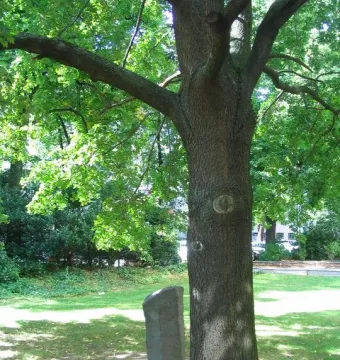
August 2012 © Kürschner · Public domain
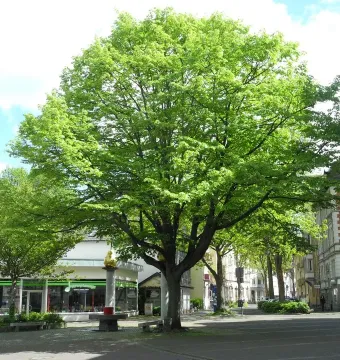
May 2021 © Baummapper · CC BY-SA 3.0 de
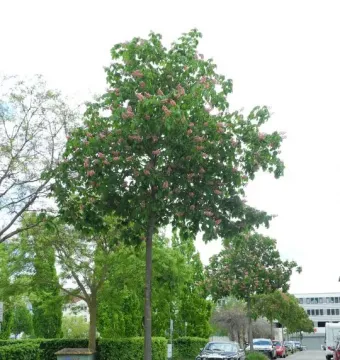
May 2021 © Baummapper · CC BY-SA 3.0 de
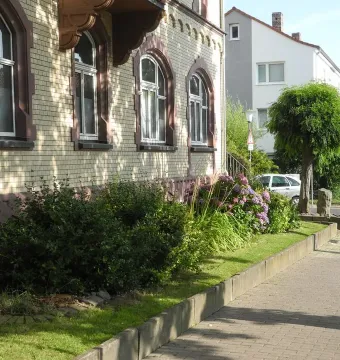
August 2019 © Baummapper · CC BY-SA 3.0 de
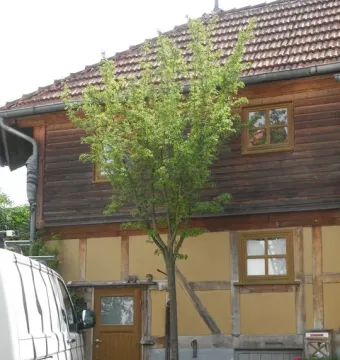
July 2019 © Baummapper · CC BY-SA 3.0 de
Identification | |
| Title | 7000 Oaks |
| English translation of title | 7000 Oaks – tree-planting in place of city administration |
| French title | 7000 Chênes |
| Spanish title | 7000 robles |
| Alternative title | City Forestation Instead of City Administration |
| Type | land art project; environmental sculpture; public art project; social sculpture |
| Original title | 7000 Eichen – Stadtverwaldung statt Stadtverwaltung |
Creator | |
| Artist | Joseph Beuys |
| Artist nationality | German |
Historical context | |
| Completion context | documenta 8 |
| Completion note | Beuys did not live to see the end of the project; he died on 23 January 1986 |
| Project duration | five years |
| First public presentation event | documenta 7 |
| Completed | 1987 |
| First public presentation location | Kassel, Germany |
| First public presentation | 1982 |
| Started | March 1982 |
Discovery and provenance | |
| Related fundraising sale | The Peace Hare and accessories sold for 777,000 DM to collector Joseph W. Fröhlich in Stuttgart |
| Poster sales | Beuys also sold posters with oaks |
| Artists represented in auction | Sandro Chia, Walter Dahn, Jannis Kounellis, and Andy Warhol |
| Auction fundraising | about one million Deutsche Marks raised from auctions of works donated by 34 artists in Tübingen and Bielefeld in April 1985 |
| Related fundraising income | 400,000 DM |
| Related fundraising advertisement | a 1984 Japanese television commercial for Nikka whisky |
| Initiated for | documenta 7 |
| Related fundraising artwork | a replica of the crown of Tsar Ivan the Terrible, remade into 'Rabbit of Peace' with accessories, sold on 30 June 1982 |
| Fundraising difficulty | raising the money was the biggest difficulty; Beuys had to finance a large part himself |
| Fundraising methods | posters, private donations, and contributions from companies and institutions |
| Funding support | Dia Art Foundation in New York (later Dia Center for the Arts) |
| Coordination office tasks | Financing through purchases and donations, cooperation with the city of Kassel on permit procedures for tree locations, and planning and carrying out the plantings |
| Coordination office | A coordination office was set up in Kassel as part of the Free International University (FIU) |
Physical characteristics | |
| Current/extended locations | different locations in Kassel; later also New York City and Düsseldorf |
| Stone form | basalt columns or steles |
| Location | Kassel, Germany |
| Stone color | black |
| Initial site | Friedrichsplatz, in front of the Fridericianum museum |
| Materials | oak trees and basalt stones |
| Tree species | English oak, American swamp oak, red oak, and 36 other species, including three ginkgo trees, one boxelder, one honey locust, and one tulip tree |
| First tree planted | an oak tree planted next to its corresponding basalt stele |
| Initial installation | 7,000 basalt steles piled up in a wedge-shaped triangle outside the Fridericianum museum |
| Number of accompanying stones | 7,000 |
| Number of trees | 7,000 |
Technique | |
| Planting process | The stones were removed one by one as each tree was planted |
| Participation model | Anyone who donated 500 Deutsche Marks could remove one basalt block and plant an oak sapling elsewhere, after which the stone was placed beside the tree |
| Cost per tree | 500 Deutsche Marks (255 euros) |
| Duration of planting | planted over five years |
Appearance | |
| Artist statement | "Not expansion, nor demolition, rather both mutually dependent on each other" |
| Conceptual function of the stones | a development indicator that made the stone sculpture shrink as more trees were planted |
Iconography and meaning | |
| Description by Beuys | social sculpture (Soziale Plastik) |
| Conceptual description | an extensive artistic and ecological intervention |
| Purpose | to sustainably alter the urban living environment in response to urbanization and widening of streets and sidewalks |
| Symbolic meaning | the planting of 7,000 oaks was described as only a symbolic beginning |
| Future goals | an ongoing worldwide tree-planting scheme, greater awareness of human dependence on the wider ecosystem, and activation of society through human creative will |
| Artistic intent | Beuys's works were meant to awaken people from tradition and provoke them, not to entertain |
| Beauty concept | a new concept of beauty extending beyond instant gratification |
| Interpretation by Beuys | a return to the old organizational structure |
| View of trees | trees were essential subjects lacking rights |
Location and ownership | |
| Dia Art Foundation holdings | maintains 37 trees paired with stones in New York City and considers the installation one of its sites |
| Initial installation site | outside the Fridericianum museum |
| Main location | Kassel, Germany |
| Maintenance | still maintained by the city |
History and restoration | |
| Incident | a motorcyclist died as a result of one of the stone markers |
| Later exhibition | 100 trees grown from those acorns were exhibited at Tate Modern in London, UK in 2021 |
| Acorn collection | in 2007, artists Ackroyd & Harvey visited Kassel to collect acorns from the original oaks |
| Later project philosophy | based on Beuys's idea that 'everyone can be an artist' and on expanding the role of the art gallery into the city |
| Later related planting | more than 350 trees planted in various Baltimore parks with the help of more than 500 volunteers, including children from local schools |
| Later related project | Joseph Beuys Sculpture Park and Joseph Beuys Tree Partnership in Baltimore |
| Prank | in 1982 some people piled pink stones on the sites as a prank |
| Criticism of appearance | some people thought the black stone markers were ugly |
| Support | the mayor of Kassel, a Social Democrat, supported Beuys |
| Political opposition | some opposition came from the conservative state government dominated by the Christian Democrats |
| Initial reception | initially controversial, later met with increasing tolerance |
| People present at completion | Eva Beuys and Wenzel Beuys |
| Completion | finished in 1987 by Wenzel Beuys, on the first anniversary of Joseph Beuys's death |
Significance | |
| Current significance | an important part of Kassel's urban landscape and public space |
| Overall significance | Beuys's largest and most enduring work; one of the most expensive art actions of its time; his largest and most consequential action |
| Art-historical interpretation | an example of the link between Situationist International art approaches and their re-creation by newer socially conscious groups |
Other | |
| Scale | long-term, large-scale intervention |
| Budget | about 4.3 million Deutsche Marks (2.2 million euros) |
| Current status | the project is still maintained by the city |