
Tlaltecuhtli Monolith
The Tlaltecuhtli Monolith is a Mexica sculpture representing the earth deity Tlaltecuhtli. It was discovered on October 2, 2006, in the Historic Center of Mexico City, at the site known as Casa de Las Ajaracas. It is considered the largest artistic work so far found made by the Mexicas, followed by the Sun Stone and the Coyolxauhqui Monolith. Thanks to modern restoration techniques, part of its original polychromy was preserved. It has also been considered a possible mortuary chamber of the tlatoani Ahuízotl.
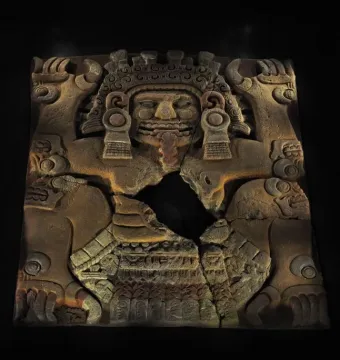
December 2012 © Citlaltec · CC BY-SA 4.0
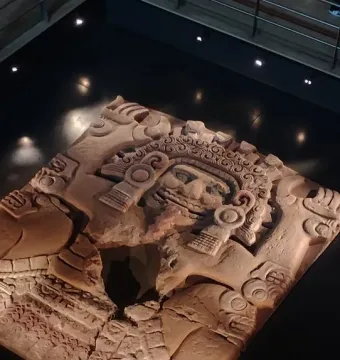
November 2025 © Ferfive · CC BY 4.0
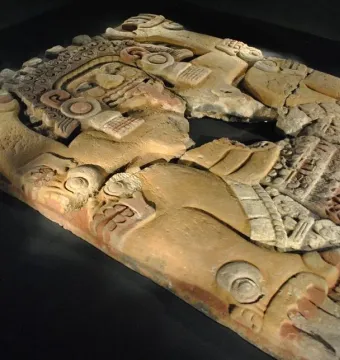
© Aztec artist · CC BY-SA 4.0
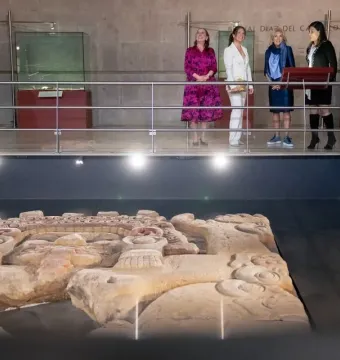
January 2023 © The White House · Public domain
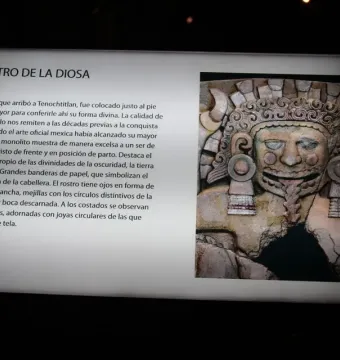
July 2012 © Gary Todd · CC0
Identification | |
| Title | Tlaltecuhtli monolith |
| Type | Mexica monolithic sculpture |
| Subject | Tlaltecuhtli, the earth deity |
| Depicted gender | A dual entity, both male and female |
Historical context | |
| Culture | Mexica (Aztec) |
| Date of creation | Late Mexica period, between 1502 and 1521 |
Discovery and provenance | |
| Discovery date | 2 October 2006 |
| Discovery context | Found during foundation works |
| Discovery location | Adjacent to Casa de las Ajaracas, beside the archaeological zone of the Templo Mayor of the Mexica, in the Historic Center of Mexico City, at the corner of República de Guatemala and República de Argentina |
| Site area | 272 square meters |
| Stone source | Cerro de Tenayuca |
Physical characteristics | |
| Dimensions | 4.17 × 3.62 × 0.38 meters |
| Weight | 12 tons |
| Color | Pinkish and purplish tones |
Materials | |
| Material type | Extrusive volcanic rock |
| Material | Lamprobolite andesite; a block of hornblende andesite |
Appearance | |
| Polychromy | Part of the original polychromy was preserved |
Iconography and meaning | |
| Meaning | Associated with the life cycle as a giver and devourer of life |
| Interpretation | It has been considered possible that it was the mortuary chamber of the tlatoani Ahuízotl |
| Associated ruler | Ahuízotl, tlatoani |
Significance | |
| Size significance | The largest Mexica artwork found to date; the largest Aztec monolithic sculpture found to date |
| Comparative works | Followed in size by the Sun Stone and the Monolith of Coyolxauhqui |
Location and ownership | |
| Historical significance of location | Part of the main Mexica ceremonial precinct and the foundational point of the new Mexico City |
| Project affected by discovery | The discovery changed the planned construction project for the site |
| Modified project name | Conjunto Ajaracas |
| Original project for site | Government of the Federal District proposal to build the mayor's house and offices |
| Modified project use before discovery | Center for the Arts of Indigenous Peoples |
| Planned use after modification | Mexico City Photographic Archive, a new headquarters for the Mexico City Historical Archive, and a museum |
| Museum purpose | To exhibit the monolith and other objects found in situ |
| Associated historical figures | Alonso García Bravo began the layout of Mexico City there; the Palacio del Marqués del Apartado nearby was built by Manuel Tolsá |
History and restoration | |
| Restoration information | Current restoration techniques made it possible to save part of its original polychromy |