
John the Baptist
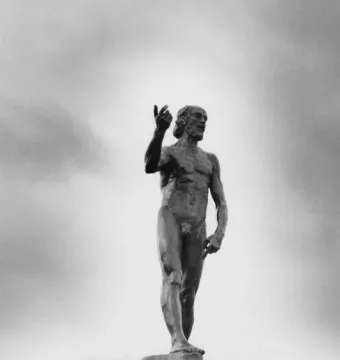
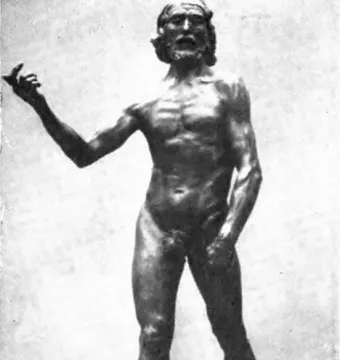
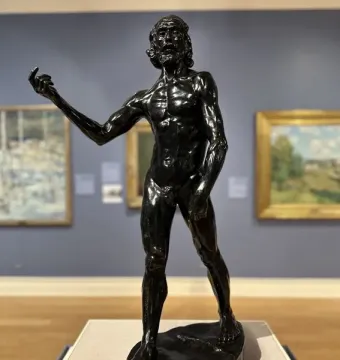
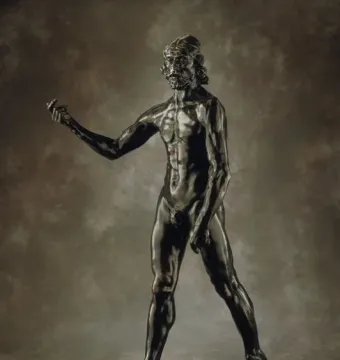
John the Baptist, also known as Saint John the Baptist (preaching), is a bronze sculpture by Auguste Rodin. After the controversy surrounding his Age of Bronze, Rodin began modeling this larger-than-life figure in 1877. He later showed a plaster model at the Salon of 1880. Rodin said the sculpture was inspired by an Italian peasant named Pignatelli. The work is associated with Rodin and appears in collections and references connected to the Musée Rodin.
· CC BY-SA 4.0
1921 © Lorado Taft · Public domain
June 2026 © APK · CC BY 4.0
© Auguste Rodin (France, 1840-1917) · Public domain
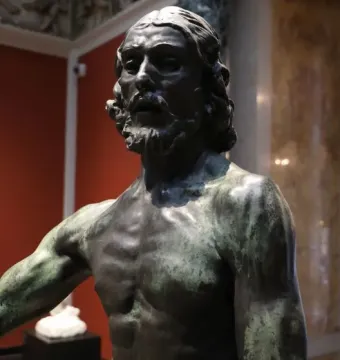
June 2024 © Francesco Bini · CC BY-SA 4.0
Identification | |
| Title | Saint John the Baptist (preaching) |
| Type | Bronze sculpture |
| Alternative titles | Il San Giovanni Battista; Saint Jean Baptiste; San Giovanni Battista che predica; San Juan Bautista Predicando; San Giovanni il Battista; John the Baptist |
Creator | |
| Artist | Auguste Rodin |
Historical context | |
| Date created | 1877-1878 |
| Related earlier work | The Age of Bronze (L'Âge du bronze) |
| Creation context | Rodin began modeling the figure after the controversy over The Age of Bronze, and created it to prove his genius and silence critics who accused that work of being cast |
Discovery and provenance | |
| Inspiration / model | Cesidio Pignatelli, an Abruzzi peasant from central Italy |
| Facial model | Danielli, a friend of the sculptor |
| Preparation | Rodin made sketches based on ideas fostered since childhood by his father Jean-Baptiste Rodin, including biblical readings and his admission as a novice into the Brothers of the Blessed Sacrament under the name Brother Auguste |
Physical characteristics | |
| Figure description | A tanned man hardened by the desert |
| Style | Realistic treatment of the face, hands, and feet; Rodinian style; new sculptural techniques including assemblage, multiplication, and fragmentation |
| Height | 2.03-2.3 meters |
| Depiction | A nude figure of Saint John the Baptist standing with the right arm slightly extended, the hand raised, and the index finger pointing upward; traditional camel-skin garments and staff are omitted |
| Scale | Larger than life-size |
Materials | |
| Material | Bronze; plaster versions also exist |
Technique | |
| Casting foundry | Alexis Rudier foundry |
Location and ownership | |
| Exhibition history | First exhibited at the Salon of 1880; the bronze version was exhibited in 1881 |
| Award | Received a medal at the Salon |
| Ownership / collection | A bronze version was purchased by the state and belongs to the Musée Rodin collection |
| Current locations of versions | Musée d'Orsay, Paris; Musée Rodin, Paris; MuMa (Musée d'art moderne André Malraux), Le Havre; Museum of Cambrai; Museo Soumaya, Mexico |
| Other known examples | Reduced-size examples were cast between 1878 and 1907; versions are also recorded in the Tate, Victoria and Albert Museum, Metropolitan Museum of Art, Norton Simon Museum, California Palace of the Legion of Honor, Glenkiln Sculpture Park, and Saint Louis Art Museum |
Significance | |
| Significance | Helped establish Rodin's reputation as a genius after The Age of Bronze, confirmed that he had not resorted to casts, and was seen as helping revolutionize sculpture through its expressive forms, emotions, sensuality, and treatment of complex parts |