
Lady of Cerro de los Santos
The Lady of Cerro de los Santos, also known as Gran Dama Oferente, is an Iberian limestone sculpture from the 2nd century BCE. It was found in 1870 at the sanctuary of Cerro de los Santos in Montealegre del Castillo, in Albacete province, Spain, and is now in the National Archaeological Museum in Madrid. The full-length female figure stands 1.3 metres high and holds a container in both hands, as if offering it. She is shown wearing three overlapping robes fastened at the neck, braided hair, three necklaces, fitted shoes, and a rodete or wheel headgear on one side of her hair.
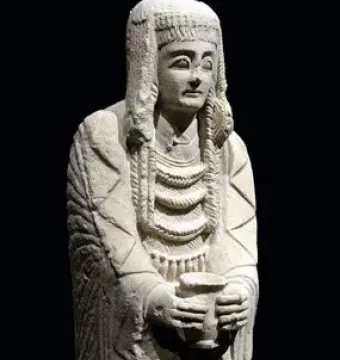
January 2015 © Ángel M. Felicísimo · CC BY-SA 4.0
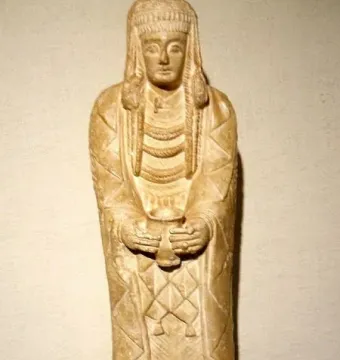
July 2010 © Zarateman · CC0
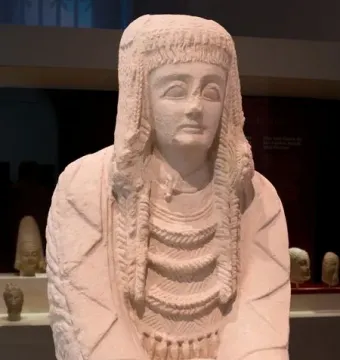
February 2026 © Luis Fernández García · CC BY-SA 4.0
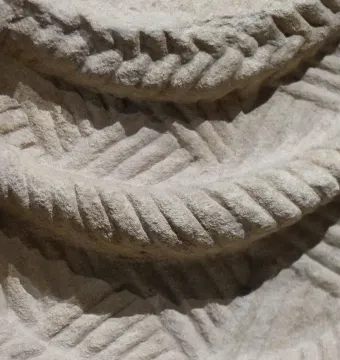
August 2016 © Benjamín Núñez González · CC BY-SA 4.0
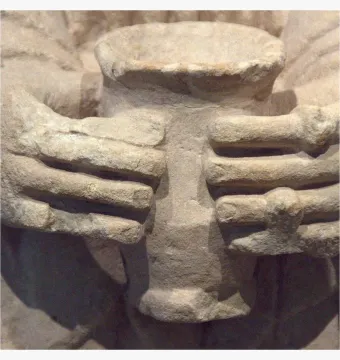
May 2014 © manuel m. v. · CC BY 2.0
Identification | |
| Title | Dama del Cerro de los Santos |
| Alternative names | The Lady of Cerro de los Santos; Gran Dama Oferente; Dama Oferente; Dama de Yecla |
| Type | Iberian sculpture |
Historical context | |
| Chronological relation | Approximately contemporary with other female figures of Iberian art; the offering gesture already appears in the roughly 400-year-older Dama de Galera |
| Date | 2nd century BCE; alternatively dated to the 3rd century BCE |
| Cultural context | Iberian art |
Creator | |
| Artistic influence | Phoenician-influenced Iberian female sculpture |
Discovery and provenance | |
| Discovery date | 1870 |
| Discovery place | Sanctuary of Cerro de los Santos, Montealegre del Castillo, Albacete province, Spain |
Location and ownership | |
| Current location | National Archaeological Museum, Madrid, Spain |
Physical characteristics | |
| Eyes | Wide open |
| Back | Smoothed rather than detailed |
| Head position | Raised |
| Pose | Standing, nearly symmetrical, with hands held in an offering gesture in front of the lap |
| Depicted figure | Standing female figure |
| Height | 1.3 metres; approximately 1.35 m |
Materials | |
| Material | Limestone |
Appearance | |
| Footwear | Fitted shoes |
| Chest ornament detail | Three cord-like braided ornament strands are emphasized |
| Earrings | Heavily decorated hanging earrings, similar to those of the Dama de Elche |
| Stylistic feature | Zigzag-shaped drapery and fine pleats |
| Jewelry | Three necklaces, five rings on the hands, earrings, and a pectoral on the chest |
| Hanging ornaments | Flower-shaped pendants and ínfulas from the diadem |
| Headgear | Diadem or headdress with a rod or wheel motif on one side; the other side may have been broken off |
| Hair | Braided or elaborately styled hair, partly uncovered and falling past the necklaces |
| Clothing | Richly dressed in layered robes or tunics, including a floor-length mantle, overgarments, and a pleated undergarment |
| Fastening | Fibula or clasp at the neck, possibly T-shaped |
Iconography and meaning | |
| Object held | Container or cup/vase |
| Interpretation of gesture | Appears to be offering the vessel in both hands |
| Interpretation | May represent a real woman or a figure from Iberian religious imagination |
| Possible identification | Perhaps a tribal leader or priest-queen |
| Social status implied | High social status |
| Historical interpretation | It evidences the role of aristocratic women in Iberian religious rituals |
Comparative references | |
| Comparisons | Lady of Baza; Dama de Elche; Dama de Galera; other Iberian art |