
Ivory Pomegranate
Ivory Pomegranate, also known as the Jerusalem Pomegranate, is a thumb-sized ornamental artifact acquired by the Israel Museum. Although commonly called ivory, it is actually made of hippopotamus bone and bears an inscription reading, “Holy (Sacred) to the Priest of the House of God (YHWH).” At the time of its discovery, it was believed to have decorated the High Priest’s sceptre in the Holy of Holies and was seen as possible evidence for Solomon’s Temple. However, experts at the Israel Museum later declared the inscription a modern forgery and dated the object to the 14th or 13th century BCE, long before Solomon’s time.
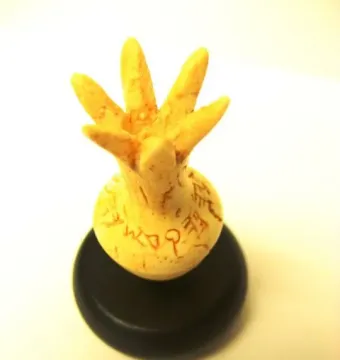
March 2010 © Wikikati · Public domain
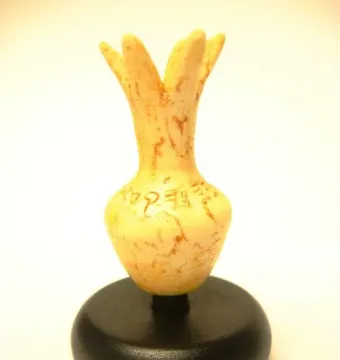
© Wikikati · Public domain
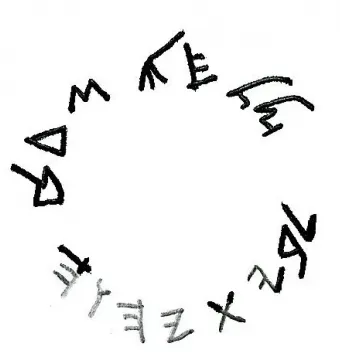
March 2010 © Wikikati · Public domain
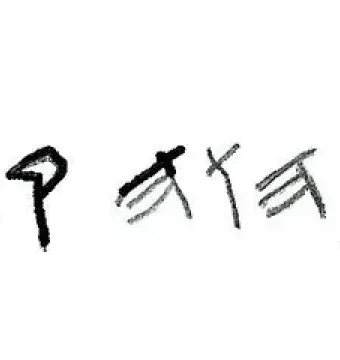
March 2010 © Wikikati · Public domain
Identification | |
| Title | Ivory pomegranate |
| Alternative name | Jerusalem Pomegranate |
| German name | Elfenbein-Granatapfel |
| Nickname | little pomegranate |
| Object type | Small carved pomegranate |
| Type | Thumb-sized ornamental artifact |
Historical context | |
| Date | Late Bronze Age; the inscription was proposed to date to the 8th century BCE, but the Israel Museum and the Investigative Committee of Israel dated the object itself to the 14th or 13th century BCE and the inscription to a modern forgery |
Creator | |
| Maker | Unknown |
Discovery and provenance | |
| Authentication history | Authenticated by Nahman Avigad before the museum purchase |
| Price on first appearance | About $3,000 |
| First scholarly encounter | First seen by André Lemaire in 1979 |
| Discovery context | No archaeological context or provenience was available |
| Origin | Unknown; first publicly seen in a Jerusalem antiquities shop in 1979, then sold to an anonymous collector in France and later acquired by the Israel Museum |
Physical characteristics | |
| Height | 4.3 cm (43 mm) |
| Diameter | 2.1 cm |
| Shape | Naturalistic unripe pomegranate |
| Condition | The blossom and parts of the body are damaged; two breaks run through the petals and a vertical break cuts through the inscription |
| Mounting feature | A round hole at the bottom would allow it to be mounted on a staff |
Materials | |
| Material | Hippopotamus tooth, not ivory |
Technique | |
| Technique | Carved object with an incised inscription |
Appearance | |
| Script | Ancient Hebrew (Paleo-Hebrew) |
| Decoration | Circular inscription around the shoulders |
Iconography and meaning | |
| Depiction | A pomegranate in blossom or unripe stage |
| Inscriptions | The object bears a circular inscription; its authenticity is disputed |
| Inscription reading | "l-beyt [yahweh]h qodeš kohanim"; also read as "Belonging to the Temple [house] of YHWH, holy to the priests" or "Sacred donation for the priests of/in the Temple [house] of YHWH" |
| Inscription translation | "Holy offering for the priests in the house of [Yahweh]" or "For the house of [Yahweh], holy to the priests" |
| Inscription language | Ancient Hebrew |
| Inscription date | 8th century BCE proposed on palaeographic grounds |
| Historical interpretation | At the time of discovery it was interpreted as evidence for Solomon's Temple and as possibly belonging to the high priest's sceptre in the Holy of Holies |
| Current scholarly view | Most experts believe a genuine Late Bronze Age object was later inscribed with a forged Old Hebrew text and that it has no connection to the Jerusalem Temple |
| Symbolism | The pomegranate was a common cultic and decorative motif in the Ancient Near East and in the Solomonic Temple; its seeds and red color symbolized fertility and abundance |
Location and ownership | |
| Museum status | Formerly displayed as a highlight of the Israel Museum's Archaeological Exhibition; later removed from display |
| Acquired by | Israel Museum |
| Current owner | Israel Museum, Jerusalem |
History and restoration | |
| Museum acquisition | Bought by the Israel Museum in 1988 for $550,000 |
| Museum acquisition basis | The museum relied on Nahman Avigad's opinion |
| Public display | Displayed in a special exhibition room with dramatic lighting and was a major audience attraction for 15 years |
| Scholarly debate | In 2004 the Israel Museum and other scholars concluded the inscription was a modern forgery; André Lemaire defended authenticity, while Shmuel Ahituv, Aaron Demsky, Yuval Goren, and others disputed it |
| Re-examination | A May 2007 re-examination by Ahituv, Demsky, and Goren kept the forgery conclusion, while Lemaire maintained it was authentic |
| Legal case | Oded Golan was charged in 2004 with forging biblical artifacts; he was acquitted of forgery on 14 March 2012 but convicted of illegal antiquities trading |
Significance | |
| Museum significance | At one point it was considered the most important item of biblical antiquities in the Israel Museum's collection |
| Public reception | For many visitors it became a quasi-religious experience |
Other | |
| Comparative context | Comparable ceremonial staffs with pomegranate finials are known from the Ancient Near East; some scholars considered a priestly staff use plausible |