
Mannetje van Willemstad
Mannetje van Willemstad is an oak figurine discovered in 1968 during construction of the Volkerak lock, part of the Delta Works, near the transition to Schouwen-Duiveland in the Netherlands. Dated by the C14 method to around 4,450 BC, it is probably a Mesolithic object and may have originated in the Vlaardingen culture. The figure was found eight meters below the surface between the roots of an oak tree. Only the face is more carefully shaped, while the body is rendered in a very abstract form. It measures about 125 mm in height, 51 mm in width, and 31 mm in depth. Its purpose is unknown, though it may have been used as a ritual object.
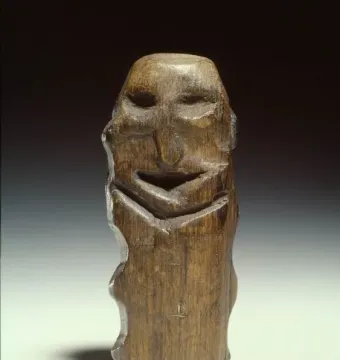
© Rijksmuseum van Oudheden, Leiden · CC BY 3.0
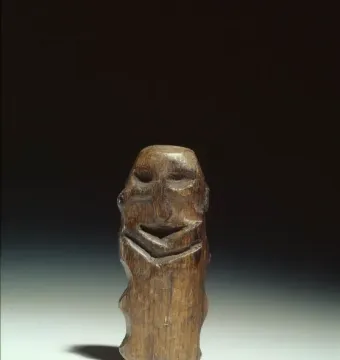
© Rijksmuseum van Oudheden, Leiden · CC BY 3.0
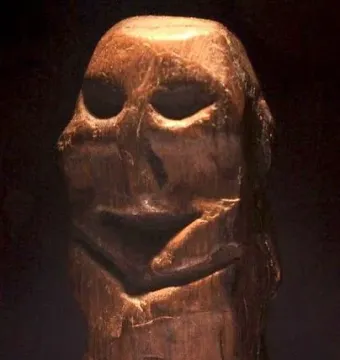
June 2009 © Urville Djasim · CC BY-SA 2.0 nl
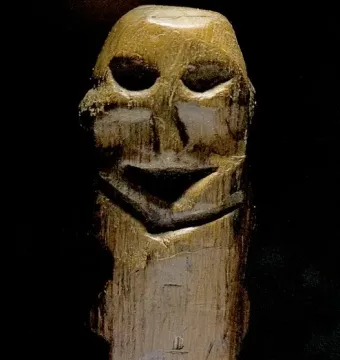
June 2009 © rob koopman · CC BY-SA 2.0
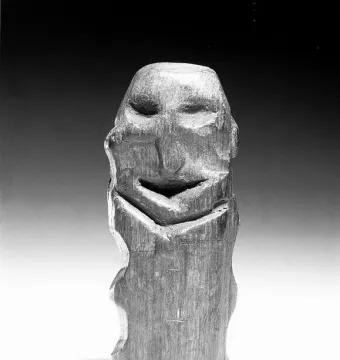
© Rijksmuseum van Oudheden, Leiden · CC BY 3.0
Identification | |
| Title | Mannetje van Willemstad |
| Alternative name | "Willemstad little man" (Виллемстадский человечек) |
| Type | wooden figurine |
Historical context | |
| Date | about 4450 BC |
| Period | probably the Mesolithic |
| Cultural context | created in the area of the Vlaardingen culture |
Creator | |
| Dating method | radiocarbon analysis (C14 method) |
Discovery and provenance | |
| Discovery date | 1968 |
| Discovery context | found during construction of the Volkerak sluice, part of the Delta Works; found at a depth of 8 meters between the roots of an oak tree |
| Discovery location | near the transition to the island of Schouwen-Duiveland, the Netherlands |
Physical characteristics | |
| Material | oak wood |
| Dimensions | height about 125 mm; width 51 mm; depth 31 mm |
Appearance | |
| Form | the face is carefully shaped, while the body is very abstractly rendered; only the face is clearly recognizable among the body parts |
Iconography and meaning | |
| Description | an idol |
| Purpose | unknown; possibly a toy or a ritual object of a shamanic cult |
Location and ownership | |
| Current location | State Museum of Antiquities, Leiden |