
Las Limas Figurine
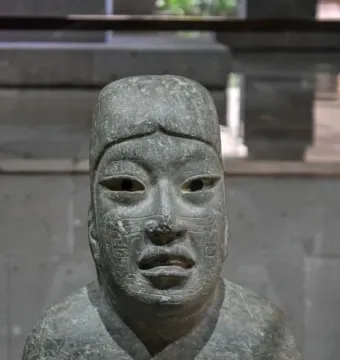
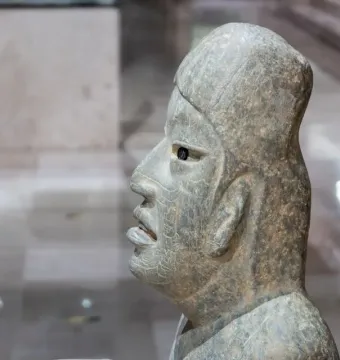
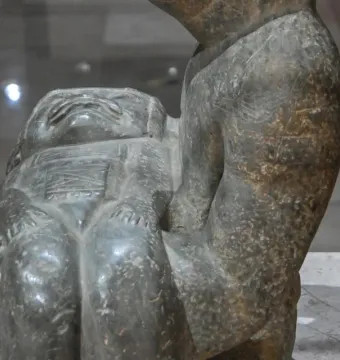
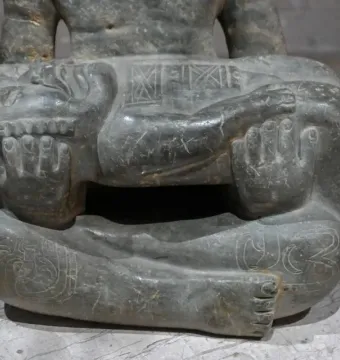
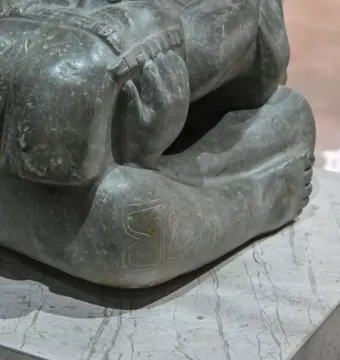
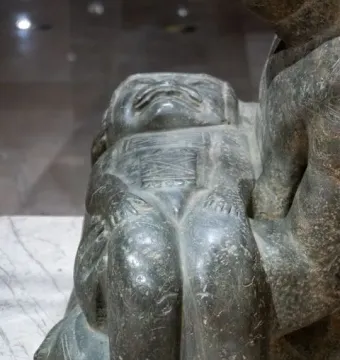
The Las Limas Figurine is an Olmec sculpture made of green stone, discovered in 1965 near Las Limas in the Mexican state of Veracruz. It was found by two children, Rosa and Severiano Paschal Manuel, and later taken to the museum in Xalapa after local people had long venerated it as an image of the Virgin Mary. The figure is 55 cm high, 42 cm wide, and weighs about 60 kg. It is probably from the Middle Preclassic period, between 1000 and 600 BCE. The sculpture shows a seated young man holding a child with jaguar features, with four carved deities on his limbs. According to Peter David Joralemon, the figure as a whole represents a storm and rain god.
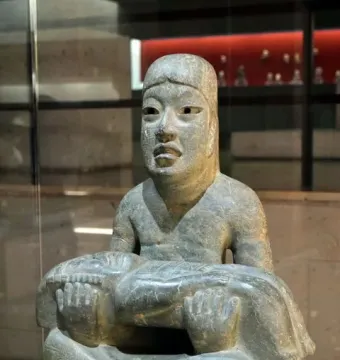
February 2017 © Mag2017 · CC BY-SA 4.0
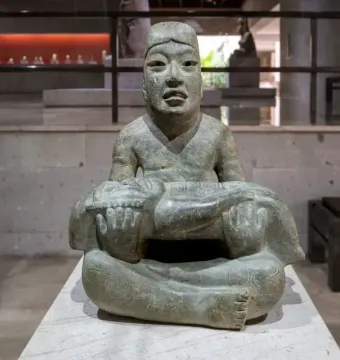
June 2025 © ProtoplasmaKid · CC BY-SA 4.0
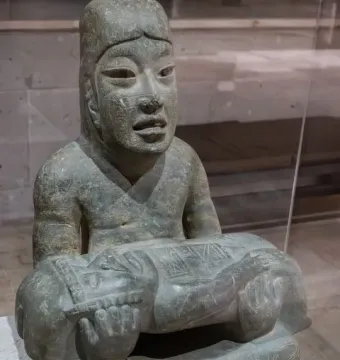
June 2025 © ProtoplasmaKid · CC BY-SA 4.0
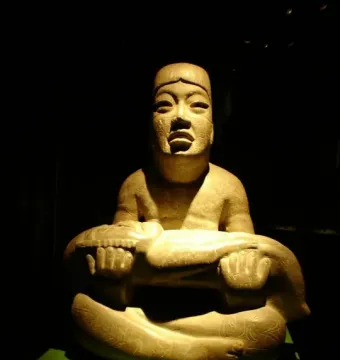
March 2007 © O Cadena (Cadeva) · CC BY-SA 2.0
June 2025 © ProtoplasmaKid · CC BY-SA 4.0
June 2025 © ProtoplasmaKid · CC BY-SA 4.0
June 2025 © ProtoplasmaKid · CC BY-SA 4.0
June 2025 © ProtoplasmaKid · CC BY-SA 4.0
June 2025 © ProtoplasmaKid · CC BY-SA 4.0
June 2025 © ProtoplasmaKid · CC BY-SA 4.0
Identification | |
| Title | Señor de Las Limas |
| Alternative names | Figurka z Las Limas; "figura de Las Limas"; "Señor de Las Limas"; Monument 1 of Las Limas; Las Limas Monument 1; Las Limas figure; "La Virgen de las Limas"; "La Virgen de Las Limas"; the "sacerdote" of Las Limas |
| Type | Olmec figurine; Olmec sculpture; greenstone figure; round-relief sculpture; round sculpture (in the round); statue; statue / sculpture; monolith |
Historical context | |
| Cultural attribution / period | Olmec; Olmec civilization; Olmec archaeological record; Olmec heartland; Mesoamerican Preclassic period; Middle Preclassic (Formative) period, between 1000 and 600 BCE; Middle Formative period, between 1000 and 600 BCE; Middle Formative Period, sometime between 1000 and 600 BCE; probably made/carved during this period |
Creator | |
| Creator | Unknown |
Discovery and provenance | |
| Discovery date | 16 July 1965; 1965 |
| Discovery location | Near Las Limas, Veracruz, Mexico; Veracruz, Mexico, in the Olmec core area; the State of Veracruz, Mexico; near Jesús Carranza, Veracruz; Las Limas, in the southeastern part of the Mexican state of Veracruz, at the southernmost end of the Olmec nuclear area |
| Discovered by | Two local children, Rosa and Severiano Paschal Manuel; two Chinantec children from Las Limas, Severiano and Rosa Manuel Pascual; found accidentally by two children, Rosa and Severiano Paschal Manuel |
| Discovery circumstances | Found accidentally while looking for a stone to crack coyoles; dug up by the children / their parents; the face was first exposed when removing what seemed to be an ordinary stone |
| Initial local interpretation | Regarded by local people as a figure of the Virgin Mary / Virgin Mary and the Child / an apparition of the Virgin Mary because the discovery occurred on 16 July, the day of the Virgin of Carmen; placed on a home altar, a personal altar, or a church altar and venerated locally; villagers considered it more important than the Virgin of Guadalupe |
| Transfer to museum | Archaeologists from Xalapa learned of the find through rumors or after lengthy negotiations with locals; they promised display and a local school; the sculpture was moved to the Museum of Anthropology of Xalapa / Museo de Antropología de Xalapa / Museo de Antropología de Veracruz in Xalapa; later restored for display there |
| Theft and recovery | Stolen from the Museum of Anthropology of Xalapa in October 1970 / 12 October 1970; taken through Tehuacán and Huautla de Jiménez toward the United States; intended for sale in the United States; recovered or abandoned in a motel room in San Antonio, Texas, in 1975 after an anonymous phone call / because it was too famous to sell on the black market; the United States government later returned it |
| Associated places | Las Limas; San Antonio, Texas; Museum of Xalapa / Museo de Antropología de Xalapa; Xalapa Museum of Anthropology; Museum of Anthropology of Xalapa; Museo de Antropología de Veracruz in Xalapa; nearby village; nearby home; church of a nearby village |
Physical characteristics | |
| Dimensions | 55 cm high and 42 cm wide; 55 x 42 cm; high and wide (exact measurements omitted in one fragment) |
| Weight | About 60 kg; approximately 60 kg; 60 kg; an estimated weight is mentioned, but the exact figure is omitted in one fragment |
Materials | |
| Material | Green stone; serpentine; greenstone; pale green jadeite; carved stone; stone |
Technique | |
| Carving and surface treatment | Carved; in the round; round-relief; monolith; visible circular incisions on the sides and back; fine incisions; engraved patterns; abstract incision-like markings resembling tattoos; inscriptions |
Appearance | |
| Overall figure | A seated young man / youth / person of indeterminate sex sitting cross-legged; a figure with ornate or headdressed headgear; a carved stone figure holding a baby-jaguar / child-jaguar / were-jaguar baby in its arms or across its lap; the baby is flaccid, inert, limp, or possibly dead or asleep |
| Head, body, and limbs | Headband, pectoral, and loincloth decorated with X-shaped motifs; facial markings around the mouth and in bands along the face; markings on the face, shoulders, knees, shins, arms, and legs; circular incisions on the sides and back; shoulder and shin decoration; surface decoration resembling tattoos |
| Additional details | Eye pupils made of polished pyrite discs; baby-jaguar with wider engraved patterns; face, shoulders, and knees covered with fine incisions |
Iconography and meaning | |
| Depicted supernatural figures | Four supernatural beings carved or engraved on the body, face, shoulders, shins, arms, and legs; probable representations of Olmec supernaturals; generally identified as the Eye-Band God / Banded-eye God, the Olmec Dragon, the Bird Monster, and the Fish or Shark Monster; also described as an unspecified figure with an almond-shaped eye and a band extending along the face |
| Iconographic motifs | X-like eye symbol; flame-like mark above the eye; flame eyebrows; incised head; narrow band running through the nose and down the face; band crossing the face; almond-shaped eye; common Olmec motifs |
| Mythological subject | Unidentified deity; earth god with caiman and toad features; solar god with bird features; chthonic water deity with fish features; child-jaguar / baby-jaguar / were-jaguar baby, a mythological character common in Olmec art and mythology; figure with a headdress holding an inert infant-jaguar |
| Interpretations | Possibly a priest presenting a victim as an offering; may indicate child sacrifice; may relate to myths of spiritual journeys, human origins, or the origins of humankind; may have been used as a mnemonic aid for priests during ritual ceremonies; incisions may have allowed ritual transport and orientation according to the cardinal points |
| Overall interpretation | The sculpture as a whole represents the god of storms and rain, to whom small children were sacrificed; some researchers considered it the Rosetta Stone of Olmec religion; Michael D. Coe developed the 'Las Limas hypothesis'; Coe believed the four supernatural beings and the baby-jaguar human represent the Olmec pantheon; Peter Joralemon later added three other deities to his widely cited 1971 publication |
| Context and comparisons | Among several Olmec sculptures of headdressed figures holding inert-looking infant-jaguars, from small figurines to large altars or thrones; part of a broader group including Monument 20 of San Lorenzo, Altar 2 of La Venta, and La Venta Altar 5; one of the best known and most essential works for understanding Olmec art; an important reference for understanding Olmec religion; the largest known greenstone sculpture; famous for engraved representations of Olmec supernatural beings; iconography led to the Las Limas hypothesis |
| Scholars mentioned | Peter David Joralemon; Morante; Coe; Gómez Rueda; Michael D. Coe |
Location and ownership | |
| Current location | Museo de Antropología de Xalapa; Museum of Anthropology of Xalapa; Museo de Antropología de Veracruz in Xalapa; on display at the Museum of Anthropology of Xalapa |
| Associated emblem | Appears on the coat of arms of the municipality of Jesús Carranza, which includes Las Limas |
Significance | |
| Local significance | A source of local pride |
| Art historical significance | One of the best known and most essential works for understanding Olmec art; important reference for understanding Olmec religion; considered a broader understanding of Olmec beliefs; provided a broader understanding of Olmec beliefs |
| Historical significance | Until the discovery of the Señor de Las Limas there was a widespread idea of a primordial jaguar god from which other Olmec deities derived |
Other | |
| Modern history | Described as consisting of a series of unusual events |