
Apollo Barberini
Apollo Barberini is a Roman sculpture now conserved in the Glyptothek in Munich. It comes from the Barberini collection, like the Barberini Faun and the Portland Vase. The work is identified as the cult statue of the Temple of Apollo on the Palatine in Rome. It is probably a copy of the Apollo Citharoedus by Scopas, from the temple of Apollo at Rhamnous.
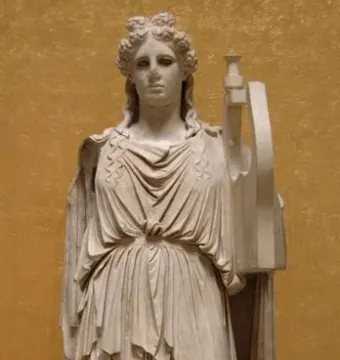
· Public domain
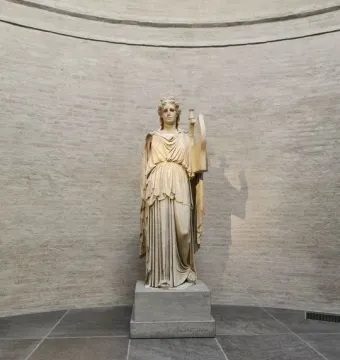
October 2021 © Netha Hussain · CC0
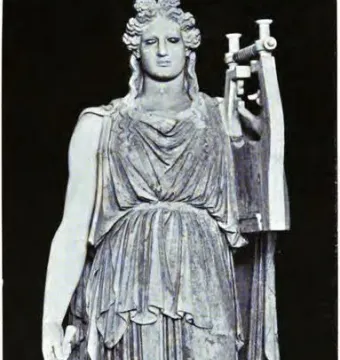
1911 © Adolf Furtwängler (1853-1907), Heinrich Ludwig Urlichs (1864-1935) · Public domain
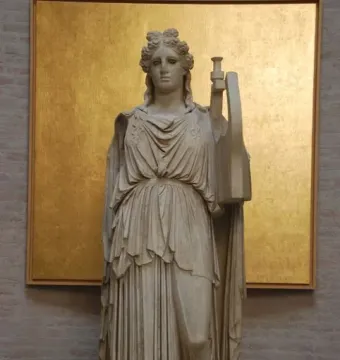
March 2012 © Marcus Cyron · CC BY-SA 3.0
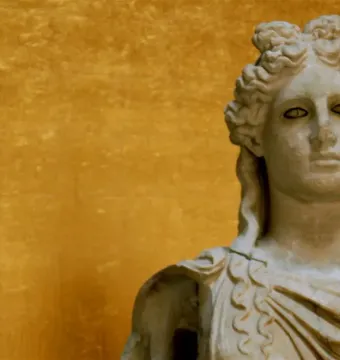
June 2007 © Todd Huffman · CC BY 2.0
Identification | |
| Title | Apollo Barberini |
| Subject | Apollo citharoedus |
| Inventory number | Inv. 211 |
| Type | Roman sculpture |
Historical context | |
| Date | 1st or 2nd century; probably Augustan age |
| Function in antiquity | Cult statue of Apollo Citharoedus in the Temple of Apollo Palatinus in Rome |
Creator | |
| Possible model artist | Scopas |
| Stylistic attribution of original | School of Phidias |
Discovery and provenance | |
| Associated works from same collection | Barberini Faun; Portland Vase |
| Transfer history | Transferred after the dispersal of the Barberini Collection in the 19th century |
| Later display location | Palazzo Barberini, Rome |
| Discovery context | Found during modern-era excavations |
| Original provenance of possible prototype | Possibly from the sanctuary of Apollo in Rhamnous, Attica |
| Discovery location | Tivoli |
| Named after | The Barberini family, who owned it |
| Provenance | From the Barberini collection |
Location and ownership | |
| Current location | Glyptothek, Munich |
| Current status | Still located there |
Physical characteristics | |
| Eyelashes | Copper, now lost |
| Right arm | Lost; formerly restored, but the restoration is no longer present |
| Hair | Thick, elaborate hair with long curls descending to the chest |
| Head and neck | Separate marble piece fitted into the body |
| Pose | Advances toward the viewer with a slow, formal step, resting on the right leg |
| Eyes | White stone eyes with dark-stone irises, the irises no longer surviving |
| Belt | Wide belt at the waist, partly covered by the folded-back veil |
| Clothing | Long veil falling in numerous folds to the ground |
| Left-hand attribute | Large lyre |
| Depicted figure | A deity |
Materials | |
| Body material | Marble |
| Eyes material | White stone; dark stone irises now lost |
| Eyelashes material | Copper, now lost |
| Head and neck material | Marble |
Iconography and meaning | |
| Actual iconographic subject | Apollo citharoedus (Apollo with the long tunic of the Pythians) |
| Possible model | Probably a copy of Scopas's Apollo Citharoedus |
| Possible prototype | May be a copy of the Apollo Palatinus by Scopas |
| Original work | A copy of an older Greek statue |
| Winckelmann's interpretation | He described the statue as female and identified it with the inspiring muse of Ageladas, the master of Phidias and Polyclitus |
| Meaning of the tunic | A garment worn by singers and musicians competing for prizes during the festival in honor of Apollo |
| Late Greek depiction of Apollo | Apollo the musician was regularly shown wearing this long robe, unlike the nude Apollo with the bow |