
The Exiled
The Exiled is a Carrara marble sculpture by António Soares dos Reis, held in the collection of the National Museum Soares dos Reis in Porto. It was begun in Rome in 1872 as a final examination piece for a sculpture school and completed in Porto. The work was sent to the 14th triennial exhibition of the Academia Portuense de Belas-Artes and won a gold medal at the International Exhibition of Madrid in 1881. Based on Alexandre Herculano’s poem Tristezas do Desterro, it was regarded by Teixeira de Pascoaes as a powerful expression of the Portuguese longing known as saudade. The sculpture is classified as movable cultural heritage of national interest.
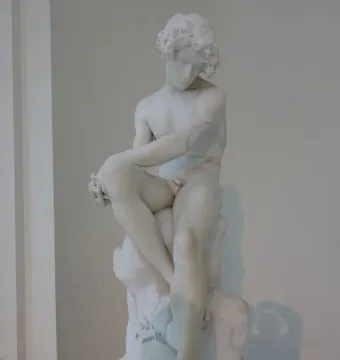
February 2016 © Joseolgon · CC BY-SA 4.0
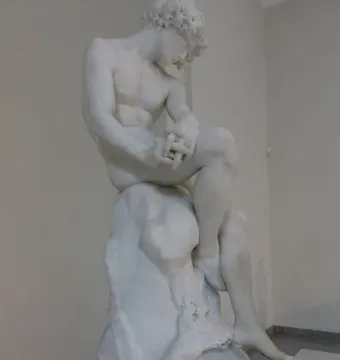
February 2016 © Joseolgon · CC BY-SA 4.0
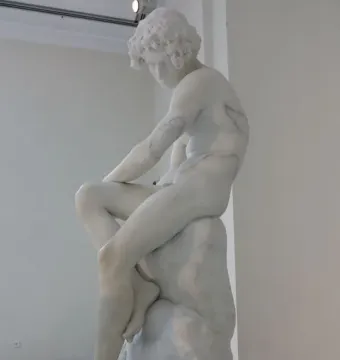
February 2016 © Joseolgon · CC BY-SA 4.0
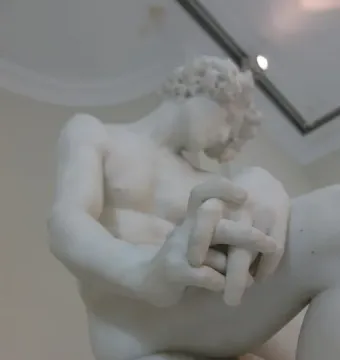
February 2016 © Joseolgon · CC BY-SA 4.0
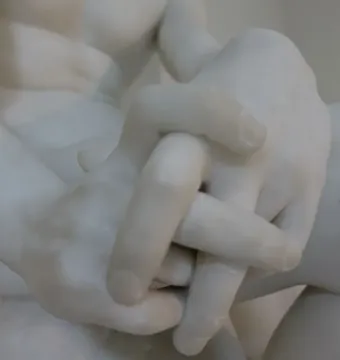
February 2016 © Joseolgon · CC BY-SA 4.0
Identification | |
| Title | The Exiled |
| Type | statue |
| Original title | O Desterrado / Der Ausgestoßene / L'Esiliato / L'Exilé |
Creator | |
| Artist | António Soares dos Reis |
Historical context | |
| Completion place | Porto |
| Exhibited at | 14th triennial exhibition of the Academia Portuense de Belas-Artes / Academy of Fine Arts of Porto |
| Award | Gold medal at the 1881 International Exhibition of Madrid |
| Purpose of creation | Final examination for a sculpture scholarship |
| Place work began | Rome |
| Start date | 1872 |
Iconography and meaning | |
| Based on | the poem "Tristezas do Desterro" by Alexandre Herculano |
| Interpretation by Teixeira de Pascoaes | considered the highest expression of saudade, characteristic of the Portuguese soul |
Materials | |
| Material | Carrara marble |
Location and ownership | |
| Collection | Museu Nacional Soares dos Reis, Porto |
| Location | Porto, Portugal |
| Legal status | movable cultural property classified as of national interest (National Treasure) |
Other | |
| Patinated plaster version | Held at Museu Nacional de Arte Contemporânea do Chiado; made as a model for the bronze version; from the Hospitium/Hospice of Santo António dos Portugueses, Rome; transferred to Lisbon in 1908–1909 with funding from the Valmor Legacy |
| Bronze version location | Garden of the Museu Nacional de Arte Contemporânea do Chiado |