
Chemamull
Chemamull is a wooden statue used by the Mapuche people during funerary rites. The name means “wooden person” in Mapudungun, from che meaning “person” and mamüll meaning “wood.” These sculptures are carved from tree trunks or pieces of wood and can be more than 2 meters tall. They depict a stylized human body and head, giving them a simplified human form with ceremonial significance.
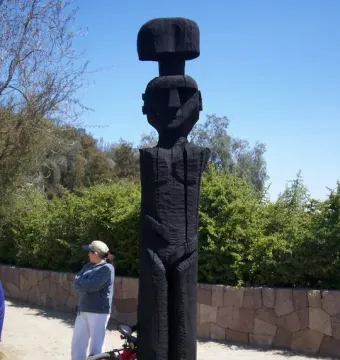
August 2007 © Al2 · CC BY 3.0
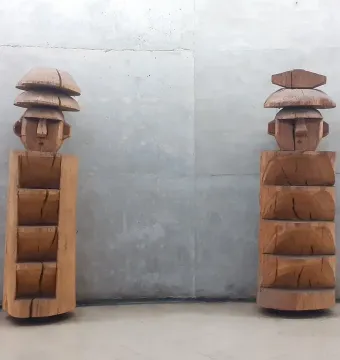
August 2021 © Sfs90 · CC BY-SA 4.0
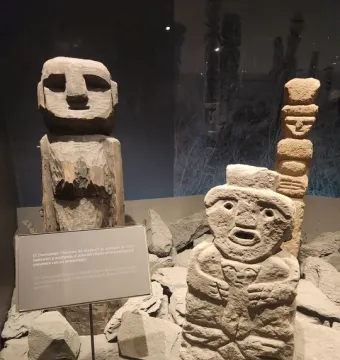
October 2025 © Aeveraal · CC BY 4.0
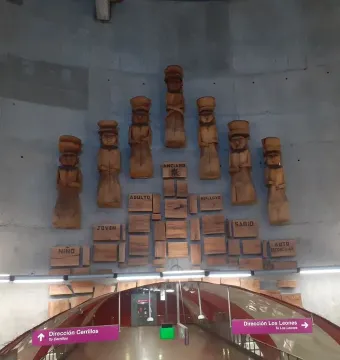
August 2021 © Sfs90 · CC BY-SA 4.0
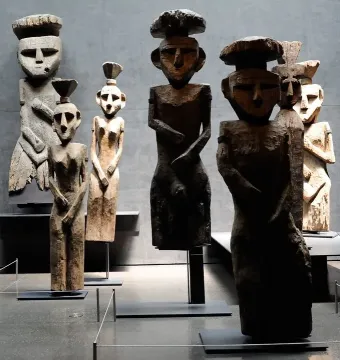
© Tim Adams · CC BY 2.0
Identification | |
| Title | Chemamull |
| Alternative names | chemamüll; chemamul |
| Literal meaning | "wooden person"; "wooden people" |
| Etymology | From Mapudungun che meaning "person" and mamüll meaning "wood"; literally "wood with the appearance of a person" |
| Type | Mapuche wooden statue |
Historical context | |
| Culture | Mapuche |
| Historical period | Pre-Columbian / pre-Hispanic era, before the arrival of the Spanish |
Creator | |
| Creators | the Mapuche people |
Physical characteristics | |
| Depicted form | Stylized human body and head |
| Gender representation | May have masculine or feminine features; represents both men and women |
| Common pose | Arms crossed over the chest |
| Height | Usually more than 2 meters tall |
| Texture | Irregularly carved wood |
Materials | |
| Material | Wood |
| Wood species used | Pellín oak (Nothofagus obliqua) or Chilean laurel (Laurelia sempervirens) |
Technique | |
| Carving method | Carved from whole tree trunks or pieces of trees using axes, small axes, or rocks; made without modern technologies |
Iconography and meaning | |
| Purpose | Used in funerary rites to mark the tomb of a deceased person, similar to a tombstone or headstone |
| Funerary meaning | Believed to help the deceased person's soul reach its final destination and reunite with the ancestors (pillanes and wangulén) |
| Ritual placement | Kept beside the deceased during the wake or funeral and later erected over or beside the grave |
| Ceremonial setting | Placed on a rehue, the altar used by the Mapuche for ceremonies |
Related works | |
| Related sculpture types | kemu-kemu, rehues, kollones, and other Mapuche sculptures |
History and restoration | |
| Former abundance | According to stories, these sculptures were once numerous in Araucanía when the Spanish arrived |
| Later fate | Many were burned after being considered idolatry; another theory says many were burned during land-clearing "cleanings" for cultivation; some were sold and later used as firewood in villages |
Other | |
| Technical context | Created without modern technologies |
| Character of the work | Described as arduous work and as art expressing much of Mapuche thought |
| Current notable sculptor | Antonio Paillafil |
| Current production location | Santiago |
| Workshop/location of work | House of Culture of San Bernardo, Santiago |
| Distribution/sales venue | Fundación Artesanías de Chile |
| Works reproduced by Antonio Paillafil | kemu-kemus, rehues, chemamull, kollones, and other Mapuche sculptures |
| Related artwork in image | Los pasos de la vida en la tierra by Antonio Paillafil, shown at Bío Bío station, Santiago Metro |