
Cristo de La Laguna
Cristo de La Laguna, also known as the Santísimo Cristo de La Laguna, is a Catholic image of Jesus Christ crucified, located in San Cristóbal de La Laguna, Tenerife. It is one of the most venerated images in the Canary Islands and is regarded as the most revered Christ devotion in the archipelago, as well as one of its oldest religious images. The sculpture is considered highly important for its historical, artistic, religious, and cultural value, and is also regarded as one of the finest Flemish images in the Canary Islands and one of the great European crucifixes. It is housed in the Real Santuario del Santísimo Cristo de La Laguna, the convent of San Miguel de las Victorias.
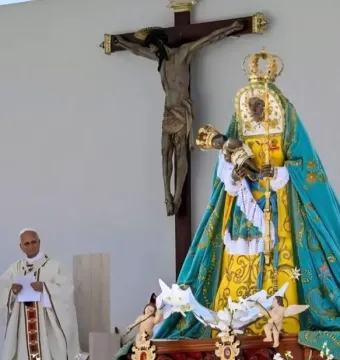
June 2026 © AmaroPargoTenerife · CC0
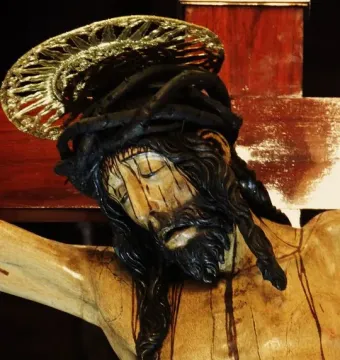
March 2013 © José1989 · CC BY-SA 3.0
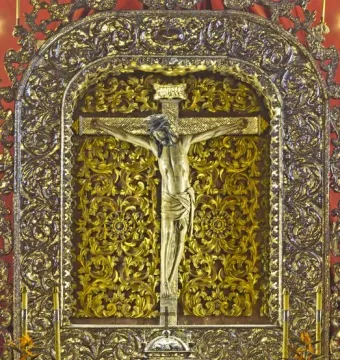
September 2012 © Koppchen · CC BY 3.0
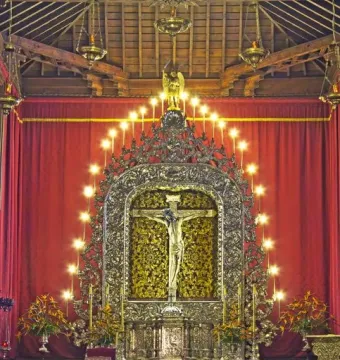
September 2012 © Koppchen · CC BY 3.0
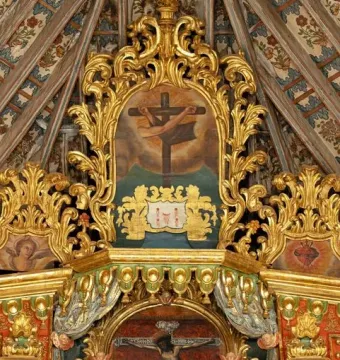
September 2024 © NaturCult · CC BY 4.0
Identification | |
| Title | Santísimo Cristo de La Laguna |
| English name | Christ of La Laguna |
| French name | Christ de La Laguna |
| Type | Gothic Catholic crucifix sculpture |
| Subject | Jesus Christ crucified |
| Alternative title | Cristo de La Laguna |
Historical context | |
| Date of creation | 16th century, probably around 1500 or 1514 |
| Place of creation | Flanders |
Creator | |
| Attribution | Louis Van Der Vule |
| Origin of artist or work | Flemish-Brabantine; earlier attributions also included Sevillian and Nordic origins |
| Research attribution | Identified by Francisco Galante Gómez in 1999 as a Flemish-Brabantine Gothic carving by Louis Van Der Vule |
Discovery and provenance | |
| Reported donor | The dukes of Medina Sidonia; also described as a possible gift from Juan Alonso Pérez de Guzmán y Zúñiga, 6th Duke of Medina Sidonia, or from the Count of Medina-Sidonia |
| Initial placement in Tenerife | Convent of San Miguel de las Victorias, now the Royal Sanctuary of the Santísimo Cristo de La Laguna |
| Recipient in Tenerife | Alonso Fernández de Lugo |
| Arrival in Tenerife | 1520 |
| Early route before Tenerife | Possibly taken through Venice, Barcelona, and Sanlúcar de Barrameda before reaching Tenerife |
| Custody before Tenerife | Kept for several years in the Hermitage of Vera-Cruz in Sanlúcar de Barrameda as property of the brotherhood there |
Physical characteristics | |
| Hair | Hair ends in ringlets |
| Overall form | Arched |
| Facial features | Long face with prominent cheekbones and an aquiline nose |
| Body representation | The body, especially the musculature, is proportioned for the period |
| Facial expression | Face shows pain |
| Head position | Head inclined and turned to the right |
| Figure posture | Christ hangs from the cross with three nails; arms and legs fully extended |
Appearance | |
| Iconographic note | Not the typical fainted crucified Christ with the body weight supported on the knees |
Materials | |
| Material | Wood |
Technique | |
| Technique | Special carving technique; later covered with a silver sheet on the cross |
Style | |
| Artistic style | Gothic |
Location and ownership | |
| Former cross | The replaced cross is kept in the lower choir of the convent of the Poor Clares |
| Processional base | Silver repoussé base donated in 1654 by Captain Lázaro Rivero |
| Cross | Current cross covered with roughly worked silver sheet; gift from Francisco Bautista Pereira de Lugo in 1630 |
| Display setting | Displayed on a silver cross in the altar with an embossed silver-and-gold altarpiece |
| Related devotional association | The Pontifical, Royal and Venerable Slavery of the Holy Christ of La Laguna is associated with the image |
| Custodian | Diocese of Tenerife |
| Sanctuary | Real Santuario del Santísimo Cristo de La Laguna, former Convent of San Miguel de las Victorias |
| Current location | Royal Sanctuary of the Santísimo Cristo de La Laguna, San Cristóbal de La Laguna, Tenerife, Canary Islands, Spain |
| Brotherhood | Pontifical, Royal and Venerable Brotherhood of the Santísimo Cristo de La Laguna |
History and restoration | |
| Public devotional use | Carried in rogations through the streets of La Laguna on many occasions, especially during epidemics, plagues, and droughts |
| 2026 papal event | On 12 June 2026, Pope Leo XIV venerated the image at the Port of Santa Cruz de Tenerife during the closing Mass of his apostolic journey to Spain, alongside the Virgin of Candelaria; it was the first papal visit to the Canary Islands and the first time in 500 years that the image left La Laguna |
| Royal and papal honors | Pope Pius X gave the brotherhood the title Pontificia; Alfonso XIII granted the Christ royal honors in its sanctuary and brotherhood; Juan Carlos I and Queen Sofía visited the image |
| Papal privilege | In 1587, Friar Bartolomé de Casanova requested indulgences for the chapel from Pope Sixtus V, who granted privileges comparable to those of the Archbasilica of St. John Lateran |
| Military patronage | Declared patron and protector of the Regiment of Field Artillery No. 93 of Tenerife (RACA 93) in 2024 |
| Military devotion | Highly venerated by artillerymen in the Morocco campaign of 1921–1922; they were placed under its protection and later vowed to accompany it in processions |
| 2025 ceremony | On 30 April 2025, Bishop Eloy Alberto Santiago made his profession of faith and oath of fidelity before the image in its sanctuary |
| Jubilee year | Pope Francis granted a jubilee year from March 2018 to February 2019 in preparation for the 2020 anniversary |
| 500th anniversary | The 500th anniversary of the image's arrival in Tenerife was commemorated in 2020 |
| BIC designation | Declared a Bien de Interés Cultural in 2005 by the Government of the Canary Islands; the sanctuary as a Monument and the image as a Bien Mueble |
| Temporary transfer for consecration | Exceptionally transferred to the Cathedral of La Laguna a few days before the consecration |
| Consecration | Consecrated on 21 September 1947 by Domingo Pérez Cáceres |
| Temporary custody after fire | Kept in the parish church of Our Lady of Remedies, now the cathedral, until the sanctuary was restored |
| Fire damage | The sanctuary was devastated by a fire on 28 July 1810, but the sculpture was saved |
Significance | |
| Replicas and related works | Replicas exist in Xalapa-Enríquez, Veracruz, and in the Palacio del Pardo, Madrid; many paintings, oils, small sculptures, and likenesses also exist in Tenerife and elsewhere |
| Devotional diffusion | Devotion spread from the Canary Islands to parts of America through Canarian emigrants, inspiring other crucifixes |
| Historical importance | A figure of great historical importance |
| Cultural importance | A figure of great cultural importance; its distinctive style is considered unique by people of La Laguna and Canarians |
| Artistic importance | Considered the most important Flemish image in the Canary Islands, one of the artworks of greatest artistic value in Spain, and one of the great European crucifixes |
| Heritage status | Considered one of the best images forming part of the Historical Heritage of the Canary Islands |
| Antiquity | One of the oldest religious images in the Canary Islands archipelago |
| Regional importance | The most important image representing Jesus in the Canary Islands and the second most important devotion in Tenerife after the Virgin of Candelaria |
| Religious importance | One of the most venerated images of Christ in the Canary Islands and one of the three most venerated and miraculous religious images in the archipelago |
Other | |
| Nearby place | Plaza del Cristo de La Laguna is next to the sanctuary |
| Processional destination | Cathedral of La Laguna |
| Processional return location | Convent of San Miguel de las Victorias |
| Festival date | 14 September |
| Annual procession date | 9 September |
| Festival event after procession | Fireworks followed by dancing |