
Birth of the New World
Birth of the New World is a bronze sculpture located on the Atlantic coastline of Arecibo, Puerto Rico. Completed in 2016, it became the tallest sculpture in North America and the tallest in the Western Hemisphere, surpassing Guerrero Chimalli in Mexico. It was also the fourth tallest sculpture worldwide at the time, behind the Statue of Unity in India, the Spring Temple Buddha in China, and the Laykyun Sekkya in Myanmar. After being imported to Puerto Rico, the sculpture was first planned for Cataño, then moved to Mayagüez before facing further delays. It was eventually assembled at its current location in Arecibo.
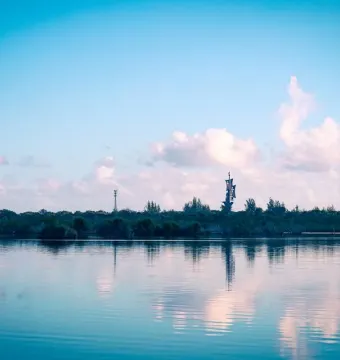
March 2026 © Ligocsicnarf89 · CC BY 4.0
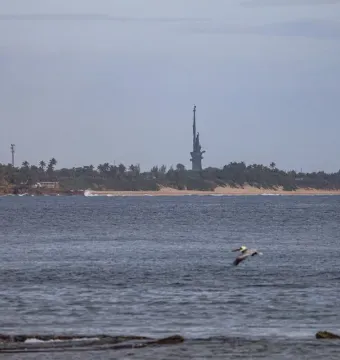
June 2026 © Ligocsicnarf89 · CC BY 4.0
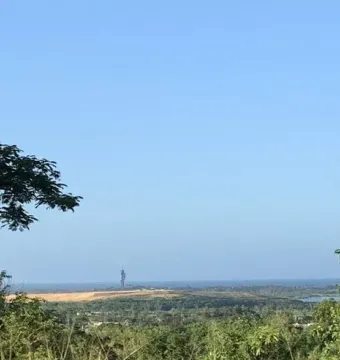
December 2019 © Old School WWC Fan · CC BY-SA 4.0
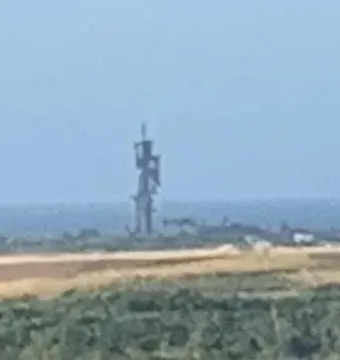
© Old School WWC Fan · CC BY-SA 4.0
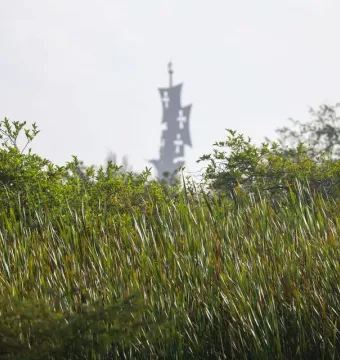
July 2026 © Ligocsicnarf89 · CC BY 4.0
Identification | |
| Title | Birth of the New World |
| Type | sculpture; statue; monument |
| Original language title | El Nacimiento del Nuevo Mundo |
| Alternative names | La Estatua de Colón; Columbus's Statue; La Statua di Colombo; Chris Kong; Robo-Columbus; From Russia with Ugh |
Creator | |
| Sculptor | Zurab Tsereteli |
| Sculptor nationality | Georgian; Russian of Georgian origin |
| Artist known for | Monumental statues |
Historical context | |
| Completion date | 2016 |
| Purpose | Commemorate the 500th anniversary of Christopher Columbus's first voyage to America |
Iconography and meaning | |
| Depicted ships | The Niña, the Pinta, and the Santa María are represented in the background crossing the Atlantic Ocean |
| Depicted attributes | Columbus is shown holding a ship's wheel |
| Depicted figure | Christopher Columbus |
Discovery and provenance | |
| Other proposed locations | Desecheo Island; Ciénaga las Cucharillas eco park in Cataño; San Juan |
| Later proposed location | Arecibo |
| HGPI plan | Assemble the statue near the coastline in time for the 2010 Central American and Caribbean Games |
| HGPI relocation site | Mayagüez, Puerto Rico |
| HGPI description | A private group involved in development of the Mayagüez port |
| Transferred to | Holland Group Port Investment (HGPI) |
| Transfer date | 16 August 2008 |
| Original Cataño construction schedule | Construction would have begun in 1999, with dedication planned for October 2000 |
| Original planned site in Cataño | Near the entrance of Cataño Bay |
| Arrival date in Cataño | 12 November 1998 |
| Import cost paid by | Public treasury, with approval from Governor Pedro Rosselló |
| Donated by | Zurab Tsereteli |
| Acquisition year | 1998 |
| Acquired by | Municipality of Cataño, Puerto Rico |
| Rejected because | They were considered too large or an eyesore; in some cases there were concerns about skyline impact |
| Initial proposed locations | Baltimore; Fort Lauderdale; Miami; New York City; Columbus, Ohio |
| Year constructed | 1991 |
| Import cost to Puerto Rico | 2.4 million U.S. dollars |
Physical characteristics | |
| Height | 110 meters |
| Weight | More than an unspecified amount (incomplete source fragment) |
| Materials | Bronze and steel; 2,750 bronze and steel pieces |
| Comparison | Much larger than the 66-meter Statue of the Chimalli Warrior in Chimalhuacán, Mexico |
| Rank by height | Tallest sculpture in North America, the United States, and the Western Hemisphere when completed; fourth tallest sculpture worldwide when completed; one of the tallest statues in the world |
| Historical stature | Tallest monument in the Western Hemisphere during the last decade of the 20th century; dwarfed the Statue of Liberty and the Monumento a la Virgen de la Paz |
Appearance | |
| Construction status | The monument is assembled |
| Location | Atlantic coast of Arecibo, Puerto Rico |
| Assembly location | Current location in Arecibo, Puerto Rico |
Location and ownership | |
| Tourism project name | Columbus Theme Park; later renamed Terravista ParkLand |
| Developer | Pan American Grain |
| Expected annual income | 4.6 million U.S. dollars per year |
| Expected jobs | 900 new employees |
| Estimated assembly investment | 98 million U.S. dollars |
| Zone reclassification | Completed by January 2013 |
| Condition while stored | Some pieces began to show signs of rust |
| Current development status | Terravista ParkLand development had not yet begun after hurricane delays and was expected to take up to five years |
History and restoration | |
| Plaintiff | Zurab Tsereteli / Birth of New World LLC |
| Hurricane Maria impact | The monument survived Hurricane Maria in September 2017 without structural damage, but nearby infrastructure and reforestation efforts were heavily affected |
| Affected infrastructure | Beach house visitor center, new roads, parking, plaza, and reforestation efforts |
| Lawsuit date | 14 March 2019 |
| Parcel transfer discussion | For a year, the parties discussed transferring between 766 and 866 square yards of the parcel to an entity chosen by the artist |
| Defendants | González Freyre; Pan American Grain; Columbus Park Corporation |
| Lawsuit claim | Prior agreements were not fulfilled; the corporation had not been refunded a $17 million investment for transferring the sculpture between Mayagüez and Arecibo and had not received title to the land |
| Effect of dispute | Plans for the monument to open fully to the public were hindered and the formal opening date was postponed repeatedly |
| Contract signing date | November 2013 |
| Protest group | Movimiento Indígena Jíbaro Boricua |
| González Freyre's claim | Tsereteli did not raise the matter again until late 2018 after more than a year without communication and ignored mediation attempts |
| Protest reason | Opposition to the monument and to Columbus's role in European genocide of Indigenous peoples |
| Permit status | Puerto Rico's port authority denied the necessary permits, citing safety concerns |
| Protest date | 11 February 2014 |
| Airport concern | It might interfere with air traffic to nearby Luis Muñoz Marín International Airport |
| Structural concern | Its height raised concerns about interference with air traffic from nearby Luis Muñoz Marín International Airport |
| Funding status | The central government stopped providing funds for the project |
| Reason for transfer | Storing the pieces was costing the public treasury 4 million U.S. dollars, and Cataño could not afford a project exceeding 100 million U.S. dollars |
| Reason for opposition to simple assembly | Wilson Soto believed that simply assembling the statue would not be enough to attract tourism and that the whole area would need development |
| Developer search | In early 2005, Tsereteli began seeking developers to take over the project |
| Revised project cost | The total project cost was re-estimated because several parts and some steel support structures needed replacement, exposure damage had to be repaired, and additional sandblasting was required |
| Lost potential revenue | An estimated 200,000 U.S. dollars that the recreational park would have generated if open to the public |
| Annual storage cost | 1.6 million U.S. dollars per year, plus salaries of several security guards |
| Storage status | Unassembled for several years |
| Storage location | Near Cataño Bay |
Significance | |
| Featured on | A Russian stamp |