
Venus of Brassempouy
The Venus of Brassempouy is a 3.65 cm-high fragment of an ivory statuette made from mammoth ivory in the Upper Paleolithic. Also known in French as "la Dame à la capuche" or "the lady with the hood," it was discovered in 1894 in the Grotte du Pape near Brassempouy in the Landes département of France, together with eight other statuettes. It is considered the oldest known, more carefully rendered depiction of a human face and is associated with the Gravettian, with an estimated age of 21,000 to 26,000 years. Unlike other Venus figures from this period, its facial features are shown in unusual detail.
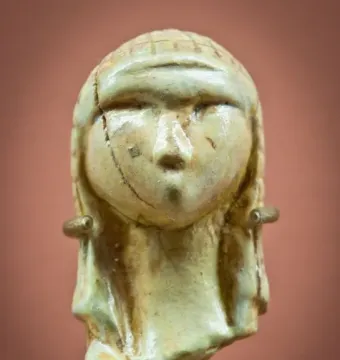
April 2012 © BastienM · CC BY-SA 3.0
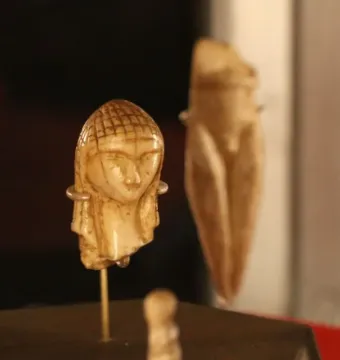
March 2017 © Cangadoba · CC BY-SA 4.0
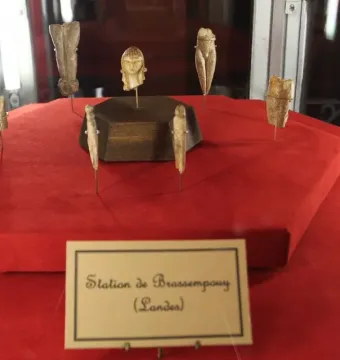
March 2017 © Lionel Allorge · CC BY-SA 3.0
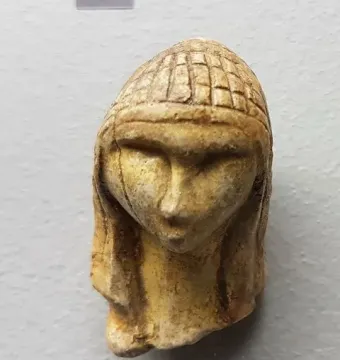
March 2017 © Roland zh · CC BY-SA 3.0
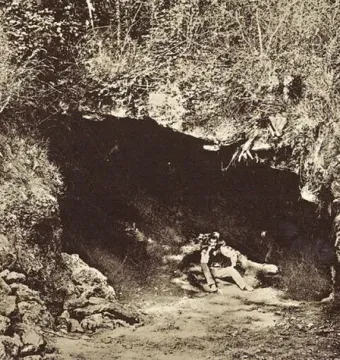
© probablement Louis de Laporterie · Public domain
Identification | |
| Title | Venus of Brassempouy |
| Alternative names | La Dame à la Capuche; La Dame de Brassempouy; Lady with the Hood; Lady of Brassempouy; Brassempouy Bust; Wenus z Brassempouy; Dame à la Capuche; Dame de Brassempouy; figurita de la capucha; Figurette; l'Ebauche; le Fragment; le bouchon à outre; la Poire |
| Type | Fragmentary female bust figurine, usually classified as a Venus figurine |
Historical context | |
| Period | Upper Paleolithic |
| Cultural attribution | Gravettian |
| Date | About 29,000–24,000 years BP; some sources give 31,000–24,000 BCE or more than 21,000 years old |
Creator | |
| Discoverer | Édouard Piette |
Discovery and provenance | |
| Discovery date | 1894; some sources say 1892 |
| Discovery location | Grotte du Pape (Pope's Cave), near Brassempouy, Landes, southwestern France |
| Discovery context | Found with at least eight other human figurines/statuette fragments; possibly unfinished works |
| Named after | Brassempouy, Landes, southern France |
Physical characteristics | |
| Form | Small head fragment from a larger figure; no body remains |
| Height | 3.5–3.65 cm |
Materials | |
| Material | Mammoth ivory |
| Material context | Found in an ivory-rich archaeological layer |
Location and ownership | |
| Current location | Musée d'Archéologie nationale, Saint-Germain-en-Laye |
| Usual storage | Usually kept in storage at the Musée d'Archéologie nationale for conservation reasons |
History and restoration | |
| Condition | Broken from a larger figure at some unknown time |
| Excavation history | First explored by Pierre-Eudoxe Dubalen in 1881; later excavated by J. de Laporterie and Édouard Piette from 1894; early excavation methods were limited and the site was badly disturbed in 1892 by amateur excavations |
| Stratigraphic attribution history | Piette initially assigned the lower levels to the late and middle Solutrean and proposed an 'ébuméen' level; modern reanalysis by Henri Delporte (1981–2000) attributes the figure to the Gravettian |
Significance | |
| Significance | Considered one of the oldest known realistic depictions of a human face; some sources call it the oldest or earliest known detailed, quasi-realistic, or realistic human face representation |
Appearance | |
| Stylistic characteristics | Facial features are more detailed than in other Venus figures from the same period |