
Venus of Langenzersdorf
The Venus of Langenzersdorf is a Neolithic figurine depicting a stylized nude woman. It was discovered in 1955 in Langenzersdorf, north of Vienna in Austria, and is associated with the Lengyel culture. The statuette is similar in style to the Venus of Falkenstein, also found in Lower Austria and from a comparable period. It has an elongated upper body, a relatively short lower body with prominent hips, and arms stretched horizontally. The head sits on a long neck and is completely abstract, without a recognizable face. The figures were made of dark brown clay mixed with small stones, then molded and fired.
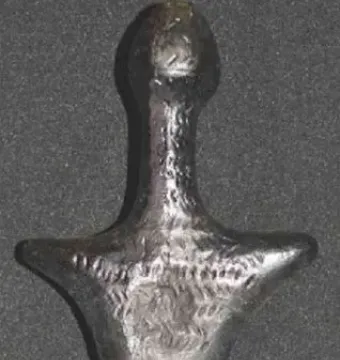
April 2018 © Warinhari · CC BY-SA 4.0
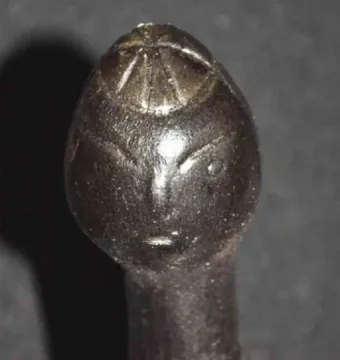
April 2018 © Warinhari · CC BY-SA 4.0
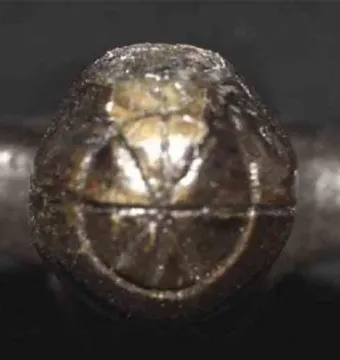
April 2018 © Warinhari · CC BY-SA 4.0
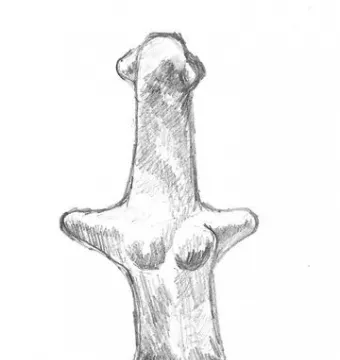
September 2009 © Martina Schettina · CC BY-SA 3.0
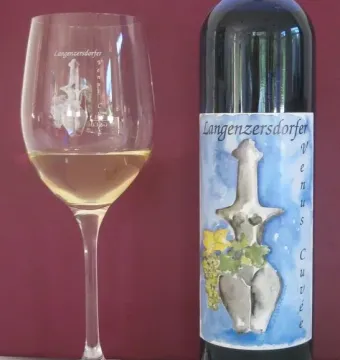
October 2009 © Foto Marinelli, Kunstwerk auf der Etikette von Martina Schettina · CC BY-SA 3.0
Identification | |
| Title | Venus of Langenzersdorf |
| Type | Venus figurine |
| Alternative name | Venus of Bisamberg |
Historical context | |
| Period | Neolithic |
| Culture | Lengyel culture |
| Date | around 5000 BC |
| Radiocarbon date | 4825 ±90 BC |
| Dating method | Radiocarbon dating of associated organic material in the same stratigraphic layer |
Creator | |
| Excavation leader | Hertha Ladenbauer-Orel |
Discovery and provenance | |
| Condition at discovery | Found in four fragments |
| Date of first fragment discovery | 21 December 1955 |
| First fragment discovered | Right thigh fragment |
| Discovery place | Burleiten district, southern slope of Bisamberg, Langenzersdorf, Korneuburg District, Lower Austria, Austria |
| Find context | Near a hearth, within settlement remains of the Lengyel culture |
| Discovery context | Found during an excavation commissioned by the Federal Monuments Office, with assistance from the Langenzersdorf museum association |
| Discovery date | 1955–1956 |
Physical characteristics | |
| Pubic triangle | Not emphasized |
| Breasts | Not strongly emphasized |
| Head | Placed on a long neck and completely abstracted, without a recognizable face |
| Arms | Stretched laterally and only hinted at |
| Lower body | Relatively shortened with prominent hips |
| Upper body | Elongated |
| Material | Dark-brown clay mixed with small stones |
| Height | 18 cm |
| Depicted figure | Stylized nude woman |
Technique | |
| Manufacturing technique | Molded and fired |
Iconography and meaning | |
| Other interpretations | Simultaneous depiction of motherhood and virginity |
| Other interpretations | Field magic or fertility magic for agriculture |
| Other interpretations | Possibly resembles an animal idol |
| Marija Gimbutas interpretation | A combination of female and male symbols, with the head and neck resembling a phallus and the body below the neck female, symbolizing strength and fertility united in one figure |
| Interpretation status | Meaning is disputed among specialists |
| Interpretation of hips | Often interpreted as a symbol of fertility and fecundity |
Location and ownership | |
| Ownership | Private ownership |
| Museum copy | Heimatmuseum Langenzersdorf displays a copy of the statuette alongside original Lengyel culture finds |
History and restoration | |
| Public exhibition | Exhibited at the 1958 World Exposition in Brussels in the Austrian pavilion |
| Public exhibition | Displayed publicly for one day during the 900th anniversary celebration of Langenzersdorf in 2008 |
Significance | |
| Use in marketing | Since 2000, the figurine's image has been used in marketing locally produced wine in Lower Austria |
| Namesake | Since 2000, it has given its name to the Venus-Cuvée |
| Associated wine | Venus-Cuvée |
| Wine producers | Made jointly by seven winemakers from Langenzersdorf |
| Wine label | A stylized Venus appears on the label |
| Wine label designer | Martina Schettina |