
Cartonería
Cartonería is considered a Mexican folk art made by molding and shaping craft paper into figures. Its best-known forms include Judas figures, piñatas, toritos, mojigangas, alebrijes, catrinas, calaveras, panzones de Corpus, and paper masks and toys such as the cardboard dolls of Celaya and little horses. The technique came to Mexico with the Conquest and, during the Colonial period, it was used by Franciscan friars as part of evangelization. Over time, the Judas of Holy Week developed a distinct style. Today, cartonería remains an important form of popular art, present throughout Mexico’s religious, ritual, and traditional calendar, especially in the Day of the Dead calaveras.
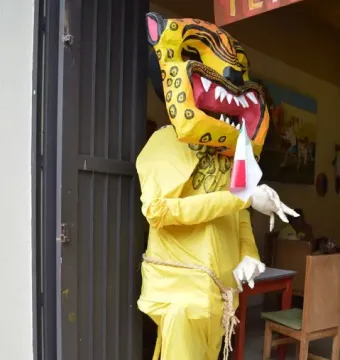
September 2015 © AlejandroLinaresGarcia · CC BY-SA 4.0
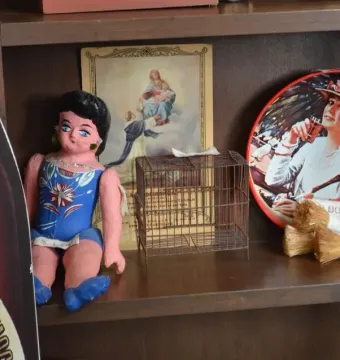
December 2013 © AlejandroLinaresGarcia · CC BY-SA 3.0
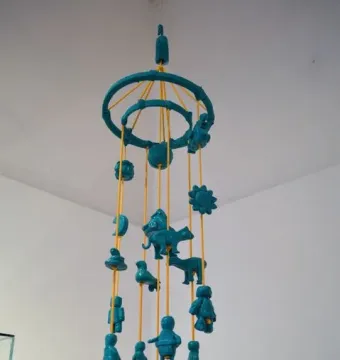
May 2017 © Thelmadatter · CC BY-SA 4.0
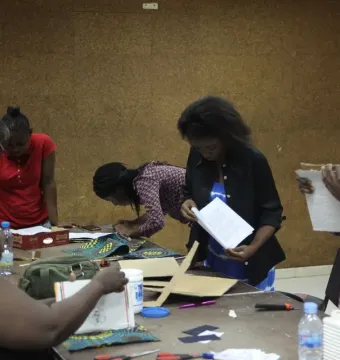
October 2017 © Virgilio Brice · CC BY-SA 4.0

July 2015 © Sebstolk · CC BY-SA 4.0
Identification | |
| Title | Cartonería |
| Alternative names | Carton piedra; cartón |
| Type | Traditional Mexican craft and papier-mâché sculpture tradition |
Historical context | |
| Historical restriction | Spanish authorities banned paper production after the Conquest because it was used in religious rites, but the ban was never complete |
| Traditional paper sources | Amate bark and maguey fibers |
| Later paper production | Paper use expanded much later, especially after the first modern cellulose and paper manufacturing plant was established in San Rafael, State of Mexico, at the end of the 19th century |
| Historical use | Used by Franciscan friars as part of evangelization, especially for church objects and religious icons |
| Origin and early development | Derived from paper-based religious and festive practices in colonial Mexico, including proto-cartonería made with layers of paper and animal glue for processions |
| Introduction to Mexico | Introduced during the colonial period |
| Country of origin | Mexico |
Creator | |
| Notable 20th-century artisans | Pedro Linares; Carmen Caballero Sevilla |
| Recognized patrons | Diego Rivera |
Discovery and provenance | |
| Development area | Central Mexico |
| Places where the craft is practiced | Mexico City; Puebla; State of Mexico; Guanajuato |
| Notable production centers | Mexico City; Celaya |
Physical characteristics | |
| Form | Three-dimensional sculptures, masks, toys, dolls, piñatas, and other festive objects |
| Typical size | Cardboard sculptures can be up to 75 cm tall; some sugar skulls are up to 50 cm |
Materials | |
| Additional materials | Waste paper such as newspapers and boxes, paste, paint, crepe paper, cotton, vegetable fibers, and deer antlers |
| Historical materials | Cloth and straw, mainly |
| Primary materials | Papier-mâché, paper, and cardboard |
Technique | |
| Painting method | Painted with acrylics; some masks are painted in changing colors according to tradition |
| Formation method | Most forms are made with molds, often of clay, plaster, or wood |
Appearance | |
| Decorative features | Often decorated with crepe paper, flowers, birds, mustaches, eyebrows, and other ornamentation |
| Stylistic features | Masks vary in shapes, sizes, expressions, and facial features, and may be made more realistic or more fantastical |
Iconography and meaning | |
| Piñata symbolism | Traditional star piñatas have seven spikes representing the seven deadly sins |
| Cora mask use | Cora papier-mâché masks usually represent the Pharisees and are placed in the river on Holy Saturday to dissolve as an act of purification |
| Traditional uses | Made for rituals, festivals, decoration, and collector pieces; many are produced for a particular celebration |
| Festival associations | Holy Week, Holy Saturday, Day of the Dead, Christmas, Carnival, Epiphany, Mexican Independence Day, the Feast of Saint John the Evangelist, May celebrations, June celebrations, birthdays, and other yearly festivities |
| Common subjects | Judas figures, piñatas, toritos, mojigangas, alebrijes, catrinas, calaveras, panzones de Corpus, masks, paper toys, dolls, horses, skeletons, coffins, parrots, clowns, eagles, Father Hidalgo, nativity scenes, devils, goats, witches, old men, sultans, monkeys, and beautiful women |
Location and ownership | |
| Current status | Considered a folk art and traditional Mexican handcraft |
| Current popularity | Less popular among younger generations, especially as urbanization continues in places such as Mexico City and Celaya |
| Preservation efforts | Government and cultural institutions, including CONACULTA, organize workshops, contests, and other events to preserve the craft |
Significance | |
| Cultural significance | It is important enough to appear year-round in Mexico's religious, ritual, and traditional calendar |
| Collector market | There is a significant market for collectors |
| Artistic recognition | In the 20th century, artisans such as Pedro Linares and Carmen Caballero Sevilla were recognized as artists, helping create a new collector market |
| Family tradition | The Linares family remains internationally known and has trained other artists, including Ruben Guzman in Oakland, California |
| Workshop and outreach projects | Projects such as Creaturas de Papel in Tepotzotlán and Miss Lupita in Mexico City promote the craft, and Carolina Esparragoza gave workshops and exhibited related figures in Tokyo in 2011 |