
Khufu Statuette
The Khufu Statuette, also known as the ivory figurine or statuette of Cheops, is a historically and archaeologically valuable artifact discovered in 1903 by Sir William Matthew Flinders Petrie during excavations at Kom el-Sultan in Abydos, Egypt. It depicts the ancient Egyptian king Cheops, ruler of the 4th Dynasty of the Old Kingdom. The small seated figure is the only largely intact three-dimensional representation of Cheops known today. Most Egyptologists regard it as contemporary with his reign, though its unusual findspot has led to repeated questions about its date. Zahi Hawass has even argued against an Old Kingdom date, suggesting a much later origin. Its purpose is also uncertain, and the artist remains unknown.
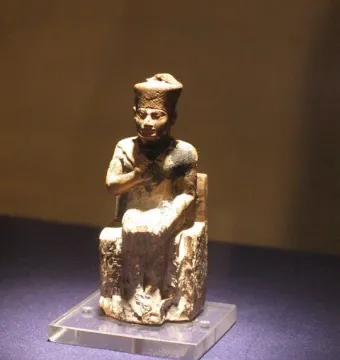
October 2003 © Chipdawes · Public domain
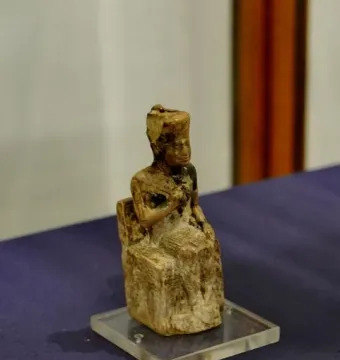
October 2019 © Olaf Tausch · CC BY 3.0
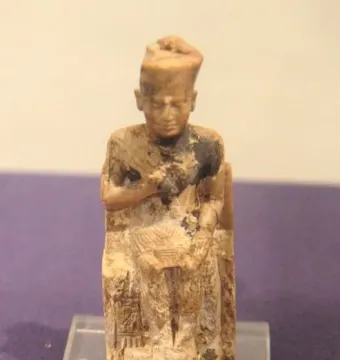
November 2019 © Djehouty · CC BY-SA 4.0
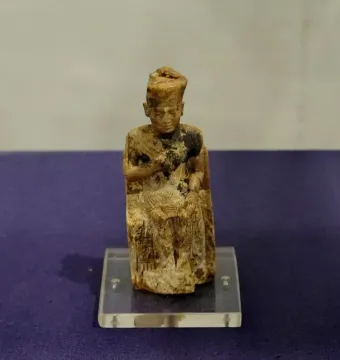
October 2019 © Olaf Tausch · CC BY 3.0
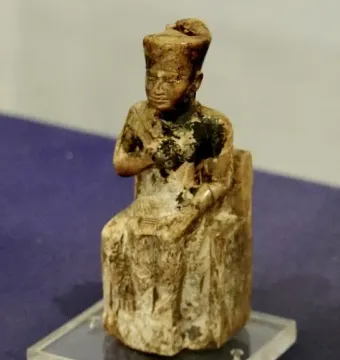
October 2019 © Olaf Tausch · CC BY 3.0
Identification | |
| Title | Khufu Statuette |
| Alternative names | Statuette of Khufu; ivory figurine of Khufu; La Statuetta di Cheope; ivory statuette of Khufu |
| Type | Ancient Egyptian ivory figurine/statuette |
| Depicted person | Khufu (Cheops, Khéops), pharaoh of Egypt's Fourth Dynasty and builder of the Great Pyramid |
Historical context | |
| Scholarly reception of alternative dating | Hawass's hypothesis has received little support but has not been disproven |
| Alternative dating hypothesis | Zahi Hawass proposed a 26th Dynasty date (664–525 BC) and rejected an Old Kingdom date |
| Dating | Most Egyptologists consider it contemporary with Khufu, probably from his reign or the immediately following years; the dating is repeatedly questioned because of the unusual findspot |
| Khufu's reign | c. 2589–2566 BC |
| Historical period | Old Kingdom |
| Dynasty | 4th Dynasty |
| Culture | Ancient Egypt |
Creator | |
| Artist | Unknown |
Discovery and provenance | |
| Discovery date | 1903 |
| Discovered by | Sir William Matthew Flinders Petrie |
| Discovery location | Kom el-Sultan near Abydos, Egypt |
| Discovery context | Found during excavations |
Physical characteristics | |
| Related remains | Several statue fragments also exist |
| Condition | Partially damaged; feet and pedestal are broken off, and the crown is damaged |
| Preservation status | The only known three-dimensional depiction of Khufu that survives largely intact; other sculptures of him survive only in fragments |
| Object size | Height about 7.5 cm; width about 2.6 cm; length 2.9 cm |
Materials | |
| Material | Ivory |
Technique | |
| Surface finish | Originally smooth, polished, and shiny |
Appearance | |
| Pose | Seated on a largely undecorated throne with a low back |
| Headgear | Red Crown (Deshret) of Lower Egypt |
| Crown condition | The back ridge/plume and the decorative front spiral are broken off |
| Right hand and attribute | Right hand placed on the chest, holding a flail against the right shoulder along the upper arm |
| Left arm and hand | Left arm bent; forearm rests on the left thigh and the open hand rests on the left knee |
| Body details | Small seated figure with a slightly oversized body proportion; large protruding ears; angular chin; no ceremonial beard |
| Clothing | Short pleated loincloth; upper body naked |
Iconography and meaning | |
| Inscription on right knee | Horus name Medjedu |
| Inscription on left knee | Very faint traces of the nomen Khnum-Khufu in a cartouche |
| Language note | Khufu is the Greekized form of Khnum-Khufu |
| Possible function | Unclear; if contemporary with Khufu, it may have belonged to the traditional statue cult or mortuary cult; if from a later period, it may have served as a votive offering |
Significance | |
| Importance | Historically and archaeologically significant |