
Gommateshwara Statue
The Gommateshwara statue is a towering monolithic image of Lord Bahubali on Vindhyagiri Hill in Shravanabelagola, Karnataka. Carved from a single block of granite, it is among the tallest monolithic statues in the ancient world and one of the largest free-standing statues anywhere. Built around 983 CE during the Western Ganga dynasty, it was commissioned by minister and commander Chavundaraya. The statue is dedicated to the Jain figure Bahubali and represents peace, non-violence, sacrifice of worldly affairs, and simple living. It is also a major Jain pilgrimage site, especially during Mahamastakabhisheka, the ritual bathing held once every 12 years.
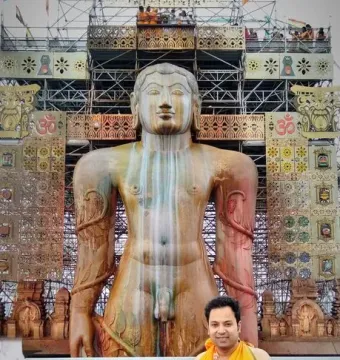
August 2018 © Jainsachin123 · CC BY-SA 4.0
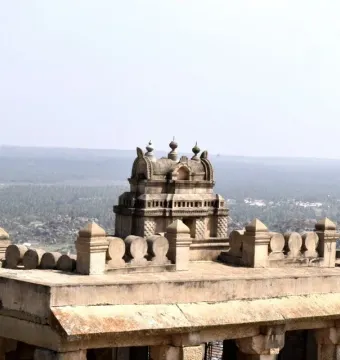
October 2016 © Vasukrishnan57 · CC BY-SA 4.0

March 2020 © Jainsanjiv · CC BY-SA 4.0
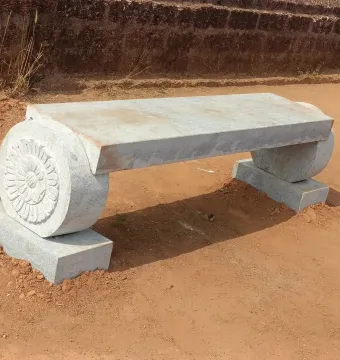
© Tejeshmavinamar · CC BY-SA 4.0
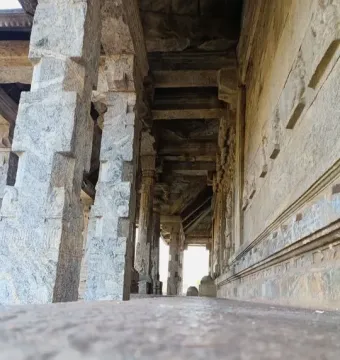
© Tejeshmavinamar · CC BY-SA 4.0
Identification | |
| Name | Gommateshwara statue |
| Alternative names | Gomateshvara; Gomateshwara; Bahubali statue |
| Type | Monolithic colossal statue |
Historical context | |
| Date of construction | Late 10th century, around 983 CE |
| Dynasty | Western Ganga dynasty |
| Religious tradition | Jainism |
| Meaning of name | Bahubali means "one with strong arms" |
| Associated figure | Bahubali, also called Gomateshvara, son of Rishabhanatha and brother of Bharat |
Creator | |
| Commissioned by | Chamundaraya (also spelled Chavundaraya), minister and commander of the Ganga dynasty |
| Purpose of commission | In honor of Bahubali |
| Builder's role | Minister of King Ganga Rachamalla IV (Raachmalla SathyaVaak IV, 975–986 AD) |
Discovery and provenance | |
| Listed by | Archaeological Survey of India |
| Official monument status | Adarsh Smarak Monument in Shravanbelagola |
Physical characteristics | |
| Height | About 18 meters |
| Material | Single block of granite |
| Technique | Carved from a single block of granite |
| Depiction | A nude figure of Bahubali shown in kayotsarga posture, with arms straight down, broad shoulders, curly hair ringlets, large ears, and half-open eyes resting on the nose |
Appearance | |
| Flanking figures | Two richly ornamented chauri bearers identified as a yaksha and yakshini |
| Rear feature | A trough carved on the rear side of the anthill |
| Base | Open lotus |
| Facial expression | A faint smile conveying calm inner peace and vitality |
| Iconographic elements | Climbing vines around the legs, an anthill, a snake and creeper twining around the legs and arms, and a cluster of flowers and berries near the upper arms |
Iconography and meaning | |
| Symbolism | Symbolises Jain precepts of peace, non-violence, sacrifice of worldly affairs, and simple living |
| Meaning of base | Signifies the totality attained in installing the statue |
| Meaning of anthill | Signifies incessant penance |
| Meaning of size | Its height reflects the original stature that Jains believed human beings had |
Location and ownership | |
| Access | Visitors reach the summit by climbing 614 rock-cut steps |
| Distance from Bangalore | 158 km |
| Visibility | Visible from a distance of 30 km |
| Nearby hill | Chandragiri, the other hill at Shravanabelagola and a seat of several ancient Jain centres |
| Nearby features | Jain basadis and several images of the tirthankaras |
| Location | Vindhyagiri (Indragiri), Shravanabelagola, Hassan district, Karnataka, India |
History and restoration | |
| Associated ritual | Mahamastakabhisheka, a Jain ritual held once every 12 years |
| Ritual actions | The statue is bathed or anointed with milk, curd, ghee, saffron, sandalwood, coconut water, sugarcane juice, water, and other consecrated substances; devotees also offer flower petals, precious stones, gold, and silver |
| Next ritual bathing | 2030 |
| Last ritual bathing | 7–26 February 2018 |
| Event attendees | Pilgrims, devotees, tourists, and notable visitors including Krishna-Rajendra Wodeyar in 1910, and Narendra Modi and Ramnath Kovind in 2018 |
| Legendary consecration story | A legend says that after completion Chavundaraya organized a mahamastakabhisheka with five liquids, but the liquid did not flow below the navel until Kushmandini intervened, after which the abhisheka was performed from head to toe |
Significance | |
| Religious importance | One of the holiest sites in Jainism and one of the religion's most important rituals |
| World ranking | Regarded as the tallest monolithic statue in the world and one of the largest free-standing statues in the world |
| Historical ranking | Regarded as the tallest Jain statue until 2016 |
| Recognition | Voted the first of the Seven Wonders of India in a Times of India poll on 5 August 2007, with 49% of the votes |