
Bamberg Horseman
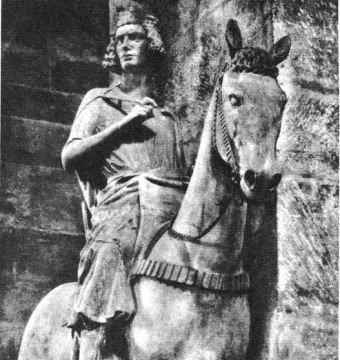
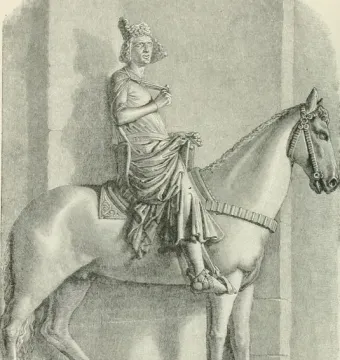
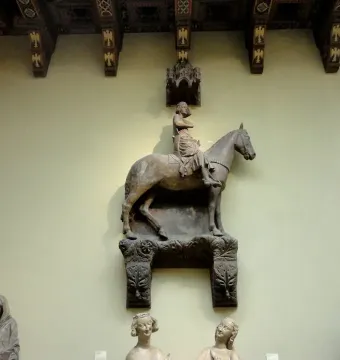
Bamberg Horseman, also known as the Bamberg Knight, is a life-size Gothic equestrian sculpture inside Bamberg Cathedral in Bavaria, Germany. Carved in the first half of the 13th century, probably around 1225, it predates the cathedral’s consecration in 1237. The work shows French Gothic influences, including those of cathedrals such as Reims, and is mounted on a bracket attached to a pillar in the eastern choir. The crowned, clean-shaven rider is shown without weapons, seated upright on a bridled horse with decorated harness and horseshoes. The identity of the figure remains uncertain, with possible candidates including Emperor Henry II, Stephen I of Hungary, Conrad III, or even a Magus or Constantine. The sculpture was likely originally painted.
1964 © Unknown authorUnknown author · Public domain
1905 © Internet Archive Book Images · No restrictions
September 2013 © Tilman2007 · CC BY-SA 3.0
August 2017 © Ulaisaeva · CC BY-SA 4.0
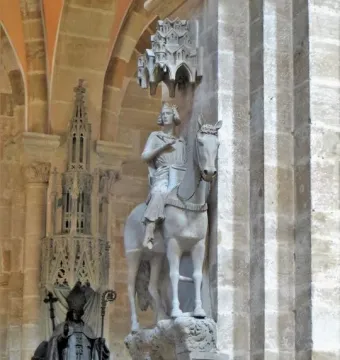
June 2018 © Bärwinkel,Klaus · CC BY-SA 4.0
Identification | |
| Title | Bamberg Horseman |
| Alternative names | Bamberger Reiter; Der Bamberger Reiter; Domreiter; steinerner Reiter; stone rider; Jinete de Bamberg; Caballero de Bamberg; Il Cavaliere di Bamberga; Cavaliere di pietra; Бамбергский всадник; Бамберзький вершник |
| Type | Equestrian statue; full-round sculpture; stone sculpture |
Historical context | |
| Date | First half of the 13th century, probably before the cathedral’s consecration in 1237, possibly after 1225 |
| Art style | Gothic art |
| Art historical period | Late Staufer period |
Creator | |
| Sculptor | Unknown |
| Stylistic influences | French Gothic cathedral sculpture, especially Reims |
Discovery and provenance | |
| Original installation | Installed before the cathedral’s consecration in 1237 |
| Original location | Bamberg Cathedral, Bamberg, Bavaria, Germany |
Location and ownership | |
| Related architectural setting | Linked to the Prince’s Portal and the St. George choir; the position between portal and imperial tomb is important in interpretation |
| Current location | Inside Bamberg Cathedral, on a console or corbel at a choir pillar in the eastern choir near the entrance |
| Original position | Probably unchanged; research suggests it has remained in its original location, though the intended position is not certain |
Physical characteristics | |
| Scale | Life-size |
| Form | Mounted rider on horseback |
| Figure depicted | A beardless, crowned, unarmed knight or nobleman |
| Horse details | Bridled horse with decorated harness and horseshoes |
Materials | |
| Material | Stone, specifically shell sandstone in several blocks |
Technique | |
| Original polychromy | Originally painted in strong colors, including a green pedestal, white horse with brown spots, red clothing with silver and gold stars, brown boots, and gilded crown, spurs, and belt |
Appearance | |
| Clothing and attributes | The figure wears a tasselled mantle and a crown and lacks weapons or other identifying attributes |
| Pose and expression | The rider sits upright with a calm, noble bearing, head held high and gaze directed to one side or forward |
Iconography and meaning | |
| Subject identity | Unknown and disputed |
| Suggested identifications | Henry II the Holy; Stephen I of Hungary; Conrad III of Swabia; Frederick II of Swabia; Philip of Swabia; Constantine I; one of the Magi; a king; a saint; the returning Messiah; a symbolic representation of the Staufer dynasty; a symbolic representation of the whole world; a collective image of the medieval knight |
| Common interpretation | Usually interpreted as a king because the rider wears a crown |
| Interpretive themes | Royal or noble rank, medieval chivalry, dynastic power, crusading and eschatological symbolism, and possible memorial meaning |
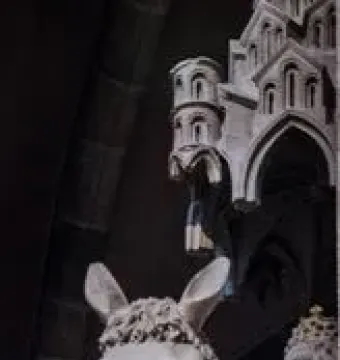
| Baldachin | A canopy over the figure, used in some interpretations as evidence for saintly or symbolic meaning |
| Horse symbolism | In some readings the horse alludes to Christ, Hungary, imperial power, or crusading symbolism |
History and restoration | |
| Preservation | The base appears original, and the statue is thought not to have been moved since the 13th century |
| Original appearance | The sculpture was probably polychrome and more visually striking than today |
| Appearance over time | Only the sculpture’s appearance has changed over time |
Significance | |
| Art-historical significance | One of the most iconic and representative works of German Gothic sculpture |
| Historical significance | Often described as the earliest surviving equestrian statue since antiquity; also among the best-known medieval works of art and one of the best-known landmarks of Bamberg |
| Horseshoes in art | Frequently cited as one of the earliest depictions of horseshoes in art |
Other | |
| Comparative works | Magdeburg Rider; equestrian sculptures by Oldrado da Tresseno in Milan and Lucca; a Sasanian stone rider relief in southern Iran; a Christ image in Auxerre Cathedral crypt; Saint Martin in the Cathedral of San Martino |