
Hebe by Antonio Canova
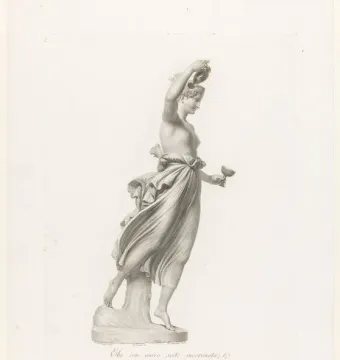
Hebe is the subject of a series of sculptures by Antonio Canova created between 1796 and 1817, along with an original plaster model. The first version, commissioned by Count Giuseppe Giacomo Vivante Albrizzi, was completed in 1799 and is now in Berlin’s Alte Nationalgalerie. A second version, made for Joséphine de Beauharnais, was shown at the Paris Salon in 1808 and is now in the Hermitage Museum in Saint Petersburg. Two later versions were created in 1814 and 1817; the former is in Chatsworth in the United Kingdom, and the latter is in the civic art gallery at the San Domenico Museums in Forlì. The plaster model is in Milan’s Gallery of Modern Art.
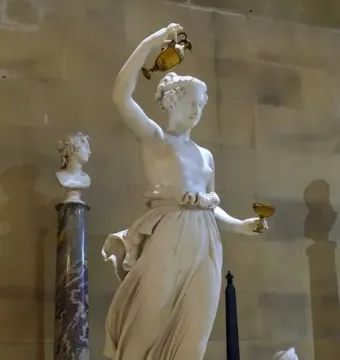
June 2016 © Daderot · Public domain
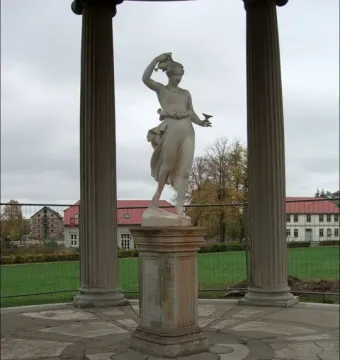
2006 © Ruchhöft-Plau · Public domain
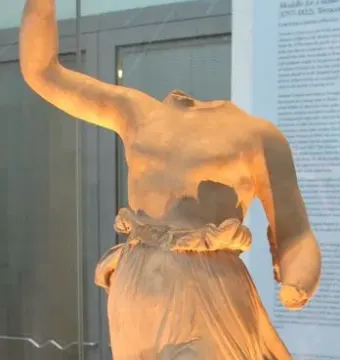
November 2011 © sailko · CC BY-SA 3.0
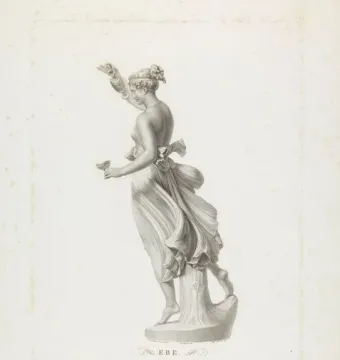
© Rijksmuseum · CC0
© Rijksmuseum · CC0
Identification | |
| Title | Hebe |
| Title in French | Hébé |
| Type | Series of sculptures |
| Subject | Hebe, the Greek goddess, daughter of Zeus and Hera, servant and cupbearer of the gods of Olympus |
| Alternative title | Ebe |
Historical context | |
| Date range | 1796 to 1817 |
| Artistic style | Neoclassicism |
Creator | |
| Artist | Antonio Canova |
| Signed by | Canova |
| Number of versions | Four autograph versions, plus the original plaster model |
Discovery and provenance | |
| Second version later transfer | Entered the imperial Russian collections in 1815 |
| Plaster model donor | Canova gave the original plaster model to his pupil Pompeo Marchesi |
| Fourth version intended purpose | Intended to make her residence in Forlì more sumptuous |
| Fourth version commission | Commissioned by Countess Veronica Zauli Naldi Guarini |
| Third version patron | Lord Cawdor |
| First version completion | 1796 |
| Second version exhibition | Exhibited at the Paris Salon in 1808 |
| Second version commission | Made at the request of Joséphine de Beauharnais, first wife of Napoleon |
| First version later sale | Sold in 1830 by Vivante Albrizzi to King Frederick William III of Prussia |
| First version dispatch | Sent to Venice shortly before the end of 1799 |
| First version commission | Commissioned in 1796 by Count Giuseppe Giacomo Vivante Albrizzi |
Physical characteristics | |
| Hair | Elaborate hair gathered with a diadem and stirred by a breath of wind |
| Attributes held | An amphora raised high and a cup in her left hand |
| Depiction | Shown walking with a light, almost dancer-like step, in a reverent, silent attitude |
| Lower body | Draped in a thin tunic with dense, complex folds |
| Upper body | Bare-breasted |
| Pose/support | Suspended on a cloud in the first two versions; in the last two versions she leans against a tree trunk instead |
Materials | |
| Primary material | Marble, with bronze details |
| Bronze details | Amphora, cup, and hair ribbon |
| Original model material | Plaster |
| Plaster model location | Galleria d'arte moderna, Milan |
Location and ownership | |
| Fourth version current location | Civic art gallery in the Museo di San Domenico, Forlì, Romagna |
| Third version current location | Chatsworth House, Derbyshire, England |
| Second version current location | State Hermitage Museum, Saint Petersburg |
| First version current location | Alte Nationalgalerie, Berlin |
Appearance | |
| Composition source | Adapted from several Hellenistic statues |
| Version differences | The versions differ only in small details, especially the switch from cloud to tree trunk support in the later versions |
History and restoration | |
| Criticized features | The bronze accessories, the pink patina used to suggest a realistic complexion, the cloud motif, and the lack of expression in Hebe's face were criticized |
| Critical reception | The first two versions drew harsh criticism |
| Admiring reception | Ippolito Pindemonte praised the work and dedicated verses to it |
| Interpretive note | Canova's use of bronze accessories was later considered correct |
Significance | |
| Commemorative coin | Saint-Marin struck a 2-euro commemorative coin showing the statue to mark the 200th anniversary of Canova's death |