
Statue of John of Austria
The Statue of John of Austria is a monumental bronze sculpture, originally gilded, by architect and sculptor Andrea Calamech. It was commissioned by the Senate of Messina in 1571 to honor John of Austria, victor of the Battle of Lepanto, and was dedicated in 1572. The figure holds a three-pronged baton symbolizing command of the triple alliance of Philip II, the Pope, and the Republic of Venice, and stands with a foot on the severed head of a defeated Turk. The pedestal features bronze plaques showing the fleet, the battle, and the victorious return to Messina. The monument has been moved several times and is now in Messina; a copy was erected in Regensburg in 1978.
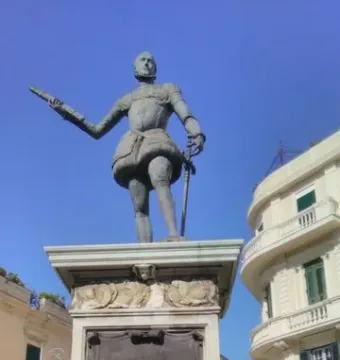
© Jeanne Griffin · CC BY-SA 4.0
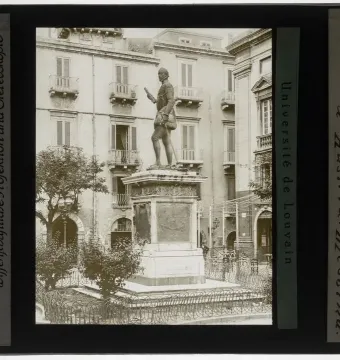
© Calamech, Andrea (Italian sculptor, architect, 1524-1589) (artist) · Public domain
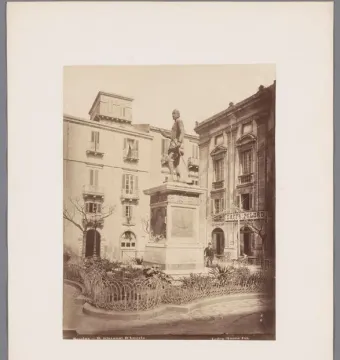
© Mauro Ledru · CC0
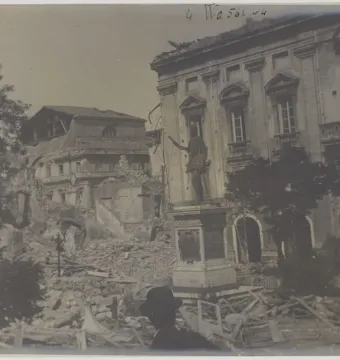
· Public domain
© Rijksmuseum · CC0
Identification | |
| Title | Statue of John of Austria |
| Type | Monumental bronze statue |
| Subject | Don John of Austria (John of Austria, Juan d'Autriche, Don Juan d'Autriche) |
| Alternative title | Statue of Don Juan of Austria; Don Giovanni d'Austria |
Historical context | |
| Commemoration | Erected in memory of the victory at the Battle of Lepanto on 7 October 1571 |
Creator | |
| Artist | Andrea Calamech |
| Artist role | Sculptor and architect |
| Artist origin | Carrara |
| Training | Trained in the Florentine workshop of Bartolomeo Ammannati |
Discovery and provenance | |
| Purpose of commission | To honor the victor of the Battle of Lepanto |
| Replica | Copy erected in Zieroldsplatz, Regensburg, in 1978 on the fourth centenary of Don John of Austria's death; erected in his birthplace |
| Commissioned by | The Senate of Messina |
| Commission date | 1571 |
History and restoration | |
| Erected | 1572 |
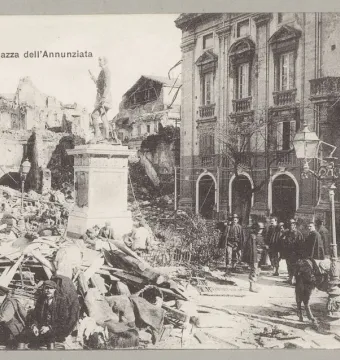
| Relocation | Moved in 1853; after the destruction of the 1908 Messina earthquake and subsequent urban restructuring, moved again in 1928 to its current site |
| Restoration | Restored after the cannon-shot damage; a sword replaced an earlier large sword during the 1852 restorations, but the sword was lost again around the 1950s |
| Damage | Damaged by cannon fire during the anti-Spanish revolt of 1674–1678, by the earthquake of 1783, and in the Sicilian revolution of 1848 |
| Created | 1573 |
Physical characteristics | |
| Pedestal plaques | Inscription and three bronze bas-reliefs |
| Material | Bronze, originally gilded |
| Base | Marble pedestal with four bronze plaques |
| Decorative features | Very fine decorations |
Appearance | |
| Armor | Complete Spanish armor |
| Figure attribute | Three-pronged command baton |
| Pose | Left foot on the severed head of a defeated Turk |
| Depiction | Faithfully rendered young face |
| Depicted age | About twenty-four years old |
Iconography and meaning | |
| Defeated figure | Generally considered to be Müezzinzade Ali Pasha |
| Baton symbolism | Reference to the triple alliance of Philip II, Pope Pius V, and the Republic of Venice against the Turks |
| First bas-relief | Deployment of the fleet, with Don John’s flagship at the center |
| Second bas-relief | The battle, with close combats between ships and Turkish boats already fleeing |
| Third bas-relief | The victorious fleet’s return to Messina, with a bird’s-eye view of the 16th-century city |
| Inscription content | Commemorates the anti-Turkish league, the departure from Messina, the date of the battle and return, the number of ships, and the names of the senators of the time |
Location and ownership | |
| Original location | Between the Royal Palace and the Church of Our Lady of the Pillar in Messina |
| Later location | In front of the Church of Santissima Annunziata dei Teatini in Corso Cavour, Messina |
| Current location | Piazza Catalani, at the end of Via Cesare Battisti, Messina, Italy |
Significance | |
| Art historical评价 | William Stirling-Maxwell called it 'one of the most effective monuments of sixteenth-century art' |
Other | |
| Nickname | Statua del chitarrista ('guitarist statue') |
| Nickname explanation | So called because of the shadow it casts on the building behind it |