
Brutus
Brutus is a marble bust by Michelangelo, now in the collections of Palazzo del Bargello in Florence. The work measures 74 cm in height and its date remains disputed, with sources giving 1538, around 1540, or 1546–1550. It depicts Brutus, the assassin of Gaius Julius Caesar, with noble features, short hair, and a face marked by intense emotion. The head turns sharply, and the sculpture was left unfinished, including parts of the hair and the unpolished surface. The drapery was created by another hand. Its patron was Donato Giannotti, and the identity of the figure has also been questioned in scholarship.
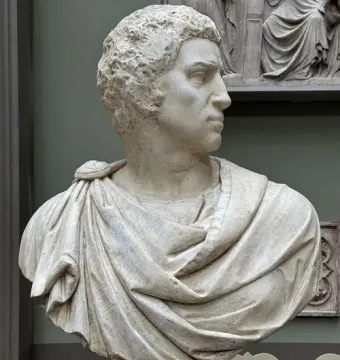
May 2026 © APK · CC BY 4.0
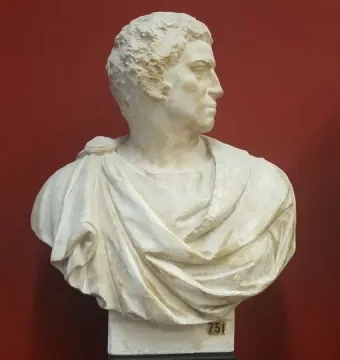
August 2016 © Romaine · CC BY-SA 4.0
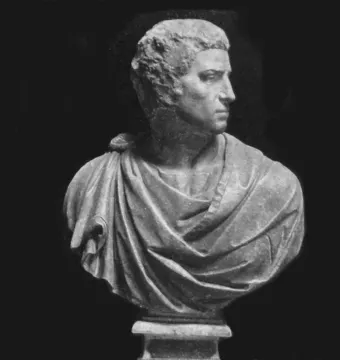
© Giorgio Sommer · Public domain
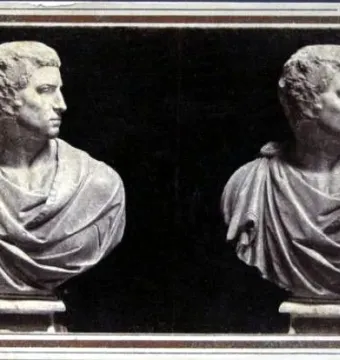
© Giorgio Sommer · Public domain
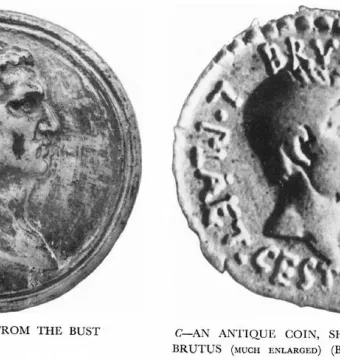
July 1935 © Charles de Tolnay · Public domain
Identification | |
| Title | Brutus |
| Type | marble bust |
| Subject | Marcus Junius Brutus |
| Italian title | Bruto |
Creator | |
| Artist | Michelangelo Buonarroti |
| Commissioner | Donato Giannotti |
| Intended recipient | Cardinal Niccolò Ridolfi |
| Intermediary in the commission | Donato Giannotti |
Historical context | |
| Date of creation | disputed; sources give c. 1538, 1539–1540, c. 1540, 1546–1550, or a period after the defeat of the Florentine Republic (1527–1531) |
| Commission date | c. 1537–1538 |
| Historical context | Associated with the restoration of Medici power in Florence, Michelangelo's support for the Florentine Republic, and opposition to Medicean tyranny |
Discovery and provenance | |
| Later transfer | Moved to the Uffizi, probably in the 18th century |
| Selection for museum | Selected for the emerging National Museum in 1865 |
| Acquired by Medici | Acquired between 1574 and 1584 from the heirs of Diomede Leoni |
| First owner | Cardinal Niccolò Ridolfi |
| Later owners | Francesco I de' Medici; Ferdinando I de' Medici |
Location and ownership | |
| Current location | Museo Nazionale del Bargello, Florence |
Physical characteristics | |
| Height | 74 cm |
| Height with base | 96 cm |
| Completion status | unfinished; not polished |
Materials | |
| Material | marble |
| Additional materials | A brass plaque was attached to the pedestal |
Appearance | |
| Face details | The face is asymmetrical; the side turned away from the viewer shows more emotion, with a visible flared nostril |
| Head shape | The head is simpler in shape than the silhouette on the shoulder; the bust shows a small head above an unusually broad, bull-like neck |
| Profile view | The profile is noble and determined |
| Front view | From the front, the face rests on a powerful neck and has a certain heaviness |
| Facial expression | The face shows tense, emotionally expressive features, with cold impassiveness, restrained energy, and an undertone of anger or contempt |
| Drapery | The drapery was finished by Tiberio Calcagni; he may also have made a wrinkle on the left side of the nose resembling a scar |
| Surface treatment | The face is slightly unfinished, while the drapery is fully finished and polished |
| Head pose | The head is sharply turned with powerful torsion, and appears noble and determined in profile |
| Hair | Short-cropped and left unfinished |
Iconography and meaning | |
| Subject interpretation | Brutus, the tyrannicide who killed Julius Caesar to restore republican rule |
| Alternative interpretation | Some literature interprets the bust as Alexander de' Medici, murdered by his cousin |
| Political meaning | Anti-tyrannical; glorification of liberty and republican sentiment |
| Possible contemporary association | Contemporaries may have connected it with the assassination of Alessandro de' Medici by Lorenzino de' Medici in 1537 |
| Inscriptions | A brass plaque on the pedestal bears the Latin verse 'Dum Bruti effigiem sculptor de marmore ducit - in mentem sceleris venit et abstinuit' and is attributed to Pietro Bembo |
History and restoration | |
| Patina of interpretation under later ownership | By about 1584 the bust was treated as a virtuoso work of art without ideological significance |
| Pedestal inscription translation | 'While the sculptor draws the image of Brutus from the marble, the crime comes to his mind, and he abandons the work' |
| Unfinished state | Michelangelo left the sculpture unfinished, reportedly because he was persuaded to stop work on its dangerous, openly anti-tyrannical message; an anecdote says he abandoned it after realizing the monstrosity of Brutus's deed |
| Finishing by | Tiberio Calcagni finished the drapery and part of the neck |
| Later modification | A later owner added an inscription explaining the unfinished character of the work |
Other | |
| Stylistic reference | Influenced by Roman imperial busts, especially a bust of Caracalla; Vasari also cited an ancient sardonyx/carnelian gem of Giuliano Cesarino |
| Stylistic significance | Considered an early and influential revival of the classical bust form in sculpture |
| Stylistic qualities | Great solemnity and power; a more complex composition with new ideological meaning, far from a decorative function |
| Broader significance | Often described as Michelangelo's only clear republican statement during the rise of absolutism in 16th-century Western Europe |