
Abbot Luigi
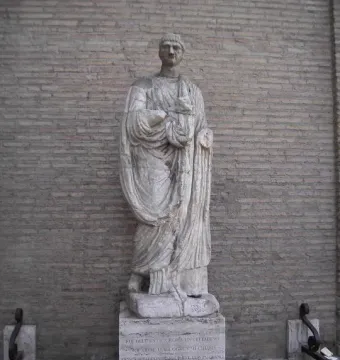
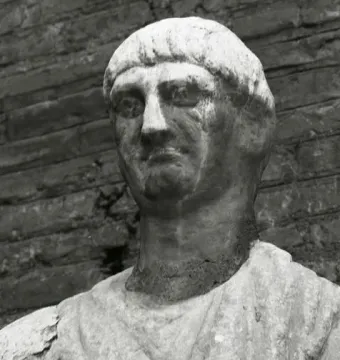
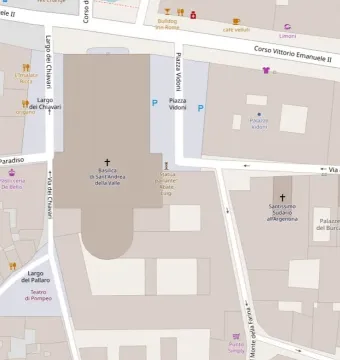
Abbot Luigi is one of the six talking statues of Rome. It is a late Roman sculpture, probably depicting a high magistrate. Since 1924, it has stood again in Piazza Vidoni, on the side wall of the Basilica of Saint Andrew, which was its original placement, though it has occupied various locations over time. The nickname Abbot Luigi was given by popular imagination because the figure was thought to resemble the sacristan of the nearby Church of the Sudario, who was known by that name. Like the other talking statues, it was used for anonymous satirical pasquinades. Verses inscribed on the base celebrate its long life of offense, burial, and renewed existence.
October 2005 © by Lalupa · Public domain
© Paolo Monti · CC BY-SA 4.0
August 2021 © Autori di OpenStreetMap (OpenStreetMap authors/auteurs) · ODbL
Identification | |
| Name | Abate Luigi |
| Type | One of the talking statues of Rome |
| Alternative names | El Abate Luigi; Abbate Luiggi; Abbot Louis |
Historical context | |
| Date | Late Roman period |
Creator | |
| Depicted figure identification | Probably a high magistrate; exact identification unknown |
Physical characteristics | |
| Depiction | A standing man wearing a toga, with elaborate drapery |
Materials | |
| Material | Not specified in the source |
Discovery and provenance | |
| Movement history | Moved several times in Rome over the centuries, including a short period in the courtyard of Palazzo Chigi and later a niche on the monumental staircase of Palazzo Caffarelli-Vidoni |
| Original and current location | Originally at the discovery site near Palazzo Vidoni; since 1924 in Piazza Vidoni against the side wall of the Basilica of Sant'Andrea della Valle, in the rione Sant'Eustachio, Rome |
| Original context hypothesis | Possibly one of the sculptures decorating the Hecatostylum (the Portico of the Hundred Columns) behind the scaena of the Theater of Pompey |
| Discovery place | Found during excavations for the foundations of Palazzo Vidoni-Caffarelli, in the area of the Theater of Pompey |
| Discovery date | 16th century |
Location and ownership | |
| Current condition | Headless (acephalous) |
History and restoration | |
| Damage history | The head has been removed repeatedly as a joke; the statue has suffered several acts of vandalism, especially decapitation |
| Conservation intervention | The Archaeological Superintendency of Rome made a cast in the 1970s for possible restoration |
| 2013 restoration decision | After the latest vandalism in 2013, it was decided not to restore the head again |
| Last pasquinade | In 1966, during a decapitation incident, it last 'spoke' with a pasquinade addressed to an anonymous vandal: 'O tu che m'arubbasti la capoccia / vedi d'ariportalla immantinente / sinnò, vòi véde? come fusse gnente / me manneno ar Governo. E ciò me scoccia.' |
Iconography and meaning | |
| Popular nickname origin | The nickname was given by popular imagination because the figure was thought to resemble the sacristan Luigi of the nearby Church of the Sudario |
| Satirical role | One of Rome's six talking statues used for anonymous pasquinades and satirical verses mocking public figures |
| Associated figures | Marforio and Pasquino |
| Inscription | The base bears an Italian/Romanesco inscription claiming the statue was a citizen of ancient Rome, is now called Abbot Luigi, achieved eternal fame in urban satires with Marforio and Pasquino, suffered insults, misfortunes, and burial, and now has a new and secure life |
Other | |
| Inscription text | FUI DELL’ANTICA ROMA UN CITTADINO / ORA ABATE LUIGI OGNUN MI CHIAMA / CONQUISTAI CON MARFORIO E CON PASQUINO / NELLE SATIRE URBANE ETERNA FAMA / EBBI OFFESE, DISGRAZIE E SEPOLTURA / MA QUI VITA NOVELLA E ALFIN SICURA |
| Inscription translation | I was a citizen of ancient Rome; now everyone calls me Abbot Luigi; with Marforio and Pasquino I achieved eternal fame in urban satires; I had insults, misfortunes, and burial; but here I have new life and at last security |