
Havmannen
Havmannen, or Havmann, is a granite stone sculpture by English artist Antony Gormley, located in Mo i Rana in northern Norway. Standing in the Ranfjord, it is associated with the city known as the Arctic Circle City. Originally intended to be made of steel to reflect Mo i Rana’s industrial history, the project became Gormley’s first large stone sculpture after local steel production changes made the original plan impossible. The sculpture was created and erected in 1995 as part of Artscape Nordland. It caused considerable local debate, including discussion about public spending and its unusual appearance, but is now a source of pride for the town and has inspired the annual Havmanndagene festival.
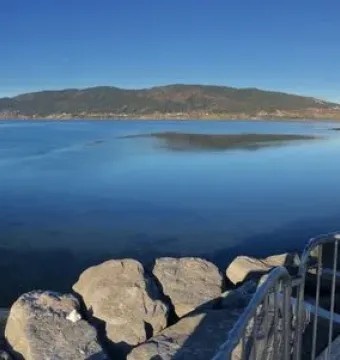
October 2017 © Wolfmann · CC BY-SA 4.0
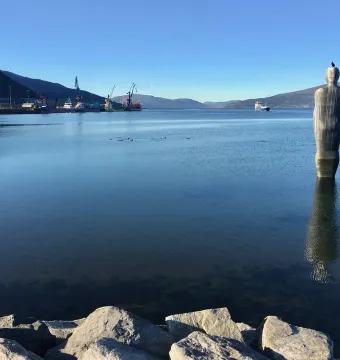
October 2017 © Wolfmann · CC BY-SA 4.0
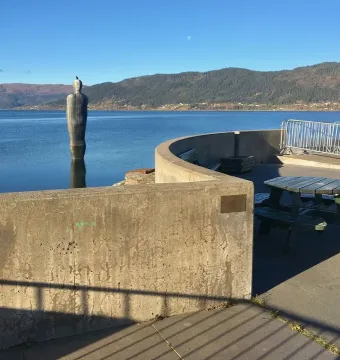
October 2017 © Wolfmann · CC BY-SA 4.0
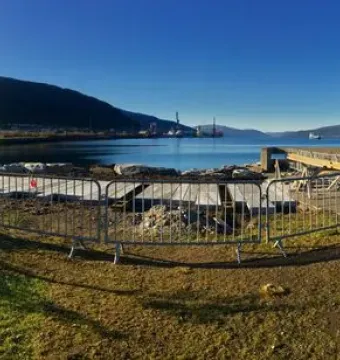
October 2017 © Wolfmann · CC BY-SA 4.0
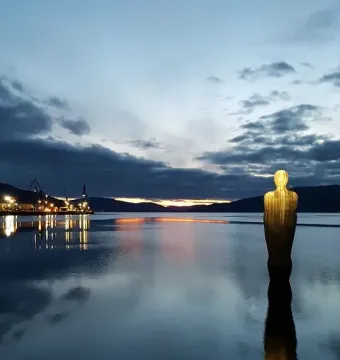
October 2019 © AVBSoMe · CC BY-SA 4.0
Identification | |
| Title | Havmannen |
| Alternative name | Havmann |
| Name meaning | The Man from the Sea |
| French title translation | L'homme de la mer |
| Type | Sculpture |
Creator | |
| Artist | Antony Gormley |
| Artist nationality | English |
Location and ownership | |
| Location | Mo i Rana, northern Norway |
| Specific site | Ranfjord, about fifteen meters from the shore |
| Local place nickname | Polarsirkelbyen (the "Arctic Circle City") |
| Associated city | Mo i Rana |
Physical characteristics | |
| Height | 11 metres |
| Weight | 60 tonnes |
Materials | |
| Material | Granite |
| Original intended material | Steel |
Historical context | |
| First large stone sculpture by the artist | Yes |
| Concept context | Inspired by Mo i Rana's traditional steel industry and intended to highlight the contrasts between nature and industry |
| Reason original steel concept was not used | Local industry was undergoing major changes, including the closure of unprofitable state-subsidized factories and the local steelworks, so local steel could not be used |
History and restoration | |
| Created | 1995 |
| Installed | 1995 |
| Part of | Artscape Nordland |
| Reception | Controversial on unveiling; it sparked extensive debate in the local media, especially in Rana Blad, over several months |
| Public response | Hundreds of letters and more than 300 poems were sent to or dedicated to the sculpture |
| Debate issues | Whether commissioning the sculpture was a good use of public money, and concern about the sculpture's lack of an erectable device |
Appearance | |
| Water level | Up to the knees; also described as up to mid-calf |
| Orientation | Turns its back to the city and looks out over the fjord |
| Description | A dark stone giant whose limbs blend into the overall silhouette of its body |
Iconography and meaning | |
| Interpretation | Invites the viewer to contemplate the vast horizons |
Significance | |
| Current local attitude | Residents of Mo i Rana are proud of the sculpture and have adopted it as an ambassador for the city |
| Festival inspired by the sculpture | Havmanndagene |
| Festival meaning | Havmann days |
| Festival timing | Held every year in May in Mo i Rana |